Yemen Escalation Puts Red Sea, Oil and Defense Stocks Back in Focus
Yemen’s president called for mobilization as Houthi advances near key waterways raised fresh risks for energy flows and trade routes.
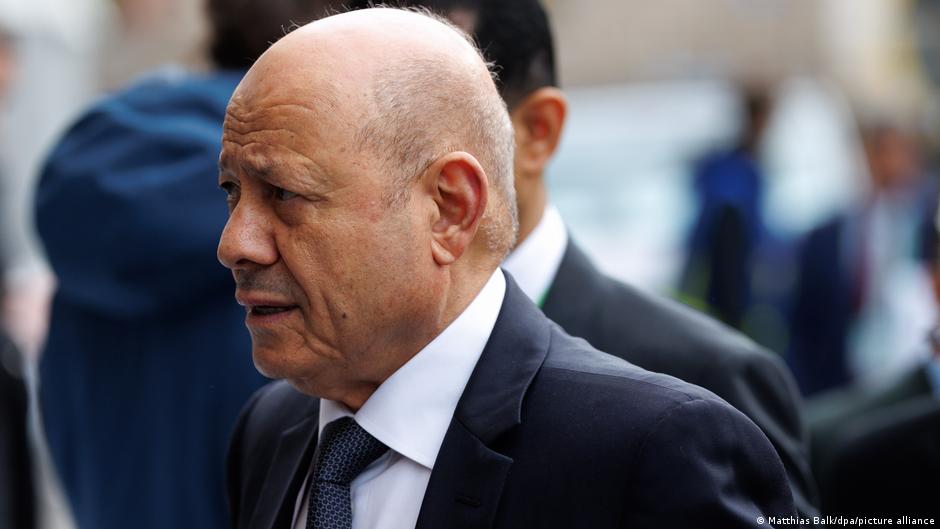
Yemen’s President Rashad al-Alimi, chairman of the country’s Presidential Leadership Council, has called on citizens to mobilize as the government faces an intensified conflict with Iran-aligned Houthi rebels, a development that may sharpen investor attention on oil-linked equities, shipping exposure and defense names tied to Gulf security.
In an address to Yemenis on Friday, September 25, al-Alimi urged citizens to contribute to the defense of the country and join the ranks of government forces. He also said rebels who leave the Houthi side and switch allegiance to the government would be pardoned under an expected amnesty.
Al-Alimi called on Yemenis to help defend the country and said those who abandon the Houthis for the government side would be covered by a forthcoming amnesty.
The appeal came as the Houthis have continued to advance despite Saudi air support for government forces. Several weeks ago, the rebels struck government troops, and the Yemeni army has continued to retreat even with backing from Saudi military aviation.
For Wall Street, the immediate relevance is not a single corporate earnings line but a wider risk repricing across energy, transport and geopolitical-risk sectors. The conflict touches the Red Sea coast and the Bab el-Mandeb Strait, a chokepoint that has gained strategic importance as an alternative trade route amid disruptions to oil supplies caused by the blockade of the Strait of Hormuz during the war involving the United States and Israel against Iran.
Energy and Shipping Risk Premiums
According to the source account, the Houthis have in recent months managed to seize the entire Red Sea coast as well as territories adjacent to the Bab el-Mandeb Strait. Those gains have allowed Iran and its allies to consolidate control over key regional waterways, affecting oil exports from Saudi Arabia and other Persian Gulf states to the global market.
That framing is central for equity traders. Any threat to oil-export routes can support crude prices and energy equities while pressuring airlines, logistics companies and consumer-facing sectors sensitive to fuel costs. The source article says rebel attacks threaten global trade routes and contribute to rising electricity prices. That could revive a familiar cross-asset trade: higher perceived risk for energy importers and transport operators, and renewed interest in producers, oilfield services and defense contractors.
No company-specific damage, production loss or trading-volume data was disclosed in the source text. As a result, investors would be likely to treat the report primarily as a macro and sector-rotation signal rather than as a direct catalyst for a particular listed issuer. In U.S. equity terms, the most obvious screens would include integrated oil producers, refiners, tanker and container-shipping operators, airlines, and defense companies with Middle East exposure.
The pressure point is the potential interaction between shipping security and energy availability. The Bab el-Mandeb Strait links the Red Sea with the Gulf of Aden and is a critical passage for trade between Europe, Asia and the Middle East. If the area is perceived as less secure, freight costs, insurance premia and delivery times can become part of the inflation discussion again, which in turn can influence equity research assumptions for margins in transport, industrials and retail.
Iran Link Raises Geopolitical Beta
Reuters has reported, according to the Russian-language source, that the Houthi advance is being directed by Iran’s Islamic Revolutionary Guard Corps. Sources in Tehran say Iran is seeking to open a new front in its confrontation with the United States.
That allegation, if treated by markets as credible, would likely increase geopolitical beta across Middle East-sensitive assets. Defense and aerospace shares often draw attention in such periods, while companies exposed to higher energy input costs can trade defensively. Oil majors and exploration-and-production names may benefit from a stronger crude-risk premium, though that support can be offset if broader markets sell off on fears of escalation.
Yemen has been engulfed in civil war since 2014. The conflict has led to the country’s de facto division among three opposing sides. The Iran-aligned Houthis control northern and western provinces, including the capital, Sanaa, where about 70% of the population lives.
Earlier in September, the Houthis announced an expansion of military operations in the Middle East and struck four cities in southern Saudi Arabia. More than 70 people were injured in the large-scale shelling, and fires broke out at oil facilities. Saudi Arabia responded with more than 60 airstrikes on several provinces controlled by the Houthis.
On September 19, the Saudi-led Coalition to Restore Legitimacy in Yemen said Yemeni rebels had attempted for the first time to strike the kingdom’s capital, Riyadh, with a ballistic missile.
For equity research desks, the key question is whether the latest mobilization call signals a contained military phase or a broader escalation around the Red Sea corridor. Analysts focused on energy and transportation would likely watch for any evidence of sustained disruption to Saudi or Gulf exports, damage at oil facilities, changes in tanker routes, or higher insurance and freight rates. Without those follow-through signals, the market impact may remain concentrated in short-term risk premiums rather than in lasting earnings revisions.
Still, the combination of Houthi territorial gains, Saudi military involvement, alleged IRGC direction and threats to maritime routes gives the story immediate relevance for traders monitoring sector rotation. In a market already sensitive to inflation and energy costs, Yemen’s battlefield developments may again turn regional security headlines into catalysts for oil prices, shipping costs and defense-sector positioning.