Macron Says Russian Mobilization Scenario Is Credible, Raising Europe Risk
France’s president said Moscow could mobilize about 300,000 people as hostile activity across Europe intensifies.
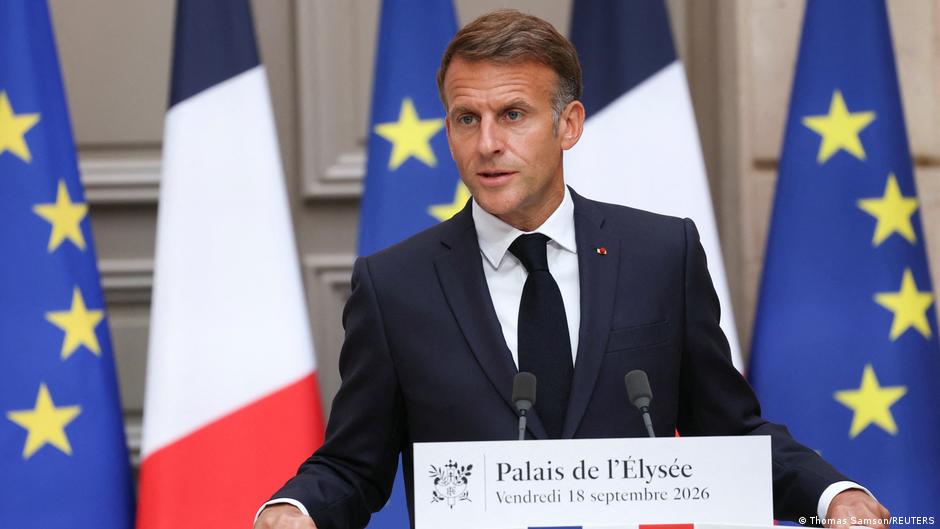
French President Emmanuel Macron said France views as credible a scenario in which Moscow could mobilize around 300,000 people, adding a new layer of geopolitical risk for investors already tracking Europe’s defense posture, energy security and exposure to hybrid attacks.
Speaking on Thursday, September 24, on TF1 and France 2, Macron said Russia had waited until after its elections to the State Duma, held from September 18 to 20, before moving toward such a step. He said it was now clear that Russia would do it, while noting that it remained uncertain whether any mobilization would be publicly announced or carried out covertly.
“This is a scenario that seems credible to us,” Macron said, referring to intelligence assessments from the United States, Europe and Ukraine.
The comments are significant for markets because they link the military trajectory of the war in Ukraine with a widening threat environment across Europe. Macron said there had been several signs pointing to Russian preparations for mobilization. He also warned that “hostile actions across Europe have increased” in recent weeks.
For Wall Street, the immediate read-through is less about a single earnings line item and more about sector rotation and risk pricing. Any escalation that suggests a longer or broader conflict could keep investor attention on European defense contractors, cybersecurity providers, energy infrastructure operators and companies tied to critical systems resilience. At the same time, it may weigh on European cyclicals, travel-sensitive names and firms with high exposure to energy costs or disrupted supply chains.
Defense, Cybersecurity and Energy Infrastructure in Focus
Macron said he had convened representatives of political forces the previous week to warn them about the development of the threat and its consequences for France. He framed Europe not as a distant observer of the war but as a strategic support base for Ukraine.
According to Macron, Russia sees Europe as Ukraine’s “strategic rear” because Europeans are helping Ukrainians, and because Kyiv is striking oil refineries and facilities inside Russia in an effort to force Moscow to stop the war. “And therefore Europe can become a target,” he said.
That warning broadens the equity-market lens. Defense stocks often draw investor attention during periods of military escalation, but Macron’s remarks also point toward the cyber and infrastructure security complex. He specifically referred to attacks in the information sphere through the spread of falsehoods, as well as in cyberspace. For equity research desks, that keeps cyber resilience, secure communications, grid reliability and industrial protection in the same conversation as military spending.
The article did not cite market moves, trading volumes or individual share prices. Still, the direction of the policy signal is relevant: European governments are preparing for a threat set that includes not only conventional military pressure but also sabotage, cyberattacks, arson, attacks on critical infrastructure and airspace violations. That range of risks can influence how investors assess capital expenditure, insurance costs, procurement cycles and public-sector demand across several listed sectors.
Hybrid Threats Add to the Risk Premium
Macron had previously said on September 18 that France was preparing a plan to protect critical infrastructure amid a growing threat of hybrid attacks from Russia. That earlier statement now sits alongside his latest remarks on possible Russian mobilization, creating a combined signal: Paris is preparing both for a more intense war effort by Moscow and for spillover risks across Europe.
The Russian Federation has previously been accused of interfering in elections and using migrants as a tool of pressure against Europe. More recently, European intelligence services have suspected a Russian connection to acts of sabotage, arson, attacks on critical infrastructure and violations of airspace.
Sources cited in the original report said many incidents, particularly cyberattacks and hacks, are not disclosed publicly, meaning the scale of Russian hybrid attacks is significantly larger than what is visible in public reporting.
For U.S. investors, the key issue is whether these risks remain episodic headlines or become a durable part of the European operating environment. If the latter, equity analysts may place greater emphasis on companies’ exposure to government security budgets, cyber demand and infrastructure hardening. Conversely, businesses dependent on stable European logistics, consumer confidence or uninterrupted industrial operations may face a higher risk premium.
Macron’s remarks do not by themselves provide a tradable timeline, and he did not say whether a Russian mobilization would be formally announced. But his public assessment that a 300,000-person mobilization scenario is plausible gives markets another geopolitical variable to price into European equities, global defense supply chains and risk-sensitive sectors.
The broader implication for Wall Street is that the Russia-Ukraine war continues to carry consequences beyond the battlefield. The prospect of additional Russian manpower, combined with warnings about information operations, cyber activity and threats to critical infrastructure, reinforces the case for investors to monitor Europe-linked portfolios through a security and resilience lens rather than only through traditional macro indicators.