German Eurofighters in Latvia Put European Defense Stocks Back in Focus
Berlin’s short-term deployment highlights NATO air-defense demand as investors assess aerospace primes and Baltic security risk.
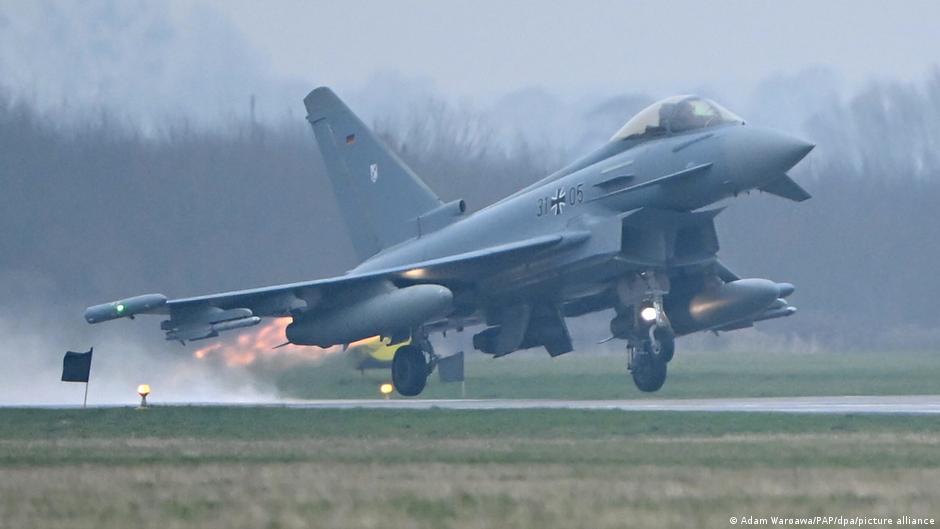
Germany has moved four Eurofighter jets to Latvia for a short deployment tied to the country’s parliamentary election on October 3, a security step that is likely to keep European defense and aerospace shares in focus for investors tracking NATO’s eastern flank.
The aircraft, from the Bundeswehr’s 74th Tactical Air Wing based at Neuburg an der Donau, were transferred to the Lielvarde military airfield in central Latvia. Latvia’s defense ministry said on Thursday, September 24, that the jets would help secure the country’s airspace during the election period.
The Eurofighters are expected to remain in Latvia for a little more than a week. Their role will be to support NATO’s integrated air and missile defense system, adding a temporary layer of allied coverage at a politically sensitive moment for Riga.
For equity markets, the deployment is another reminder that European air-defense capacity has moved from a niche military procurement theme to a recurring investment narrative. Listed defense names exposed to combat aircraft, radar, missile defense, maintenance and sustainment remain closely watched as NATO members respond to repeated airspace incidents around the Baltic region.
Defense Rotation Remains Linked to NATO Demand
The immediate move is operational rather than commercial: no new contract, order value or procurement timetable was announced. Still, the event lands in a market environment where investors have repeatedly rewarded companies viewed as beneficiaries of higher European defense spending and longer-duration NATO readiness requirements.
The Eurofighter program is associated with major European aerospace and defense contractors, and the aircraft’s recurring use in NATO air policing keeps attention on the industrial base behind fighter production, upgrades, spare parts and mission support. For traders, the most relevant listed names are those with exposure to European military aircraft and air-defense systems, alongside broader defense primes and suppliers that benefit from sustained government spending.
That does not mean the Latvian deployment by itself changes earnings estimates. Equity research teams would typically treat such a short-term mission as confirmation of demand signals rather than as a direct revenue event. The investment question is whether frequent deployments, drone incursions and air-policing missions continue to support multi-year budget allocations across NATO members.
Latvia’s prime minister Andris Kulbergs thanked Germany for its “readiness to help and close cooperation,” calling the deployment a concrete sign of NATO solidarity.
Riga requested support from NATO allies against the backdrop of repeated violations of Baltic airspace, according to the source article, which cited dpa. Since Russia’s full-scale war against Ukraine began, drones have repeatedly entered the airspace of the Baltic states. In August, NATO fighters shot down a drone that had violated Latvian airspace.
Those incidents are central to the market read-through. Defense investors have increasingly focused not only on headline weapons orders but also on utilization: aircraft rotations, air policing, intercept missions, surveillance flights and readiness requirements. Higher utilization can support demand for maintenance, repair, overhaul, munitions readiness, training and replacement cycles, even when a single deployment is temporary.
Baltic Security Risk and Sector Positioning
NATO has guarded the airspace of its northeastern flank since Estonia, Latvia and Lithuania joined the alliance in 2004. The mission has become more prominent since the war in Ukraine broadened security concerns across Europe, particularly for countries bordering or near Russia and Belarus.
For portfolio managers, the Baltic security backdrop can affect sector rotation in several ways. Defense and aerospace stocks may draw incremental buying when geopolitical risk rises, while airlines, industrials with high energy exposure and broader European cyclicals can face more cautious positioning if investors interpret the news as a sign of higher regional tension. The response often depends on whether the news is viewed as contained deterrence or as escalation risk.
Trading volumes in defense shares can also rise around visible NATO activity, especially when developments involve air defense, drones or fighter deployments. The Latvian election context adds a political-risk element, though the article does not report any disruption to the election process itself. Instead, the deployment is framed as preventive support for airspace security.
Latvia’s prime minister described the German move as part of a shared commitment to protect Latvian airspace and the security of the Latvian population. That language is likely to reinforce the policy direction investors already track: more persistent allied presence, more frequent air-defense missions and greater emphasis on readiness along NATO’s eastern edge.
The source also notes that Eurofighters are set to resume a longer-term NATO airspace surveillance role from Estonia beginning in December 2026 under the NATO Air Policing mission. Through March 2027, five Eurofighter jets and their flight crews are scheduled to be stationed at Amari air base in northwestern Estonia.
That future rotation matters more for the equity research view than the week-long Latvian deployment alone. A scheduled multi-month presence points to the continuing institutionalization of air-policing demand in the region. Analysts covering European defense groups are likely to read it as part of a broader pattern: NATO missions are becoming more durable, more visible and more connected to drone-era air-defense needs.
The market impact, therefore, is indirect but relevant. There is no disclosed procurement package attached to the Latvian move, and the article provides no financial terms. But the repeated operational use of Eurofighters in the Baltics helps sustain investor attention on Europe’s defense supply chain, from aircraft platforms to sensors, ground systems and support services.
For Wall Street and global investors, the signal is less about one election-week deployment and more about the persistence of demand. As long as Baltic airspace violations remain a recurring security issue, defense-sector positioning is likely to remain sensitive to NATO announcements, air-policing rotations and any evidence that European governments are converting operational pressure into funded programs.