G20 Invitation Puts Putin Diplomacy in Focus for Ukraine-Linked Trades
Germany says a ceasefire would signal Moscow’s readiness for serious talks, keeping sanctions, defense and energy stocks on watch.
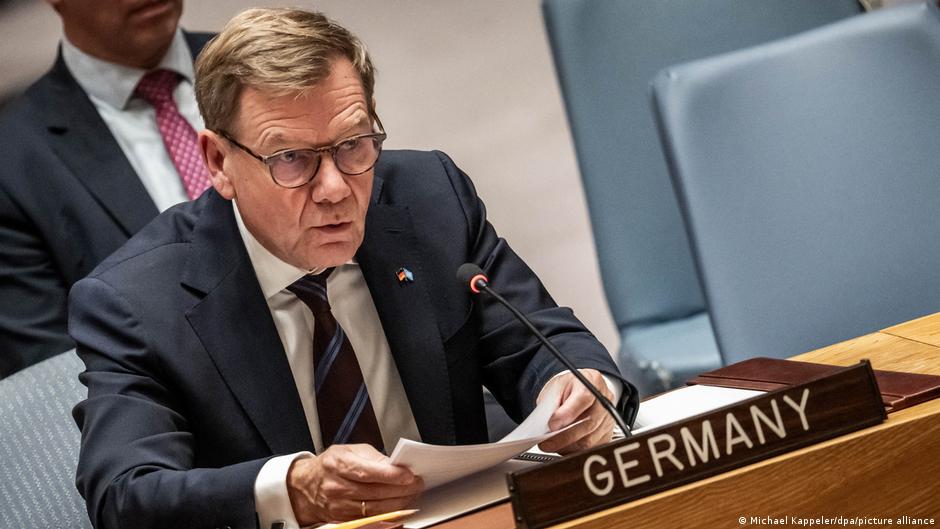
German Foreign Minister Johann Wadephul said a possible appearance by Russian President Vladimir Putin at the December G20 summit in Miami would serve as a “litmus test” of the Kremlin’s willingness to enter serious negotiations with Kyiv, a diplomatic signal that equity investors are likely to read through the lens of sanctions risk, defense spending and energy-market positioning.
Speaking in Ottawa on Friday, September 25, after meeting Canadian Foreign Minister Anita Anand, Wadephul said Germany and other Western allies of Ukraine have repeatedly called on Russian authorities, and Putin personally, to come to the negotiating table. He said the clearest indication that Russia was prepared for substantive talks would be a ceasefire in Ukraine.
For Wall Street, the question is not only whether Putin attends the summit, but whether any diplomatic engagement changes the assumptions built into Ukraine-exposed market sectors. Defense contractors, European industrial suppliers, energy producers and companies sensitive to sanctions enforcement have all traded for years against a backdrop of war risk, fiscal defense commitments and periodic hopes for negotiations.
Investors Watch Defense, Energy and Sanctions Risk
The immediate equity-market read-through is likely to be cautious. The Russian leader’s participation remains uncertain, and Wadephul described it as “very hypothetical,” urging observers to wait for developments in the coming weeks. That uncertainty limits the scope for a clean rotation out of defense-linked equities or into cyclical European assets on diplomacy alone.
Still, traders are likely to monitor stocks with direct or indirect exposure to the conflict narrative. In the defense sector, names such as Lockheed Martin, Northrop Grumman, RTX, BAE Systems, Leonardo and Rheinmetall have been watched closely since Russia’s full-scale invasion of Ukraine as investors assess Western military aid, NATO procurement and ammunition demand. Any credible ceasefire signal could affect sentiment toward future order expectations, even if existing budget commitments remain in place.
Energy shares may also remain in focus. Companies including Exxon Mobil, Chevron, Shell, BP and TotalEnergies are often viewed through the prism of geopolitical supply risk, sanctions enforcement and volatility in crude and natural gas markets. A serious diplomatic opening could ease some war-premium assumptions, while a breakdown in talks or a perceived legitimization of Moscow without concessions could keep investors positioned for elevated political risk.
Trading desks may also watch market breadth and volume in exchange-traded funds tied to aerospace and defense, energy producers, European equities and emerging-market risk. The source article did not provide trading-volume figures or market moves, and any reaction would depend on whether investors see the G20 invitation as a pathway to negotiations or a symbolic gesture with limited policy consequence.
“Russia must negotiate — the sooner, the better,” Wadephul said.
Anand said Putin’s potential participation in the G20 would not be grounds for a boycott. She argued that diplomacy requires leaders to remain at the table and conduct difficult conversations. That stance may matter for investors because it suggests Western governments are not yet treating the invitation itself as a rupture within the alliance, even as political resistance in Washington is building.
Washington Pushback Adds Policy Overhang
U.S. Secretary of State Marco Rubio earlier said the Kremlin leader had been invited to the G20 summit, scheduled for December in Miami. Rubio said the visit would give Putin an opportunity to hold talks with U.S. President Donald Trump and other heads of state and government. The Kremlin has not yet decided how to respond to the invitation.
According to The Washington Post, a bipartisan group of 14 U.S. senators has urged Trump to withdraw the invitation. The senators said Putin bears sole responsibility for Russia’s full-scale war of aggression against Ukraine and warned that allowing him to attend a G20 summit in the United States raises serious concerns about legitimizing and normalizing authorities that continue daily strikes on civilian targets in Ukraine.
The senators also noted that Putin and other members of the Russian delegation are under U.S. sanctions for actions Washington regards as a threat to national security. They argued that if Putin is not isolated from the international community, he will have less motivation to end the war in Ukraine.
That political divide creates a policy overhang for markets. Equity research teams are likely to frame the issue around scenario analysis rather than a single directional call: a ceasefire signal could support a rotation toward European cyclicals and reduce geopolitical risk premia, while continued fighting alongside a high-profile summit appearance could reinforce demand for defense exposure and keep sanctions-sensitive risk elevated.
For now, the investable conclusion is that the G20 invitation has become a diplomatic catalyst rather than a market event with measurable impact. Wadephul’s comments place the ceasefire threshold at the center of the story. Until Moscow responds and Western governments clarify the summit framework, portfolio managers are likely to treat Ukraine-linked trades as headline-sensitive, with defense, energy and sanctions-exposed equities remaining the key screens to watch.