Western Tutors Employed to Educate Putin's Alleged Children Amid Confidential Arrangements
Alleged children of Vladimir Putin are reportedly taught foreign languages by Western governesses under discreet contracts, raising questions on elite education and spending.
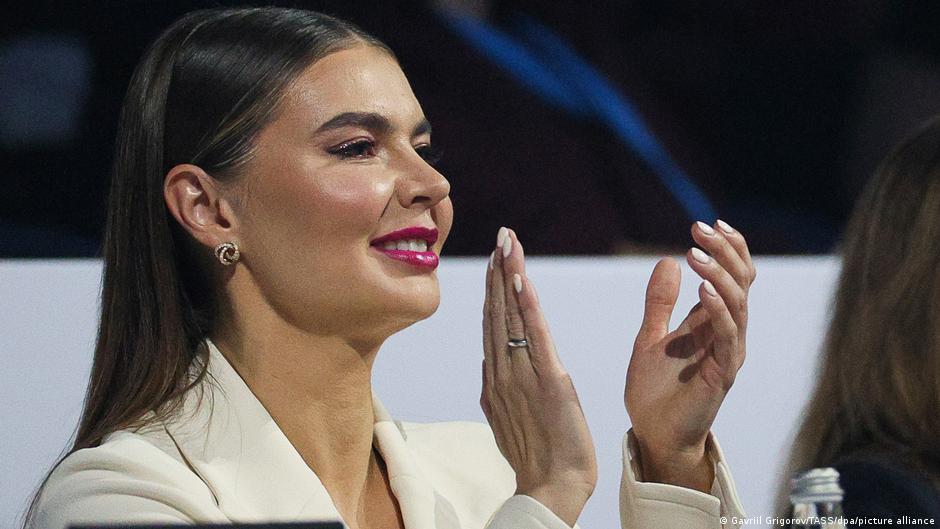
Recent investigative findings reveal that the presumed children of Russian President Vladimir Putin and Olympic champion Alina Kabaeva are educated in foreign languages by governesses from Western countries. This arrangement, spanning from 2017 to 2026, involves educators from the United Kingdom, New Zealand, Germany, Austria, and Ireland.
Education Details and Financial Implications
The governesses are paid substantial salaries, with at least 3.5 million rubles (approximately $45,000) reportedly disbursed in January 2026 alone to three such tutors. Officially, these educators are employed as "leading translators" at the Institute for Professional Retraining of the International Medical Center "Sogaz," a classification that facilitates work visas for highly skilled professionals in Russia.
Documentation obtained indicates that hiring and management of these foreign tutors have been conducted by relatives on Kabaeva's side, specifically her cousins Olesya Fedina and Ekaterina Golovacheva. The children themselves are referred to only as "wards" in official records, with no direct mention of Putin or Kabaeva. One 2019 document references a name "Ivan Fedin," although this does not correspond with the known names of Fedina's son, adding to the ambiguity.
"By the age of four, Ivan should be immersed in a 'language bath' with English speech resembling that of a literate European," a 2019 directive to governesses reportedly stated, underscoring the high linguistic expectations for the children.
Earlier journalistic investigations have suggested the alleged children’s names as Ivan (born 2015) and Vladimir (born 2019), though these remain unconfirmed by official sources.
Operational Environment and Restrictions
The tutors lived on-site at the presidential residence in Valdai, requiring them to maintain strict health protocols, including regular medical examinations. Their duties came with clear restrictions: they were prohibited from imposing political, religious, or ideological views upon the children, and topics related to sexual education and LGBTQ+ issues were expressly off-limits.
Efforts to obtain comments from the involved parties—including the governesses, Kabaeva’s representatives, and Kremlin spokesperson Dmitry Peskov—went unanswered, maintaining a veil of secrecy around these educational arrangements.
While the direct impact on Wall Street equities is indirect, such revelations highlight ongoing concerns about transparency and governance in high-profile Russian affairs, potentially influencing investor sentiment toward Russian-related assets and sectors tied to elite state spending. The revelations also underscore the broader narrative of confidential expenditures within the Kremlin circle, a factor that equity researchers monitor when assessing geopolitical risks and sectoral rotations related to Russia.