Venezuela Government-Opposition Talks in Caracas Signal Potential Political Shift
Direct negotiations between Venezuelan government and opposition to address earthquake aid and election scheduling.
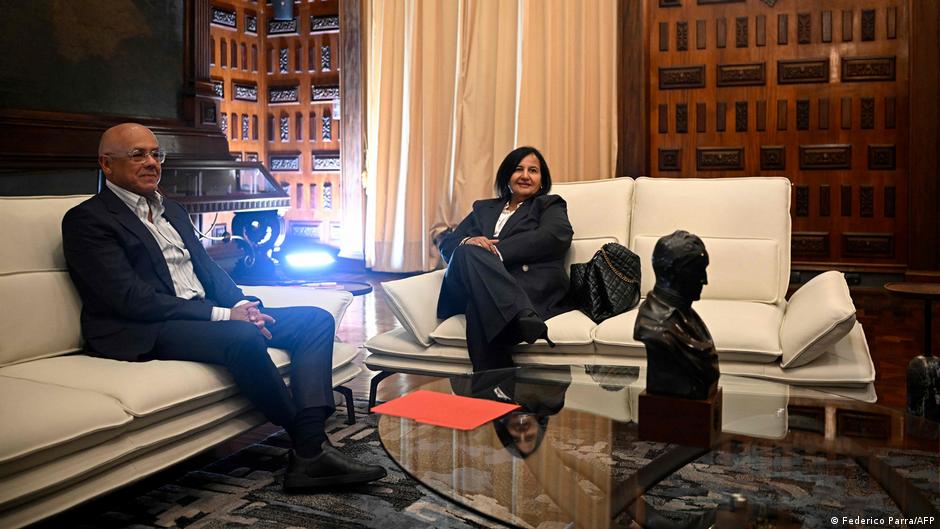
Venezuela is set to witness a significant political development as the government prepares to hold direct talks with opposition representatives in Caracas next week. These discussions aim to address urgent humanitarian needs following a recent earthquake and to outline plans for future elections, potentially impacting both domestic stability and international relations.
Negotiation Details and Political Context
The upcoming negotiations mark the first face-to-face dialogue between Venezuela's government and opposition factions in several years. Jorge Rodríguez, the head of the National Assembly and government chief negotiator, announced on August 1 that the opposition will be represented by Dinora Figuera. Figuera, formerly holding Rodríguez’s previous position, fled Venezuela in 2018 due to persecution fears and now leads a center-right opposition bloc recognized by Washington but rejected by former president Nicolás Maduro.
Washington has expressed support for these talks, which are seen as an opportunity to restore democratic institutions and strengthen the electoral system in Venezuela. The discussions will likely focus on election scheduling and mechanisms to ensure transparency and fairness.
Recent elections in 2024 declared Nicolás Maduro the winner; however, the opposition has disputed these results, claiming that their candidate, Edmundo González Urrutia, secured the majority of votes. High-profile opposition figure and Nobel Peace Prize laureate María Corina Machado, an ally of González and currently in exile, has pledged to return but was notably excluded from the negotiations.
"The talks represent a critical step toward addressing Venezuela’s political crisis and humanitarian challenges," said a political analyst familiar with the process.
Implications for Financial Markets and Sector Rotation
The announcement of these negotiations is already influencing market sentiment, particularly among investors focused on Latin America and emerging markets. Stocks of companies with exposure to Venezuela’s energy and mining sectors may experience increased trading volumes as market participants anticipate potential easing of political tensions and reforms that could improve economic stability.
Sector rotation could occur as renewed political dialogue suggests the possibility of greater economic openness. Equity research analysts are closely monitoring developments to reassess risk profiles and investment prospects tied to Venezuela and the broader region.
Furthermore, commodities linked to Venezuela, such as crude oil, might see price volatility depending on the pace and outcomes of these political talks. Wall Street traders are advised to factor in these geopolitical developments when adjusting portfolios sensitive to Latin American geopolitical risk.
Overall, the Venezuelan government-opposition meetings represent a noteworthy event with the potential to reshape political dynamics and market expectations in the near term.