Poland Court Crisis Raises Political Risk for Warsaw Equities
A confrontation over Poland’s Constitutional Tribunal has triggered protests and sharpened investor focus on domestic political risk.
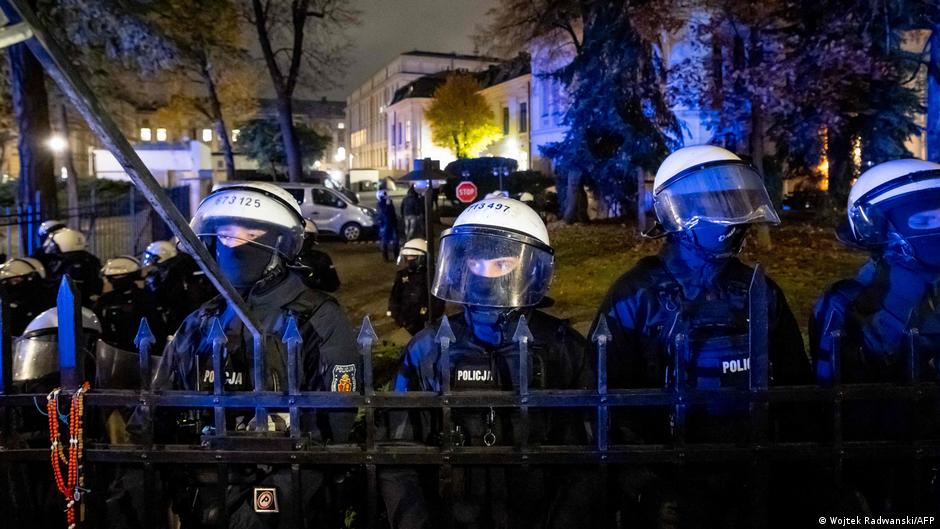
A rapidly escalating confrontation over Poland’s Constitutional Tribunal is adding a fresh political-risk variable for investors in Warsaw-listed equities, particularly companies whose valuations are sensitive to government policy, regulation and foreign capital flows.
Police cordoned off the tribunal’s building in Warsaw after demonstrations gathered outside. The protests followed a decision by Anna Korwin-Piotrowska, one of the tribunal’s 15 judges, to suspend chairman Bogdan Święczkowski and deputy chairman Bartłomiej Sochański from their duties for one month.
The decision, published on the tribunal’s website on Friday evening, October 30, accused the two officials, among other things, of preventing judges appointed by the Sejm in 2026 and subsequently sworn in from participating in cases. Korwin-Piotrowska cited a 2016 law governing the tribunal’s organization and procedures, saying it gave the longest-serving judge authority to act. She also called a general meeting of tribunal judges for November 3.
For equity traders, the immediate issue is not a disclosed change in corporate earnings or fiscal policy, but whether the institutional conflict develops into a broader constitutional crisis. The source material provides no stock-price or trading-volume figures, leaving investors to assess the event through political-risk premiums rather than confirmed market moves.
Competing Claims Deepen Institutional Uncertainty
A message published through the state body’s account on X alleged that its website had been “illegally seized.” The post maintained that Święczkowski remained chairman and Sochański remained his deputy, denied that Korwin-Piotrowska was a Constitutional Tribunal judge and described the actions as a criminal coup. The tribunal’s website, however, said the X account was not connected with the institution.
Sochański told the newspaper Rzeczpospolita that Korwin-Piotrowska had telephoned him and said she was now running the tribunal. He said he had no further information and called the situation unprecedented.
“I do not know of any legal provision that would permit such interference in the independence of the tribunal or an individual judge. A coup is taking place,” Sochański said.
Prime Minister Donald Tusk supported the temporary suspension. Tusk and the Sejm are in opposition to President Karol Nawrocki. In a post on X, the prime minister said restoring the rule of law was a duty after years of lawlessness under the Law and Justice party, known as PiS. He described the process as difficult and sometimes painful but said decisive action was necessary.
The clash places investors between competing narratives: the government presents its actions as an effort to restore lawful institutions, while the tribunal’s disputed leadership and its allies characterize the move as an unlawful seizure of authority. Prolonged uncertainty could matter most for regulated and domestically focused sectors, where political decisions have a direct bearing on operating conditions. Banks, insurers, utilities and state-influenced enterprises would therefore be natural areas for traders to monitor for changes in turnover, volatility and foreign participation.
President Returns as Confrontation Intensifies
Nawrocki, who was traveling to Senegal on the evening of October 30, said he turned his aircraft around because of events surrounding the tribunal. After returning to Poland, he met Święczkowski and Supreme Court First President Zbigniew Kapiński. Nawrocki and Kapiński then entered the tribunal building, according to presidential chief of staff Paweł Szefernaker.
Nawrocki entered despite Korwin-Piotrowska saying she was prepared to meet the president only at the Presidential Palace. Maciej Berek, a tribunal judge elected by the Sejm but not admitted to take the oath by Nawrocki, said the president had chosen a path of physical confrontation. He also alleged that people identifying themselves as presidential office employees tried to obtain keys to rooms in the tribunal.
Warsaw police said Prosecutor General and Justice Minister Waldemar Żurek had asked officers to pay particular attention to security during protests outside the building. Police also received a letter from one tribunal judge reporting a potential threat to life and health.
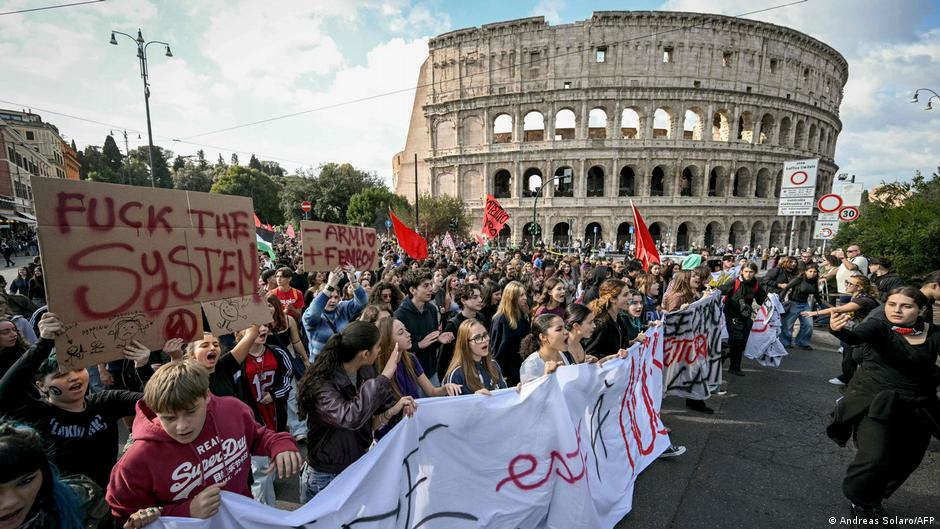
Officers cordoned off the site but said police were not stationed inside. Authorities reported that demonstrators threw dangerous objects at officers. Three protesters were detained after climbing over a barrier and entering the tribunal grounds.
Long-Running Dispute Becomes a Market Risk Test
The confrontation has developed over several months and reflects the wider struggle between Tusk’s government and Nawrocki’s Law and Justice camp. It began after the president refused to accept the oaths of new judges elected by the new parliament. Święczkowski also refused to recognize their authority or allow them to hear cases.
The government considers the tribunal illegitimate because judges chosen by the previous authorities remain on it. The governing coalition and judges supporting its position regard Nawrocki’s actions as unlawful obstruction of the institution’s work.
Adding another legal front, Żurek said on October 30 that he had submitted five applications to the Constitutional Tribunal seeking the removal of immunity. He said the applications concerned, among others, Święczkowski and Sochański.
Equity research desks will now be watching whether the November 3 meeting clarifies control of the tribunal or produces parallel claims to authority. With no verified evidence in the source of unusual trading volumes or stock-specific price reactions, the investable signal remains political: a swift institutional settlement could contain the risk premium, while a prolonged standoff may increase scrutiny of Polish assets and encourage rotation toward companies with less exposure to domestic regulation.