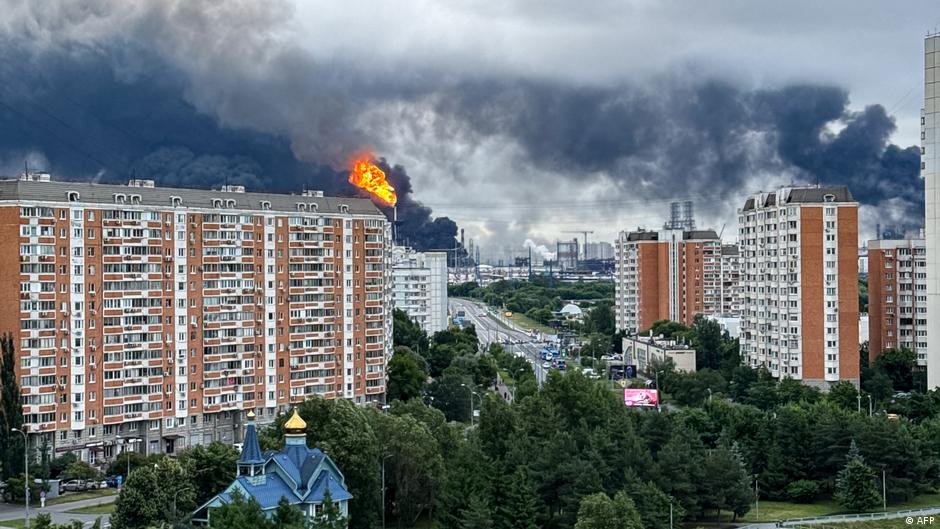
Ukraine Strikes Put Transport and Industrial Risk in Investor Focus
Deadly Russian attacks across Ukrainian cities damaged rail, warehouse and industrial assets, sharpening equity concerns over regional disruption.
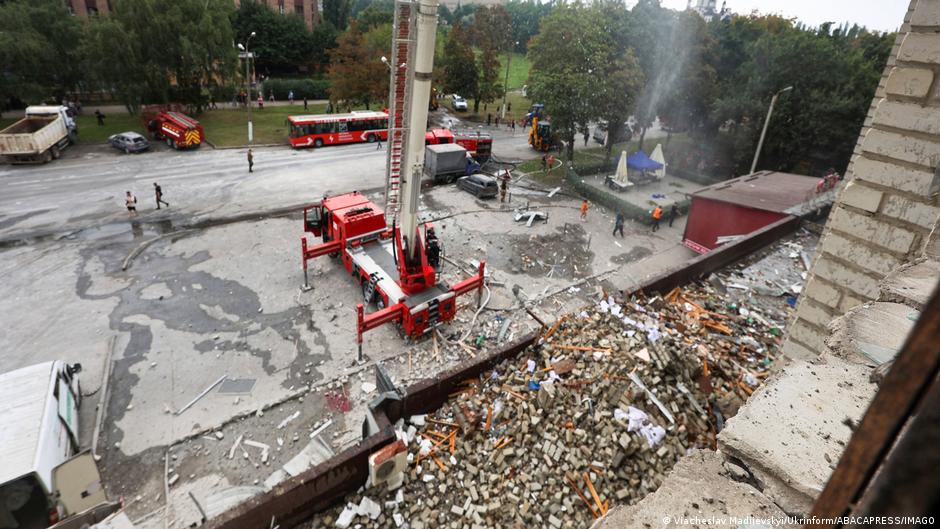
Russian attacks across Ukraine killed civilians and damaged transport, commercial and industrial property on October 29, putting renewed attention on the operational risks facing businesses and infrastructure in the country. For equity investors, the reported strikes highlight potential exposure across logistics, rail transport, warehousing, manufacturing and other sectors dependent on uninterrupted physical assets.
Two 15-year-old girls were killed when a Russian strike hit central Chernihiv with a Banderol, or S8000, munition, described as a compact hybrid of a cruise missile and a jet-powered attack drone. At least 25 people were injured, including four children: a 10-month-old girl, a 10-year-old girl and boys aged 16 and 17, according to regional military administration head Viacheslav Chaus.
“Two children — a brother and sister — are in serious condition. Eight people in total are currently in hospitals. The others received medical assistance at the scene or are being treated as outpatients,” Chaus wrote.
Ukraine’s State Emergency Service said homes, shops and cars were damaged on an ordinary street and described the attack as having no military purpose. Chernihiv declared October 30 a day of mourning.
Rail, Warehousing and Industrial Assets Damaged
The heaviest reported loss of life occurred in Dnipro, where a drone strike on the railway station killed at least 14 people and injured another 14 on October 29. Damage to a rail hub is especially relevant to assessments of Ukraine’s transport network, given the importance of railway infrastructure to passenger mobility and the movement of goods.
In Kremenchuk, three residents were killed and 25 were injured in another Russian attack, according to Ukraine’s emergency service. In Zaporizhzhia, two men aged 41 and 66 were injured and received medical assistance. Four passenger cars and an open area caught fire, while a warehouse building, four cars and four buses were damaged.
Those incidents broaden the potential economic impact beyond the immediate human toll. Damage involving stations, warehouses, buses, trucks and commercial vehicles can disrupt supply chains and raise replacement, repair and insurance costs. The source reports did not identify affected listed companies, provide estimates of financial losses or disclose trading volumes, leaving investors without a direct basis for attributing the damage to specific publicly traded stocks.
In Kharkiv, a Russian missile struck the city’s Slobidskyi district on the evening of October 29, the emergency service said. Fires broke out in a production building and on adjacent land, covering a combined area of 400 square metres. At another location, remnants of various materials burned across 80 square metres, and two trucks were damaged.
Authorities did not specify why the explosion caused the fire or what had been stored in the production building. Kharkiv Mayor Ihor Terekhov said the Slobidskyi district was struck with a Banderol munition.
Equity Analysis Confronts Limited Company-Level Disclosure
Kyiv was also targeted during the evening with a Russian ballistic missile, according to Mayor Vitali Klitschko. A strike hit warehouse buildings in the Darnytskyi district and started a fire. In the Dniprovskyi district, missile debris burned in the courtyard of a residential complex.
Klitschko said a blast wave shattered windows in one residential building. At another address in the Dniprovskyi district, windows and cars in a residential courtyard were damaged. A shop building near the residential complex where missile debris fell was partially destroyed. The Kyiv city military administration said one person was killed in the attack.
From an equity-research perspective, the reports reinforce the difficulty of valuing Ukrainian operating exposure while attacks can simultaneously affect logistics nodes, inventory storage, production sites and local retail property. Any sector rotation or stock-specific response would require verified information about ownership, business interruption and repair costs. No share-price movements, trading-volume data, corporate disclosures or analyst estimate revisions were included in the reported information.
Earlier on October 29, Ukrainian President Volodymyr Zelenskyy said in his daily address that intelligence indicated Russia was preparing to attack Ukraine again with ballistic missiles. The warning adds to uncertainty around the duration and geographic breadth of infrastructure risk.
Russia’s Defence Ministry, meanwhile, said on Telegram that Russian forces had used drones that day to strike Ukrainian port infrastructure and vessels it alleged were operating in the interests of Ukraine’s armed forces. It also reported a strike on a temporary Ukrainian troop deployment point in the Kharkiv direction and said Russian forces had identified and destroyed enemy FPV-drone control points in the Dnipropetrovsk direction.
The competing military accounts do not resolve the central question for markets: whether the latest damage will remain localised or translate into wider interruptions to transport, production and distribution. Until companies or authorities provide asset-level financial assessments, investors are likely to focus on disclosures from businesses with Ukrainian logistics, warehousing, industrial and retail exposure rather than infer precise stock impacts from the attacks alone.