U.S. Strike on Caribbean Vessel Adds Geopolitical Risk for Defense and Shipping Stocks
The reported attack that killed four people extends a U.S. campaign in the Caribbean, putting security, energy and maritime names back in focus.
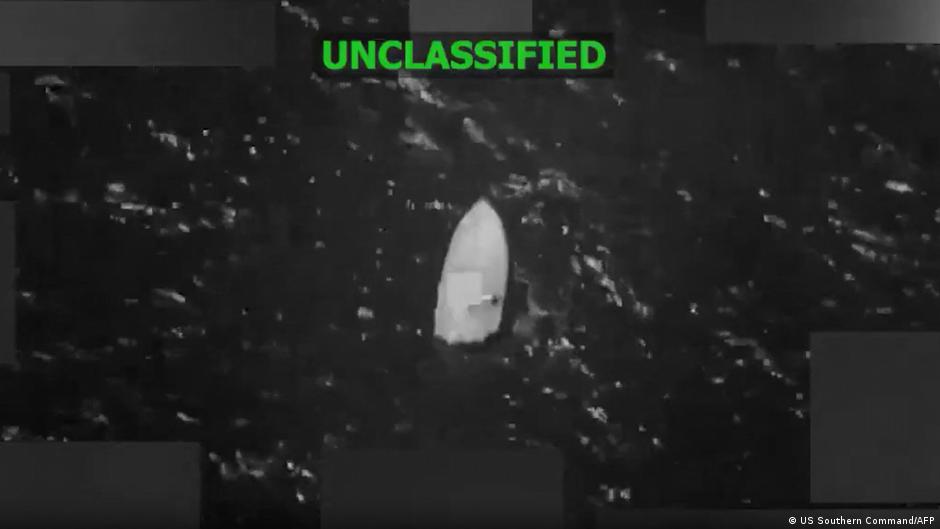
U.S. forces reported a new strike on a vessel in the Caribbean Sea that they said was carrying drugs, an operation that killed four people and added another point of geopolitical tension for investors tracking defense, shipping and regional risk exposure.
U.S. Southern Command said on Saturday, September 19, that American military personnel had carried out a “lethal strike” against a speedboat that was traveling along routes used for illegal drug transportation in the Caribbean Sea. The command said intelligence had confirmed the vessel’s involvement in drug trafficking and that four “narcoterrorists” were killed in the operation.
“Credible intelligence confirmed the vessel’s involvement in drug trafficking,” the U.S. military said, adding that four people were killed in the operation.
Video published on X showed a moving vessel that then disappeared in a bright flash. The U.S. side did not present evidence proving the vessel’s involvement in drug trafficking.
For Wall Street, the immediate relevance is less about a single engagement than about the persistence of a military campaign in a commercially sensitive region. The Caribbean is not a central global chokepoint on the scale of the Strait of Hormuz or the Red Sea, but sustained U.S. kinetic operations can still affect investor assumptions around defense spending, maritime insurance, regional security costs and the risk premium applied to companies with exposure to Latin America and Caribbean logistics.
Defense and Maritime Names Return to the Risk Screen
Defense contractors and surveillance technology suppliers are the clearest equity groups likely to draw attention from traders when U.S. military activity expands or becomes more frequent. The source report does not identify the weapons, aircraft, ships, surveillance platforms or contractors involved in the strike, so there is no basis to assign the operation to any specific listed company. Still, equity desks often treat recurring overseas operations as a sentiment factor for large-cap defense names, particularly those associated with intelligence, surveillance, reconnaissance, precision munitions and maritime monitoring.
That does not automatically translate into a durable bid for the sector. Investors typically distinguish between episodic operations and programs that lead to procurement growth, supplemental funding or confirmed contract flow. In this case, the reported strike adds to a broader operating backdrop rather than providing a company-specific catalyst. Equity research teams would likely frame the event as supportive of the defense-risk narrative, while noting that no incremental budget authorization or procurement detail was disclosed in the source account.
Shipping, cruise and logistics stocks may also receive renewed scrutiny if the tempo of operations raises questions about navigational risk, insurance costs or regional routing. The report describes the target as a speedboat allegedly moving along drug-trafficking routes, not a commercial vessel, and it does not indicate any disruption to merchant shipping. As a result, the market impact on listed carriers or cruise operators would be expected to depend on whether investors see the campaign as isolated to suspected trafficking craft or as a sign of broader instability in Caribbean waters.
Campaign Totals Raise Legal and Political Risk
The Associated Press, cited in the source report, said that with this case included, the total number of people killed in U.S. military strikes against vessels of alleged drug traffickers in the Caribbean Sea had reached at least 231. According to the agency’s count, 69 such strikes have been carried out as part of a campaign that has continued for more than a year.
Those figures matter for markets because they suggest a recurring policy instrument rather than an isolated military action. A campaign of that scale can feed into sector rotation when investors reassess exposure to defense, border security, surveillance and maritime services. It can also raise headline risk for companies tied to Caribbean trade, energy logistics or regional infrastructure, even when no direct operational impact has been reported.
The political backdrop is also unusually explicit. On October 23, 2025, at a White House press conference, U.S. President Donald Trump said American military forces would “kill people” who bring drugs into the country from Venezuela. That statement places the campaign within a wider U.S.-Venezuela enforcement and security posture, a theme that investors may connect to sanctions risk, energy-market sensitivity and Latin American asset pricing.
Energy traders may watch the issue because Venezuela remains a politically sensitive oil producer, though the source report does not mention oil output, sanctions changes, export restrictions or price moves. Any equity-market read-through to integrated oil companies, refiners or tanker operators would therefore be indirect and contingent on subsequent policy action rather than the reported strike itself.
Legal Scrutiny Complicates the Market Narrative
The campaign also carries a legal dimension that can affect how institutional investors assess policy durability. On October 31, 2025, Volker Türk, the United Nations High Commissioner for Human Rights, said U.S. attacks on vessels “allegedly linked to drug trafficking” violated international law. Türk called for immediate, independent and transparent investigations into the attacks.
That criticism introduces a governance and reputational layer to the trade. Defense and security stocks can benefit from heightened threat perceptions, but legal controversy around the use of force can limit enthusiasm among investors with environmental, social and governance mandates or strict human-rights screens. It may also become relevant for companies if congressional oversight, litigation or allied-government pressure changes the scope or conduct of operations.
The lack of publicly presented evidence in the reported strike is another factor investors may follow. The U.S. military said credible intelligence confirmed the vessel’s role in drug trafficking, but the source report states that the American side did not provide proof. In market terms, that uncertainty does not point to a direct earnings effect, but it increases the chance of political dispute and policy volatility.
Trading volumes in directly affected equities would depend on how U.S. investors price the headline during the next active session, particularly across defense primes, maritime security providers, shipping operators and Latin America-linked exchange-traded funds. The source article provides no market data, stock moves or broker commentary, so any equity impact remains a watch item rather than a confirmed market reaction.
The key conclusion for Wall Street is that the Caribbean campaign remains active, lethal and legally contested. For now, the latest reported strike is a geopolitical-risk headline with potential sector implications, not a disclosed company-specific catalyst. Investors will be watching whether the pattern leads to higher defense demand, greater maritime-risk pricing, new sanctions pressure around Venezuela, or a sharper legal challenge to the U.S. campaign.