Houthi Missile Attempt on Riyadh Puts Energy and Shipping Stocks in Focus
Saudi officials said a ballistic missile aimed at Riyadh was intercepted, adding pressure to oil routes already strained by Red Sea and Hormuz disruptions.
Saudi Arabia said Yemen’s Iran-aligned Houthi movement attempted to strike Riyadh with a ballistic missile overnight, an escalation that could sharpen Wall Street’s focus on energy producers, refiners, tanker operators and defense-linked equities when markets assess geopolitical risk in the Gulf.
The Saudi-led Coalition to Restore Legitimacy in Yemen said on Saturday, September 19, that Houthi forces had for the first time attempted to target the Saudi capital with a ballistic missile. Brig. Gen. Turki al-Maliki, the coalition’s official spokesman, said on X that the missile had been intercepted and destroyed.
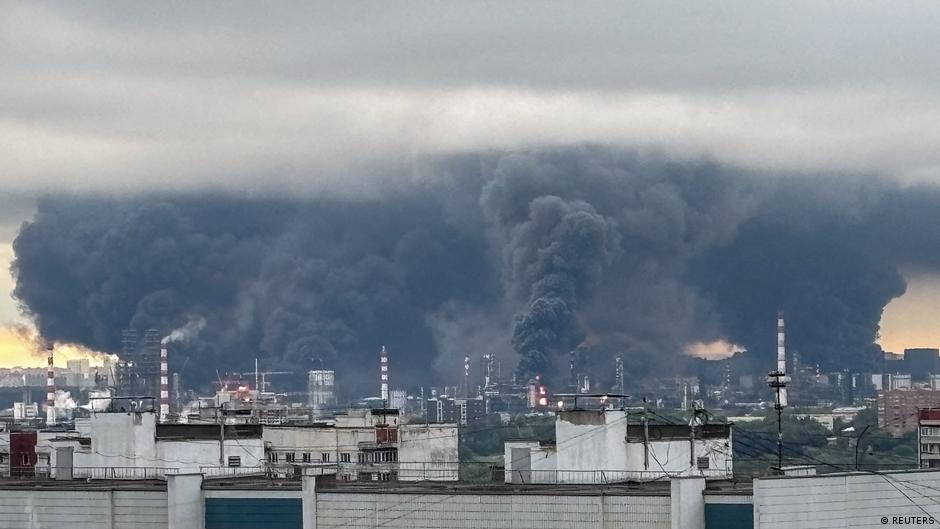
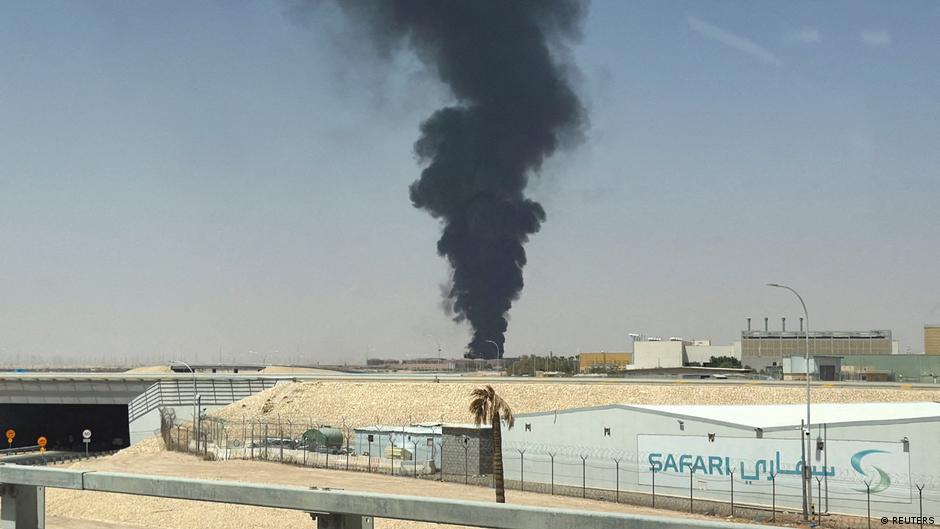
Air-raid sirens were reported in Riyadh overnight, and some residents heard an explosion. Saudi authorities reported no casualties or damage. Later, a column of smoke was seen near the airport. AFP, citing its correspondent, reported that a fuel tank belonging to Saudi Aramco was burning and that the fire was extinguished. It remained unclear whether the incident was connected to the attempted missile strike. Aramco did not respond to journalists’ request for comment.
Saudi officials said the missile was intercepted and destroyed, while the Houthis claimed attacks on “important facilities” in Riyadh and Aramco infrastructure in Yanbu.
For U.S. equity investors, the immediate question is whether the latest incident reinforces a rotation into oil producers and defense exposure while increasing pressure on refiners and transport-sensitive sectors. The report adds another risk point around Saudi energy infrastructure, Red Sea shipping lanes and alternative export routes that have become more important after the war involving the United States, Israel and Iran significantly complicated tanker passage through the Strait of Hormuz.
Energy Infrastructure Risk Returns to the Tape
Saudi authorities also said the Houthis had attempted to attack civilian infrastructure, including sites in Yanbu, the Red Sea port city that is critical to Saudi export logistics. The Houthis said they carried out strikes using drones, cruise missiles and ballistic missiles against important sites in Riyadh and Aramco infrastructure in Yanbu.
That makes Aramco the central company-specific name in the story, even though its main listing is in Saudi Arabia rather than on a major U.S. exchange. On Wall Street, the read-through is likely to fall on large integrated oil companies such as Exxon Mobil and Chevron, oilfield services firms, tanker operators, and refiners with exposure to crude flows and feedstock pricing. The article’s facts do not establish any market move, but the pattern of attacks described in the region is the kind of catalyst that can lift trading volume across energy and shipping baskets as investors reprice supply-chain risk.
Financial Times reported on September 11 that Saudi Arabia had halted operations on the East-West pipeline, which ends at Yanbu, after a drone attack launched from Iraqi territory. On September 18, Bloomberg reported that Saudi Aramco had notified at least two European refineries that it would not supply them with oil in October. According to Bloomberg, the pipeline was expected to be partially restarted within days and fully restored within about a month and a half.
The East-West pipeline has taken on additional significance because Saudi Arabia increased exports through it after tanker passage through the Strait of Hormuz became substantially more difficult. Any further disruption around Yanbu therefore matters beyond the local security picture: it affects the market’s assumptions about Saudi Arabia’s ability to reroute exports when Hormuz is constrained.
Shipping Lanes and Sector Rotation
The recent pressure has not been limited to pipelines. In recent weeks, the route’s capacity has declined because of Houthi attacks on Saudi tankers in the Red Sea. In August, about 2.5 million barrels per day were shipped through Yanbu, the lowest level since 2013, according to the International Energy Agency.
Reuters and AFP reported on September 11 that the Houthis had seized strategically important islands in the Bab el-Mandeb Strait, which connects the Red Sea with the Arabian Sea. Roughly 12% of global cargo traffic passes through the strait, including oil trade. The route has become especially important for Saudi Arabia after the closure of Hormuz. The Houthis said shipping through Bab el-Mandeb was “safe for all commercial vessels except Saudi ones.”
News also emerged the previous day that the Houthis had taken control of the port of Mokha on Yemen’s coast along the Bab el-Mandeb Strait. Reuters reported that the Houthi advance was being directed by Iran’s Islamic Revolutionary Guard Corps. Sources in Tehran said Iran was seeking to open a new front in its confrontation with the United States.
For equity desks, that combination points to a wider market-impact map than crude alone. Higher perceived risk to Red Sea and Gulf logistics can influence tanker rates, insurance costs, refining margins, airline fuel expectations and broader inflation assumptions. In practical trading terms, that can increase volume in energy exchange-traded funds, shipping names, defense stocks and rate-sensitive sectors as investors assess whether geopolitical pressure will remain contained or become a more persistent supply shock.
Defense and aerospace companies may also draw attention after Saudi officials said on September 16 that the Saudi-led coalition intercepted a drone allegedly launched by the Houthis toward Mecca, a city holy to Muslims. The Yemeni rebels denied the accusation. The latest Riyadh missile claim adds to that sequence of aerial threats and may support investor focus on missile defense, air defense systems and regional security spending, though the source article does not identify any defense contractors or procurement decisions.
The equity research view is therefore likely to separate immediate operational facts from risk premium. The confirmed Saudi statement is that the Riyadh missile was intercepted and destroyed, with no reported casualties or damage. The unresolved issues are whether the reported Aramco fuel-tank fire near the airport was linked to the attack, how quickly the East-West pipeline returns to full capacity, and whether Houthi control around Bab el-Mandeb leads to further disruption for Saudi-linked shipping.
Until those questions are answered, Wall Street may treat the incident as another input into the same trade: geopolitical risk supporting energy and defense exposure while weighing on transport, refining certainty and companies sensitive to oil-price volatility.