Drone Attack on Moscow Region Puts Russian Energy and Transport Assets in Focus
The reported strikes killed two people, injured at least six and disrupted airports, while fires were reported at a refinery and warehouse complex.
A large-scale drone attack on Moscow and the surrounding region on Sunday placed Russian energy, logistics and transport infrastructure back in focus for investors assessing geopolitical risk across markets exposed to the war in Ukraine.
Two people were killed and at least six were injured in the Moscow region as a result of a mass drone attack, regional governor Andrey Vorobyov wrote on Telegram on the morning of Sunday, September 20. Vorobyov said 249 Ukrainian unmanned aerial vehicles had been shot down over the region.
The incident adds another data point for traders monitoring the vulnerability of physical infrastructure around Moscow, including refining capacity, power assets, warehouse space and airports. While the Russian source report did not provide financial-market data, stock moves, trading volumes or company-level damage assessments, the locations cited are the types of assets equity investors typically watch for potential effects on fuel supply, logistics costs and risk premiums.
Energy and logistics assets cited in reports
According to Vorobyov, a warehouse complex caught fire in Sofyino after the attack. The anonymous Telegram channel VChK-OGPU claimed that a logistics complex of about 850,000 square meters was fully engulfed in flames. That claim was attributed to the channel in the source report and was not accompanied by a company name or publicly available financial estimate.
Vorobyov also said drones had hit and caused fires in three apartment buildings and one private house. The civilian damage underscores the broader operational risk around the region, where logistics and residential areas can sit near transport routes and industrial zones.
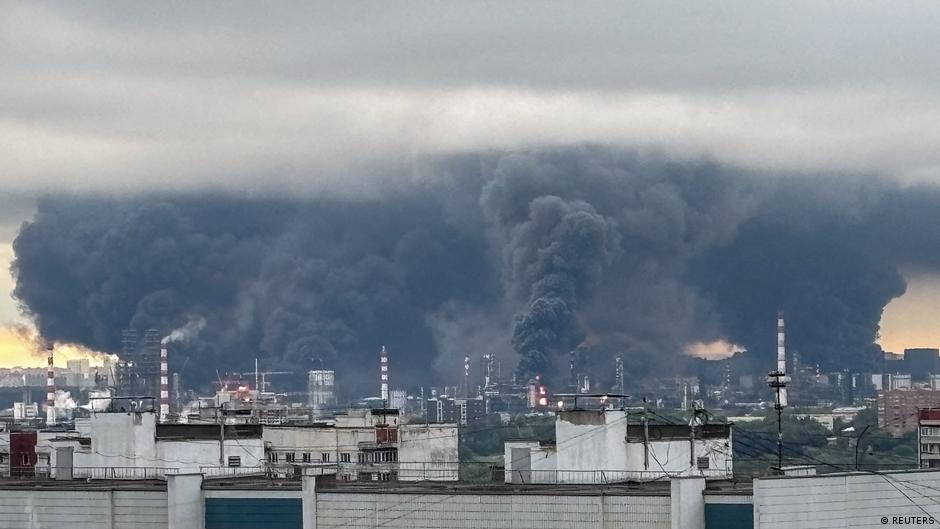
Moscow Mayor Sergey Sobyanin said 186 drones had been shot down on approach to Moscow. He added that an object on the territory of the Moscow oil refinery had been damaged and that there were no casualties there.
“An object on the territory of the Moscow oil refinery was damaged. There are no casualties,” Sobyanin said, according to the source report.
VChK-OGPU reported that the oil refinery in Moscow’s Kapotnya district was burning. The same refinery had already been attacked in June, according to the source article. For market participants, repeat incidents at refining sites are significant because even limited damage can affect maintenance schedules, product flows and expectations around supply resilience, though the source did not state whether production was halted or quantify any impact.
Airport disruption broadens the market lens
The source report also said that Moscow’s Vnukovo, Domodedovo and Zhukovsky airports suspended operations. Airport pauses during drone alerts can matter beyond aviation operators because they can affect cargo movement, passenger flows and business continuity across the wider Moscow economy. The report did not specify the duration of the suspensions or any listed companies directly affected.
In Lyubertsy, drones attacked a thermal power plant, VChK-OGPU claimed. In Kotelniki, a drone hit a residential building, according to the same Telegram channel. The channel Ostorozhno, Novosti, citing local residents, reported a fire in a residential complex in Kotelniki.
In Istra, drone debris damaged an apartment in a residential building, municipal district head Tatyana Vitusheva said. These details point to a geographically dispersed incident across the Moscow region, involving energy, housing, warehousing and transport-related sites.
For Wall Street desks, the immediate equity-market read-through would likely center on sector risk rather than a single confirmed listed issuer. Energy traders may watch any follow-up on the Moscow refinery for implications for Russian fuel processing. Transport and logistics analysts may look for confirmation of damage at the Sofyino warehouse site and the extent of airport disruption. Defense and aerospace investors may also monitor the scale of drone activity and air-defense claims as part of the broader war-related demand backdrop.
The article’s confirmed official claims include two deaths, at least six injuries, 249 drones shot down over the Moscow region according to Vorobyov, and 186 drones shot down on approach to Moscow according to Sobyanin. Other claims, including the scale of the warehouse fire, the refinery fire in Kapotnya, the Lyubertsy thermal power plant attack and the Kotelniki residential strike, were attributed in the source to Telegram channels.
Without company statements, exchange filings or official estimates of operational downtime, investors have limited basis for a precise earnings impact. Still, the incident is likely to keep attention on geopolitical risk premia tied to Russian infrastructure, particularly in energy processing, logistics real estate and aviation-linked activity.