White House Oleshky Talks Put Defense and Energy Stocks in Focus
Melania Trump will meet Russian and Ukrainian representatives as investors assess whether a localized ceasefire could ease geopolitical risk.
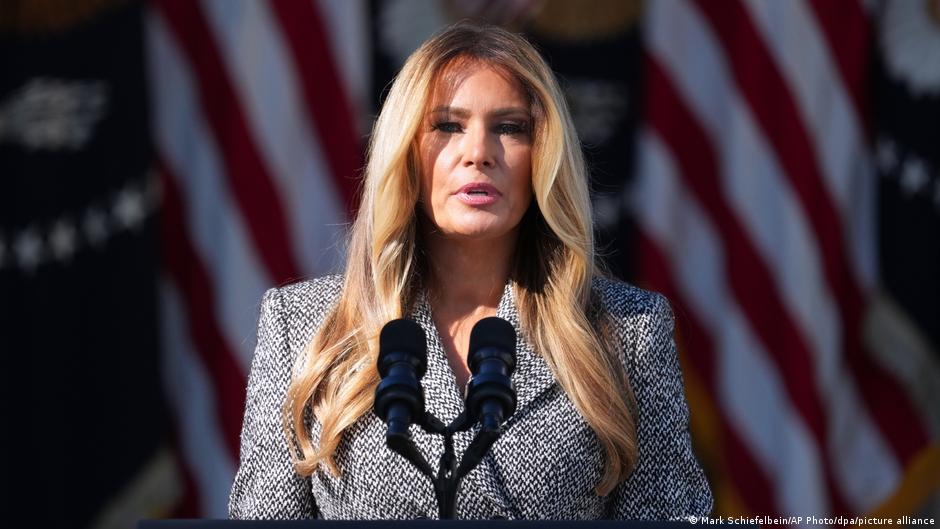
Wall Street investors will watch an unusual White House diplomatic initiative this week as US first lady Melania Trump prepares to discuss a ceasefire in the Russian-occupied city of Oleshky with representatives from Ukraine and Russia.
The talks concern the city in Ukraine’s Kherson region, referred to as Aleshki in Russian, and follow a temporary cessation of hostilities that enabled a humanitarian operation. The first lady is also scheduled to deliver an official statement on the results of that mission at 11 a.m. Eastern Time on Thursday, November 5, according to an announcement posted on the White House’s official website on Tuesday, November 3.
The White House announcement did not specify whether the meeting with the Ukrainian and Russian delegations would take place on Thursday or on a different date.
Defense, energy and risk-sensitive shares in view
For equity markets, the immediate question is whether the engagement remains a narrowly defined humanitarian initiative or provides evidence that localized agreements can be negotiated between Moscow and Kyiv. The source material reports no market reaction, stock-price moves, changes in trading volume or equity-research recommendations linked to the planned meeting. Any implications for Wall Street therefore remain prospective rather than confirmed.
Defense contractors are among the most directly exposed groups to shifts in investor expectations surrounding the war. A durable reduction in hostilities could alter assumptions about future demand for weapons and military replenishment, while the limited geographic and temporary nature of the Oleshky ceasefire may encourage investors to avoid treating the event as a broader peace signal.
Energy shares may also draw attention because the conflict has influenced assessments of European supply security and geopolitical risk. However, the announced discussions concern a specific city and nearby areas, not energy infrastructure, sanctions or commodity exports. The information released so far therefore offers no factual basis for revising oil, natural-gas or company earnings forecasts.
Airlines, industrial companies and other economically sensitive stocks can respond to changes in geopolitical risk, while investors may also monitor the broader rotation between defensive and cyclical sectors. Still, no details have been disclosed about sanctions relief, reconstruction commitments, trade measures or a wider settlement that could directly affect listed companies.
Delegations expected in Washington
According to the RBC-Ukraine news agency, the Ukrainian side will be represented at the White House by David Arakhamia, head of the Servant of the People parliamentary faction, and Dmytro Lubinets, the Ukrainian parliament’s commissioner for human rights.
The Russian delegation is expected to include Kirill Dmitriev, a special representative of Russian President Vladimir Putin, and ombudsperson Yana Lantratova. Their participation places humanitarian and political representatives in the same Washington discussion, although no negotiating agenda beyond the Oleshky ceasefire has been reported.
Moscow and Kyiv describe Melania Trump as a key intermediary in arranging the temporary cessation of hostilities.
The ceasefire in Oleshky and surrounding districts began early on October 27 and ended at 10:59 p.m. on November 1. It resulted from agreements reached by the parties with the involvement of the US first lady.
During the humanitarian operation, hundreds of civilians were evacuated from the city, and humanitarian supplies were delivered there. Melania Trump’s Thursday address is expected to review the outcome of that mission, potentially providing further information about the operation and the diplomatic contacts that supported it.
Equity research awaits evidence of a broader process
From an equity-research perspective, the meeting’s significance depends on whether it produces another temporary arrangement, extends protection to additional areas or remains focused solely on reviewing the completed mission. None of those possible outcomes has yet been announced.
Investors looking for a tradable shift would typically need evidence that the talks affect the duration or geographic scope of hostilities, Western sanctions, government defense spending, commodity flows or rebuilding activity. The current announcement does not address those issues and names no public companies, contracts or financial commitments.
Trading desks may nevertheless monitor defense, energy and European-exposed equities around the first lady’s statement for signs that investors are assigning a lower geopolitical-risk premium. Any accompanying increase in trading volumes or sector rotation would need to be observed in market data after further details emerge; the source provides no such figures.
The White House event is therefore best viewed as a diplomatic catalyst with uncertain market transmission. Its confirmed importance lies in the humanitarian results in Oleshky and the planned engagement of Russian and Ukrainian representatives. For Wall Street, a lasting sector-level impact would require indications that the localized ceasefire can develop into a wider or more durable negotiating framework.