Spain Rail Disaster Raises Market Scrutiny After Transport Chief Quits
Óscar Puente’s resignation intensifies investor focus on Spanish rail safety, infrastructure spending and transport-sector risk.
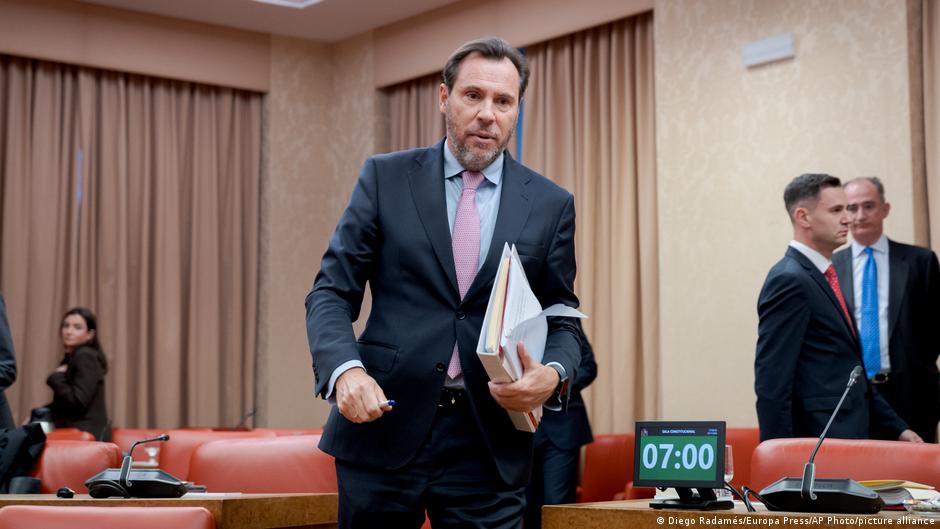
Spain’s transport minister, Óscar Puente, has resigned following a high-speed rail disaster near Toledo that killed 69 people, a political shock likely to sharpen equity-market scrutiny of the country’s transport infrastructure and rail-safety investment.
Puente announced his departure on Tuesday evening, November 3, while appearing before a parliamentary commission in Madrid. He also said he would not participate in the country’s early parliamentary elections. His decision came almost a week after the collision and followed calls for his resignation from every opposition party.
“A minister cannot remain in office after two disasters of this magnitude in less than one year. It is a matter of political dignity, responsibility and political sensitivity,” Puente said.
The resignation was unexpected because Puente and Prime Minister Pedro Sánchez had repeatedly ruled out such a step. It now adds political uncertainty to an already serious operational crisis for Spain’s railway system, potentially influencing investor assessments of transport operators, infrastructure contractors, signalling suppliers and companies exposed to government rail budgets.
Rail Safety Spending Moves Into Market Focus
Several hours before Puente announced his resignation, the Spanish government approved measures intended to improve railway safety. At its weekly cabinet meeting, it also authorized a €30 million assistance package for people injured in the disaster and the families of those killed.
For equity investors, the immediate question is whether those measures represent the beginning of a wider review of Spain’s rail network. Any expansion of inspections, signalling upgrades or track maintenance could redirect public spending toward rail-technology and engineering suppliers, while increasing compliance and disruption costs elsewhere in the transport sector.
The source information does not identify publicly traded contractors involved in the affected line, disclose share-price reactions, or provide trading-volume data for individual stocks. It also contains no published equity-research recommendations. Investors therefore lack a source-supported basis for attributing a specific market move to the resignation or for identifying a listed beneficiary of the government’s safety measures.
Still, the political response raises the prospect of sector rotation within transport-related equities. Markets may distinguish between passenger-service exposure, where accidents can create operational and reputational pressure, and infrastructure or safety-technology exposure, where higher government expenditure may support future demand. That distinction will depend on the findings of the investigations and the eventual scope of Madrid’s policy response.
Collision Investigation Centers on Protection System
The latest disaster occurred at 8:53 a.m. on October 28 near the town of Urda in Toledo province, on the Madrid-Seville high-speed line. Passenger train AVE 2080 struck the rear carriage of Iryo 6076, which was stationary on the tracks. Sixty-nine people were killed and more than 50 were injured.
Investigators examining the Urda crash are focusing on a failure of the automatic train-protection system and possible errors in instructions issued by the dispatch center. Those areas of inquiry are particularly relevant to the market because they could determine whether responsibility is concentrated in technology, operating procedures, network control or a combination of factors.
The accident is part of a broader deterioration in Spain’s rail-safety record. Since the start of 2026, the country has experienced seven railway disasters in which passengers were injured. Another major collision occurred on January 18 near Adamuz on the Madrid-Málaga high-speed line and involved two trains. That accident killed 46 people and injured another 150 to varying degrees.
Damage to the railway tracks is being considered as one possible cause of the Adamuz disaster. By contrast, the Urda inquiry is centered on automatic protection and dispatching decisions. The different investigative tracks broaden the range of potential risks facing the rail system, covering physical infrastructure, signalling technology and operational oversight.
Research Analysts Await Evidence on Costs and Liability
From an equity-research perspective, the key unknowns include the cost of remedial work, the allocation of legal and operational liability, possible service interruptions and the size of any additional government investment. None of those figures is established in the source material, making near-term earnings estimates or stock-specific valuation changes premature.
Trading desks may nevertheless monitor transport and industrial shares for unusual volume as the government releases further safety measures and investigators clarify the causes of both crashes. Elevated turnover, if it occurs, would need to be assessed against normal trading patterns before being linked to the political developments.
Puente’s resignation increases the likelihood that rail safety will remain prominent during the early-election campaign. For Wall Street investors following European equities, the market significance will depend less on the ministerial change itself than on whether it produces accelerated capital expenditure, tougher regulation, contract reviews or material liabilities for companies connected to Spain’s high-speed network.