Russian Strikes on Ukraine Keep Defense, Energy and Shipping Risks in Focus
Fresh attacks killed four people in Ukraine and added to the geopolitical risk backdrop watched by global equity investors.
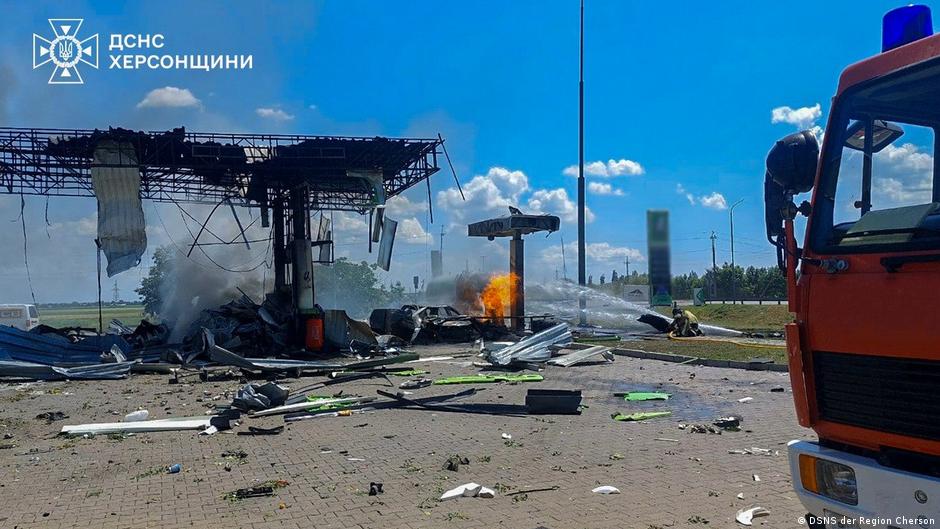
Russian attacks across several Ukrainian regions killed four people and injured others, adding another security shock to a conflict that continues to sit in the background of Wall Street’s assessment of defense spending, energy infrastructure risk, logistics exposure and broader geopolitical risk premiums.
Two people were killed near Kherson after a Russian drone strike in the settlement of Tekstylne on Friday evening, September 18, according to Oleksandr Prokudin, head of the regional military administration. In Sumy, local authorities reported that at least two people were killed and seven injured after a strike believed to involve a guided aerial bomb hit a multi-story residential building. The blast damaged several apartments and partially collapsed the structure.
The latest attacks also hit Odessa and the Kyiv region. In Odessa, emergency services said an 11-story administrative building was struck on September 18 and caught fire. The same building was later hit again while emergency crews were working at the scene. Ten people were reported injured, including two rescuers. Overnight into September 19, Odessa was attacked again after air alerts and reports of incoming small Russian missiles, with local residents posting footage of a fire in a residential building inside the city. Initial details were not provided.
For equity markets, the immediate significance is less about a single-day trading catalyst and more about the durability of war-related risk across sectors. Investors tracking U.S. and European equities have treated the Ukraine war as a recurring factor in defense procurement expectations, energy security policy, insurance costs, grain and freight flows, and infrastructure exposure. Each renewed wave of strikes reinforces the case that conflict-related volatility remains a standing input for portfolio positioning rather than a resolved macro variable.
Defense and Security Stocks Remain Central to the Market Read-Through
The attacks are likely to keep investor attention on the defense and aerospace complex, particularly companies tied to air defense, drones, radar, munitions and missile systems. The reported use of drones, guided aerial bombs and small missiles underscores the operational themes that equity research desks have repeatedly watched since the war began: persistent demand for layered air defenses, counter-drone capabilities, electronic warfare and ammunition replenishment.
No company-specific contracts or new procurement decisions were cited in the reports from Ukrainian officials. Still, the pattern of attacks offers a sector-level reminder of why defense budgets in the United States and Europe have remained a focus for analysts. For Wall Street, the relevant question is whether continued strikes harden political support for long-cycle defense outlays and sustain order-book visibility for large contractors and specialized suppliers.
“Two men sustained injuries incompatible with life,” Prokudin wrote in a Telegram post about the drone strike near Kherson.
That human toll is the central fact of the latest reports. The market angle is secondary but material: the continuation of civilian-area strikes keeps security spending and reconstruction needs firmly inside the investment narrative around Ukraine and Europe’s eastern flank.
Energy, Shipping and Infrastructure Risk Stay on Watch
Odessa’s repeated targeting is also important for investors because the city and surrounding region have long been associated with Ukraine’s Black Sea logistics, port activity and strategic infrastructure. The reported strikes in this case hit an administrative building and, later, a residential building where a fire was observed. The source reports did not identify damage to port facilities, energy assets or grain infrastructure. Even so, attacks on Odessa tend to draw market attention because of the city’s broader role in regional trade and shipping risk.
For shipping, insurance and commodity-linked equities, the direct signal from this round of attacks is limited by the absence of reported port damage. But the risk backdrop remains relevant. Any intensification around Black Sea cities can affect how traders think about freight routes, war-risk insurance, agricultural export reliability and the cost of moving goods through contested areas. Agricultural commodity traders and investors in grain handlers, fertilizer producers and bulk shipping firms typically watch such developments for signs of disruption, even when a specific strike does not immediately alter supply.
The Kyiv region also reported damage. Timur Tkachenko, head of the regional military administration, said two men were injured in the Bucha district after a strike on warehouse premises. Warehouse facilities were also damaged in the Boryspil district. These reports add an infrastructure and logistics dimension to the latest round of attacks, though no publicly traded company exposure was identified in the source account.
Energy investors may also remain attentive because attacks on Ukrainian cities have often coincided with broader concerns about power infrastructure, heating systems and emergency repair capacity. The latest reports did not state that energy facilities were hit. As a result, any market read-through for utilities, oil and gas, renewables or equipment suppliers should be framed as general risk monitoring rather than a direct operating impact.
Equity Research Lens: Persistent Risk, Not a New Thesis
From an equity research perspective, the key point is persistence. The reports describe multiple regions under attack over a narrow time window: Kherson, Odessa, Sumy and the Kyiv region. In Kherson, Prokudin also repeatedly reported air alerts during the evening, including alerts linked to possible launches of guided aerial bombs by Russia. A city hospital in Kherson was also attacked on September 18 when a drone dropped explosives on the grounds of the facility; no casualties were reported in that incident.
That breadth matters for market analysis because it argues against treating the war as a localized or fading risk. Investors may continue to assign premiums to companies exposed to defense modernization and resilience spending, while applying caution to assets sensitive to Eastern European infrastructure, insurance and transport uncertainty. The impact is most visible in sector rotation when geopolitical headlines coincide with macro stress: defense and energy security themes can gain attention, while travel, regional financials, industrial supply chains and high-beta cyclical exposures may face more scrutiny.
There were no trading volumes, share-price moves, analyst rating changes or company earnings updates included in the source material. Any specific call on U.S.-listed defense contractors, European industrials, shipping companies or energy names would therefore require separate market data. What the latest attacks do provide is a fresh factual basis for the ongoing geopolitical-risk framework used by portfolio managers: civilian casualties are rising again, emergency services are being struck while responding, and infrastructure in several regions remains exposed.
For Wall Street, the immediate takeaway is that the Ukraine war continues to shape the risk map even when it does not produce a discrete market event. The deaths in Kherson and Sumy, the repeated strike in Odessa and the warehouse damage in the Kyiv region all point to a conflict environment that can sustain defense demand, complicate logistics assumptions and keep investors alert to sudden shifts in energy and commodity sentiment.