Greenland Security Deal Puts Arctic Defense and Rare Earth Stocks in Focus
Washington says a pending accord with Denmark and Greenland would expand the U.S. military footprint while preserving Danish sovereignty.
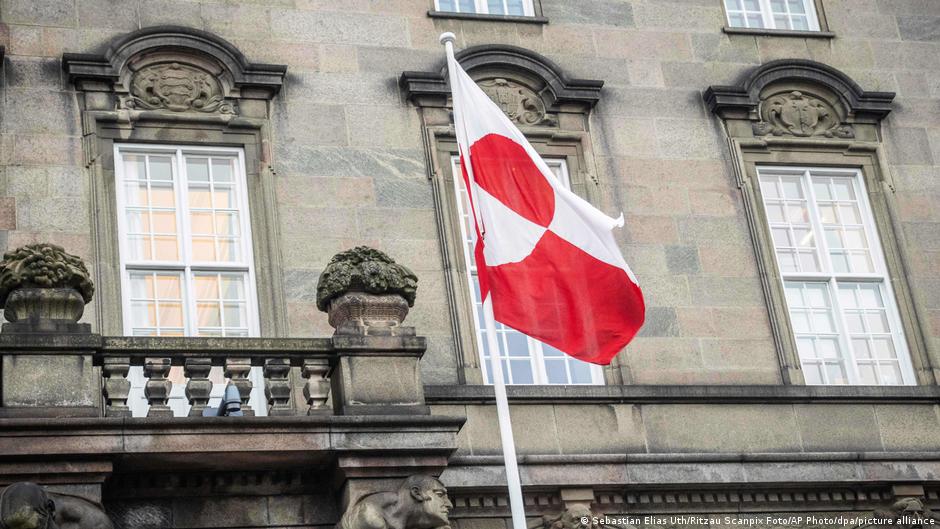
U.S. President Donald Trump said Washington has reached an agreement with Denmark and Greenland to expand the American military presence on the island, a development that could draw fresh investor attention to Arctic defense, surveillance, logistics and critical-minerals equities.
The announcement, made by Trump on Truth Social on Friday evening, September 18, described the arrangement as a deal on “Greenland security.” According to Trump, the agreement would give the United States permanent control over security and other needs in Greenland, including an indefinite right to do what is necessary to secure and protect both the island and the United States.
For Wall Street, the immediate read-through is likely to fall less on broad equity indices than on subsectors tied to U.S. strategic infrastructure. Defense primes such as Lockheed Martin, RTX, Northrop Grumman and General Dynamics may be watched for any sign that Arctic basing, missile warning, air defense, communications or maritime surveillance becomes a larger budget priority. Engineering, construction and logistics contractors could also come into focus if the U.S. presence is expanded across several parts of Greenland, as Trump said would begin immediately.
The source material did not cite market prices, trading volumes or contract values. That leaves equity investors to trade the headline initially as a policy signal rather than a quantified procurement event. In practical terms, research desks are likely to separate the announcement into two baskets: defense and infrastructure names that could benefit from a larger U.S. operational footprint, and critical-minerals companies that could be affected by a more assertive American role in Greenland.
Defense and critical minerals become the equity lens
Trump said the United States would receive authority to prevent “opponents of the U.S.” from establishing military bases in Greenland or making “sensitive investments” in the autonomous Danish territory without American approval. He also said the deal would cost the United States nothing.
That language may matter for sector rotation. A no-cost claim could limit near-term assumptions about direct federal spending, but the strategic direction still supports the longer-running market theme around NATO readiness, Arctic security and hard-power infrastructure. Investors have already treated defense spending as a structural theme across U.S. and European markets, and Greenland adds a geographic focal point at the intersection of North Atlantic defense and Arctic access.
Rare earth and critical-mineral stocks may also receive renewed attention. Trump has long argued that U.S. security interests justify a greater role in Greenland, while officials close to him have repeatedly noted that the island is rich in rare earth resources. The source article does not name any specific resource projects or companies, so the equity impact remains thematic rather than company-specific. Still, traders may monitor names linked to rare earth supply chains, including MP Materials and other critical-minerals exposure, as they assess whether U.S. policy toward Greenland could eventually affect resource access or investment screening.
Trump said Washington had obtained an indefinite right to do what is necessary in Greenland to ensure and protect the security of the island and the United States.
The governments in Copenhagen and Nuuk welcomed the understandings with Washington. Danish Prime Minister Mette Frederiksen said the arrangement would benefit NATO by strengthening “our common security in the Arctic and the North Atlantic region.”
At the same time, the joint statement from Denmark and Greenland emphasized that the understandings recognize Denmark’s sovereignty and territorial integrity, as well as the right of the Greenlandic people to self-determination. Greenland Prime Minister Jens-Frederik Nielsen said the agreement would ensure and strengthen the security of Greenland, the Kingdom of Denmark, the United States and the Western alliance. He added that it also recognizes Greenland’s interests and its place in international cooperation.
Unsigned status may temper the market reaction
A key caveat for investors is that the statement from Nuuk and Copenhagen was presented as a press release about an “expected agreement” with the United States. That wording may indicate the final documents have not yet been signed. Under Trump, negotiations between Washington and other countries have repeatedly collapsed at the last moment, followed by accusations that the White House sought to change terms in the final stage.
That uncertainty is important for equity research. A signed, detailed agreement could produce a more concrete investment debate around basing, procurement, permitting and infrastructure. An unsigned framework, by contrast, may generate a shorter-lived trading response concentrated in high-beta defense, surveillance, engineering and critical-minerals names, with volume dependent on how much detail emerges from Washington, Copenhagen and Nuuk.
U.S. Secretary of State Marco Rubio, speaking to Fox News Digital, called the Greenland deal a “huge victory” for the United States and Americans. He said the arrangement would permanently guarantee U.S. security interests in the Arctic without cost to American taxpayers.
Rubio also said Denmark and Greenland understand the limits of their defense capabilities. According to the Fox News account cited in the source article, Rubio said Denmark and Greenland do not have the financial resources needed to defend Greenland in the event of an attack or threat, while the United States does.
The deal could mark the end of Trump’s years-long push for control over Greenland, an island off the coast of North America that is part of Denmark. During his first term, Trump said he wanted to buy Greenland. After returning to the White House, he increased pressure on Denmark and its European allies, including threats of large customs tariffs. Trump has justified his position on security grounds.
For markets, the broader signal is that Arctic strategy is moving from diplomatic background noise toward an investable geopolitical theme. The headline may not immediately change earnings estimates for defense or materials companies, but it gives analysts another reason to scrutinize exposure to northern defense architecture, allied basing, satellite and radar networks, air and maritime systems, and rare earth supply chains.