Russia Opens Three-Day Duma Vote as Investors Weigh Political Risk
The election structure and disputed voting in occupied Ukrainian territories add another governance signal for markets tracking Russia exposure.
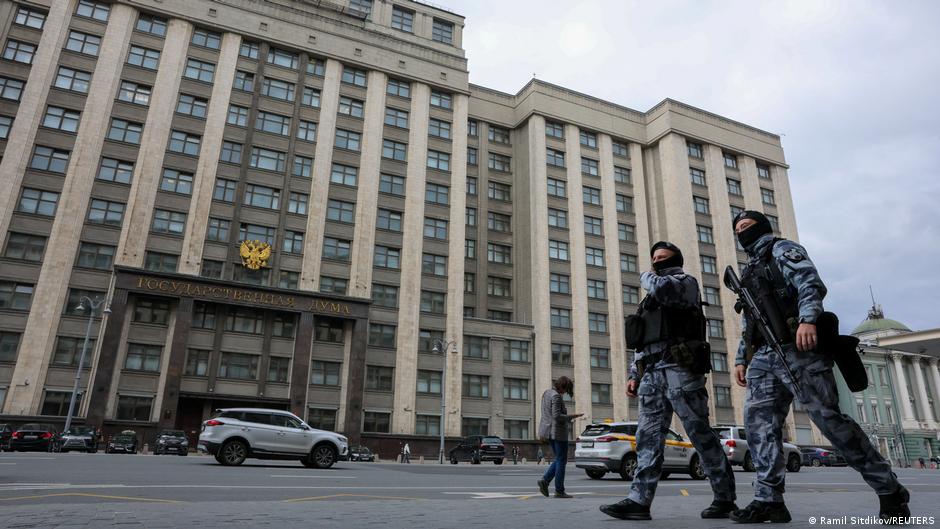
Russia formally opened three days of voting for the State Duma on Friday, September 18, at 08:00 local time, beginning with polling stations in Kamchatka and Chukotka. The vote is scheduled to run through September 20, with polling places in the regions open until 20:00 local time.
For equity investors, the event is less a conventional electoral catalyst than a political-risk marker. The source material does not report market moves, trading volumes, analyst price targets, or direct reactions in individual listed stocks. Still, the mechanics of the vote, the exclusion of the anti-war party Yabloko from party lists, and the extension of voting to occupied Ukrainian territories are relevant to investors who monitor sanctions risk, Russia-related assets, defense-sector sentiment, energy-sector exposure, and broader emerging-market risk appetite.
The new Duma will have 450 deputies. Half are expected to be elected in single-mandate constituencies, allowing voters to choose individual candidates. The remaining 225 seats will be distributed through party lists. Ten parties are listed for the party-list contest after Yabloko was barred from taking part on formal grounds. Yabloko candidates remain present in some regions as single-mandate contenders.
Political Risk, Not a Conventional Earnings Catalyst
The previous Russian State Duma elections were held in 2021. This time, voting has been expanded to occupied Ukrainian territories. According to representatives of various Russian structures, participants in Russia’s full-scale invasion of Ukraine and residents of Russian-occupied regions voted early from late August through September 17.
That expansion is the central market-relevant detail for a Wall Street audience. It ties the election directly to the continuing war in Ukraine, which remains a driver of sanctions policy, energy-market positioning, defense spending expectations, and geopolitical risk premiums. The article does not name public companies or report turnover in any security, so any connection to stocks must be understood as sector-level context rather than a reported trading event.
Investors with exposure to global energy, defense, shipping, commodities, and emerging-market benchmarks have continued to assess how political developments in Russia may affect the sanctions environment and risk pricing. The vote itself does not provide new financial data, but it reinforces the governance backdrop against which sell-side research teams and institutional desks evaluate Russia-linked risk.
Observers noted that, even aside from the question of legitimacy in the occupied regions, the way Russia’s Central Election Commission organized voting there made the results practically impossible to verify.
According to observers cited in the source, authorities did not publish data on regional election commission members or polling-station addresses in those territories. Open video monitoring was not organized, and portable ballot boxes were permitted. Russia’s Central Election Commission also allowed local election commissions, where necessary, to print ballots on site and not immediately transfer them to higher-level bodies after counting.
Those details matter for investors because governance quality, institutional transparency, and political predictability are part of country-risk analysis. In markets where direct exposure is restricted or illiquid, the signal may appear indirectly through regional allocation decisions, exchange-traded funds with emerging-market or geopolitical-risk sensitivity, currency positioning, and flows into sectors viewed as beneficiaries or casualties of a prolonged conflict environment.
Information Control and the AI Narrative
Before voting began, pro-government Russian media outlets circulated videos arguing that footage of vote rigging and ballot stuffing from polling stations could be generated by artificial intelligence. Ella Pamfilova, chair of Russia’s Central Election Commission, also said such technologies could allegedly replace the live picture from polling stations.
For Wall Street readers, this points to another investment-research issue: information reliability. The source does not report whether any specific videos were verified or debunked, nor does it provide evidence of market reaction to the AI claims. But the pre-election messaging highlights the difficulty of assessing political information in a controlled media environment. That affects how analysts interpret official results, turnout figures, and claims about public support.
None of the ten parties represented in the 2026 State Duma election has condemned the continuing war in Ukraine, according to the source. Yabloko, which had consistently criticized the war, was initially admitted to the elections but was later removed on formal grounds.
Yabloko was struck from the party lists, though individual members are participating as candidates in single-mandate districts. Later, some of those candidates also faced pressure and removal from the race on various grounds, often connected to old photographs and social-media posts, including references to Alexei Navalny.
Shortly before the election, opposition figures Yulia Navalnaya and Maxim Katz urged Russians to vote for the strongest single-mandate candidates who were not members of United Russia. Yabloko criticized that proposal and instead advised voters to spoil their ballots.
From an equity-research perspective, the political picture described in the source suggests continuity rather than policy surprise. There is no indication in the article of a competitive platform debate over economic liberalization, sanctions relief, war policy, or institutional reform. That limits the vote’s usefulness as a stock-specific catalyst but increases its relevance as a confirmation point for macro and geopolitical-risk assumptions already embedded in market views.
For traders, the immediate questions would normally include whether Russia-sensitive energy names, defense contractors, European banks, commodity producers, or regional ETFs see unusual volume around the event. The source, however, provides no trading-volume data, no pricing information, and no broker commentary. A disciplined market reading therefore stops at the political facts: a three-day vote, expanded participation in occupied territories, contested verification procedures, pre-emptive official messaging about AI-generated election fraud footage, and the exclusion of the main anti-war party from party lists.
The bottom line for investors is that the election is unlikely to be judged by markets as a standalone democratic contest with a wide range of policy outcomes. Instead, it functions as another data point in the continuing assessment of Russian political control, war-related risk, and the durability of sanctions-sensitive investment assumptions.