Trump Says U.S. Will Scrap 10% Tariff on Irish Whiskey Imports
The announcement points to relief for spirits exporters and could sharpen investor focus on beverage stocks with U.S.-Ireland trade exposure.
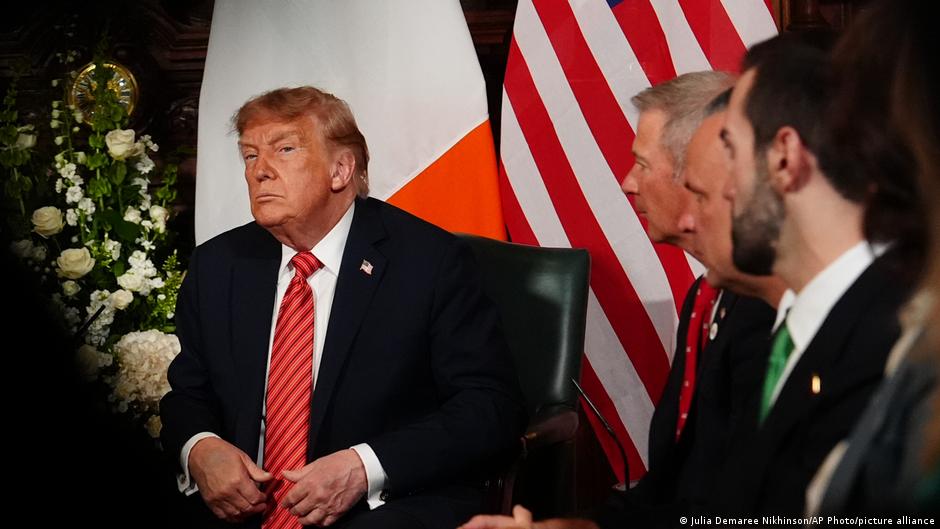
U.S. President Donald Trump said the United States will remove a 10% tariff on Irish whiskey, a move that could ease pressure on beverage exporters and give Wall Street another trade-policy signal to price into the spirits sector.
Trump made the announcement as he concluded a visit to Ireland, speaking on Sunday, September 13, before a cheering crowd of Irish golf fans at a tournament held at a golf club owned by his family. He said he had yielded to numerous requests to cancel the duty on Irish whiskey imports into the United States.
The decision, if fully implemented, would reverse a levy currently collected as part of U.S. tariffs covering all European Union wine and spirits exports to the American market. For investors, the key question is whether the move remains narrowly targeted at Irish whiskey or becomes a sign of broader tariff relief for European alcoholic beverages.
Spirits Stocks Draw Trade-Policy Attention
For Wall Street, tariff announcements in the beverage industry matter because they can affect import costs, distributor margins, retail pricing and volume expectations. A removal of the 10% Irish whiskey duty would be most relevant to listed spirits groups, alcohol distributors, bar and restaurant operators, and retailers with meaningful exposure to premium imported liquor sales.
The source article did not name any publicly traded companies or quantify the value of Irish whiskey exports affected by the tariff. That limits the immediate equity read-through. Still, beverage analysts and traders typically monitor tariff changes for signs of margin relief, pricing flexibility and potential changes in demand, particularly in categories where imported brands compete at premium price points.
Sector rotation could be modest but notable if investors interpret the announcement as a less confrontational trade stance toward European consumer goods. Defensive consumer staples names, including beverage companies, often trade on brand strength, pricing power and stable cash flows. Tariff relief can support those narratives when it reduces an external cost overhang.
At the same time, the market impact may depend on implementation. The Irish Whiskey Association welcomed Trump’s statement, while also expressing hope that the decision would be fully carried out. That distinction matters for investors: a presidential announcement can move sentiment, but equity research desks will usually wait for formal trade documentation before revising forecasts.
“Nothing characterizes U.S.-Ireland trade relations better than Irish whiskey,” Irish Whiskey Association director Oen O’Cathain said in a statement.
Golf-Club Announcement Adds Political Context
Trump said several people had urged him to remove the tariff, including Irish Prime Minister Micheál Martin and leading Irish golfer Shane Lowry. The setting of the announcement, at a family-owned golf club in Ireland, also gives the decision a political and personal backdrop that investors may separate from the mechanics of trade policy.
For U.S. markets, the substance is straightforward: a 10% duty on Irish whiskey imports is set to be canceled, according to Trump’s statement. If the duty is lifted, importers could see lower landed costs on Irish whiskey shipments, while distributors and retailers may gain room either to protect margins or adjust consumer prices. The source article does not state which path companies would choose.
Trading volumes in affected equities could rise if investors view the announcement as actionable for beverage-sector earnings. However, because the article provides no company-level exposure, no revenue figures and no implementation timetable beyond Trump’s statement, the immediate investment case remains qualitative rather than model-driven.
Equity research coverage is likely to focus on three questions. First, whether the tariff removal applies only to Irish whiskey or signals a possible change in the broader U.S. tariff treatment of EU wines and spirits. Second, whether the timing allows importers to change near-term purchasing or inventory decisions. Third, whether companies with Irish whiskey exposure can translate tariff relief into improved margins without sacrificing volume growth.
The current levy is part of tariffs applied to all EU wine and spirits exports to the United States. That broader framework is important because Irish whiskey is only one segment of the European drinks trade. If investors believe the move could foreshadow further exemptions, market attention may widen from whiskey-linked names to the broader spirits complex.
For now, the announcement is a targeted relief headline rather than a full sector reset. It preserves the core facts: Trump said the 10% U.S. tariff on Irish whiskey will be removed; he cited requests from Irish officials and figures; the Irish Whiskey Association welcomed the statement; and the duty is currently collected under wider tariffs on EU wine and spirits exports to the United States.
The market takeaway is therefore measured but constructive. A completed tariff removal would reduce one trade friction for Irish whiskey entering the U.S. market. Until implementation details are confirmed, investors are likely to treat the news as a sentiment boost for the spirits trade and a watch item for beverage stocks rather than a definitive earnings revision.