Trump Expects Iran Talks as Strait of Hormuz Risk Keeps Markets on Alert
The White House is seeking a broader deal with Tehran, leaving energy, shipping and defense stocks exposed to headline-driven trading.
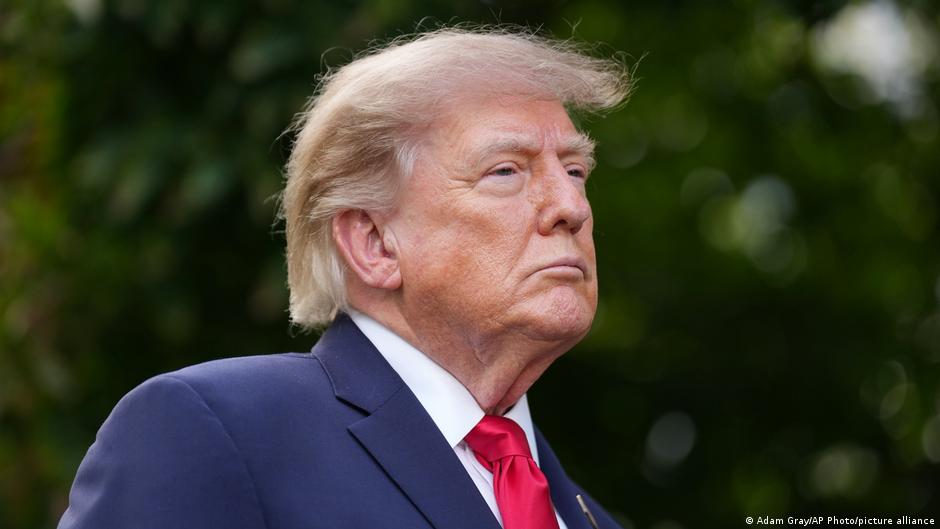
U.S. President Donald Trump said he expects negotiations with Iran to resume in the coming week, keeping Wall Street focused on geopolitical risk around the Strait of Hormuz, oil exports and potential military action in the Middle East.
Trump made the comments on Sunday, September 27, in a telephone interview with Axios. His remarks followed his rejection of a seven-day proposal from Tehran that would have reopened shipping through the Strait of Hormuz under certain conditions. The standoff has become a market-sensitive issue because the strait is one of the world’s most closely watched energy transit routes, and any restriction on shipping can quickly alter expectations for crude prices, tanker demand, inflation and risk appetite.
“I expect new talks with Iran,” Trump said, adding that Tehran “wants to make a deal, but it is not the deal I want to make.”
For equity investors, the immediate question is whether a renewed diplomatic track can reduce the premium attached to oil and defense-related trades, or whether the widening gap between Washington and Tehran keeps volatility elevated. The source material does not provide trading volumes or stock-price moves, but the policy path described by Trump is directly relevant to shares tied to crude supply, marine transport, defense spending and broader cyclical risk.
Energy and Shipping Shares Remain in Focus
The clearest market transmission channel is energy. If investors judge that talks could lead to a reopening of the Strait of Hormuz and a reduction in maritime disruption, the pressure point for oil-linked equities may shift from supply fear toward fundamentals such as production costs, cash returns and demand. In U.S. trading, that would put major integrated oil companies including Exxon Mobil and Chevron, oilfield service providers such as SLB and Halliburton, and exploration and production names including ConocoPhillips on investors’ watchlists.
Shipping and tanker operators are another sector likely to react to headlines. Companies such as Frontline, Teekay Tankers and International Seaways are often monitored when maritime routes are disrupted, because freight rates and vessel availability can become more sensitive to route risk and insurance costs. The Russian-language source does not report any specific shipping-rate changes, insurance-market data or trading-volume spikes. Still, the focus on the Strait of Hormuz gives traders a clear macro catalyst to track during the next round of diplomatic contacts.
The same uncertainty can also feed into inflation expectations. A prolonged blockage or partial reopening of Hormuz would matter not just to oil producers but also to airlines, logistics firms and consumer-facing companies exposed to fuel costs. That makes the Iran story relevant beyond a narrow energy trade. Sector rotation could move in either direction depending on whether investors interpret the coming talks as de-escalation or as a prelude to renewed confrontation.
Washington and Tehran Remain Far Apart
According to Axios, two regional sources who requested anonymity also confirmed Trump’s comments about a resumption of negotiations. They expect Qatari mediators, who previously participated in meetings between representatives of Washington and Tehran, to hold meetings as soon as September 28 with Iranian Foreign Minister Abbas Araghchi and U.S. presidential special envoy Steven Witkoff.
The disagreement is substantive. Tehran wants any negotiations to focus on fully reopening the Strait of Hormuz and lifting the U.S. maritime blockade. Washington is insisting on a broader agreement that includes concessions on Iran’s nuclear program. That distinction matters for investors because a narrow shipping deal could ease near-term energy-market stress, while a comprehensive nuclear-linked bargain would be more difficult and could take longer to negotiate.
A few days earlier, Araghchi said Tehran had proposed to Washington that shipping through the Strait of Hormuz be restored within a week if certain conditions were met, and that talks on a longer-term settlement of the conflict resume. Media reports cited conditions including an end to fighting on all fronts, including Lebanon; the lifting of the blockade on Iranian ports; the unfreezing of Tehran’s assets; and the removal of restrictions on Iranian oil exports.
Trump said on September 26 that he had rejected Iran’s offer. He said Tehran wanted a deal under which the strait would reopen immediately because Iran was suffering heavy losses. He added that he likes making deals, but said that such an arrangement would be unacceptable.
Defense Risk Premium Has Not Disappeared
The military dimension remains part of the market calculus. Asked by Axios whether he was considering renewed strikes on Iran, Trump replied that he “always” thinks about it. Earlier, The Wall Street Journal reported, citing unnamed sources, that Trump had rejected Iran’s proposal and had told aides he intended to resume bombing Iran after the congressional midterm elections in November.
According to the newspaper’s sources, Trump views a new military operation as “highly likely” because he is skeptical that Tehran is prepared to meet his demand for a complete abandonment of its nuclear program. That assessment keeps defense contractors such as Lockheed Martin, RTX, Northrop Grumman and General Dynamics in the broader market conversation, though the source article does not report any analyst upgrades, target-price changes or specific equity research notes tied to the latest comments.
For portfolio managers, the issue is less a single headline and more the path dependency of negotiations. A meeting mediated by Qatar could support a relief trade if it produces concrete steps toward reopening Hormuz. But the White House demand for nuclear concessions, combined with Trump’s public rejection of Tehran’s seven-day proposal and his stated willingness to consider strikes, leaves the risk premium intact.
Equity research desks are likely to frame the next week around three questions: whether Qatari mediation produces direct progress, whether the United States narrows or broadens its demands, and whether Iran signals flexibility beyond the shipping channel. Until those points are clearer, the market impact is likely to remain concentrated in energy, tanker shipping, defense and fuel-sensitive consumer sectors, with trading driven by headlines rather than confirmed changes in company fundamentals.