Swiss Voters Reject Neutrality Measure That Could Have Curbed Sanctions Policy
The referendum result preserves Bern’s flexibility on sanctions, a factor investors are likely to read through Swiss banks, exporters and defensive equities.
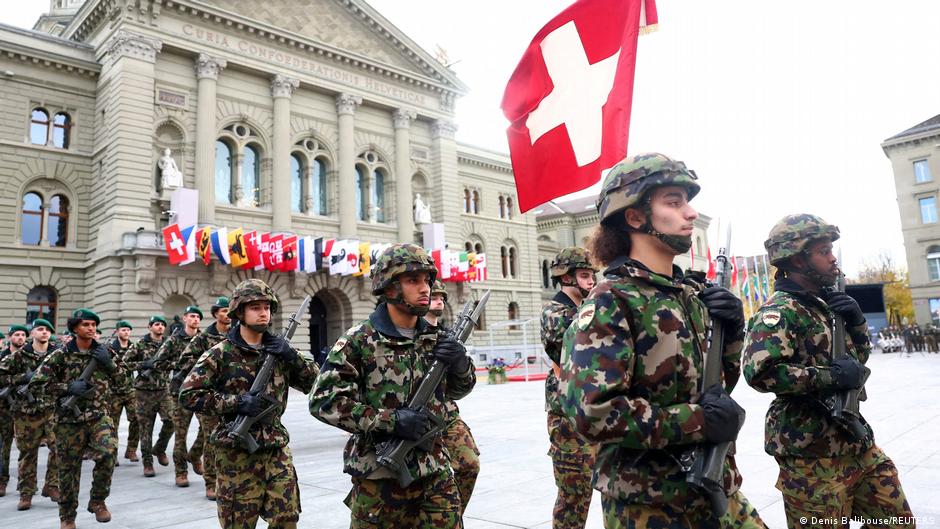
Swiss voters have rejected a proposal that would have sharply narrowed the country’s ability to impose sanctions, preserving a flexible interpretation of neutrality that matters not only for diplomacy but also for how global investors price Swiss political risk.
Official results published by the Swiss government on Sunday, September 27, showed that 70.15 percent of voters opposed the initiative, which sought a stricter definition of Switzerland’s political neutrality. The measure would have constrained the government’s ability to join sanctions against countries at war, including measures aligned with the European Union’s sanctions on Russia over the war in Ukraine.
For Wall Street, the outcome removes a potential policy shock for Swiss-listed multinationals, financial institutions and export-heavy sectors that operate across European, U.S. and global regulatory regimes. A vote in favor could have raised questions over whether Switzerland would diverge more sharply from Western sanctions frameworks, complicating compliance assumptions for banks, commodity-linked businesses and companies with cross-border supply chains.
Sanctions Flexibility Remains Intact
The initiative, titled “Preserving Swiss Neutrality,” was advanced by the group Pro Schweiz, which is close to the right-conservative Swiss People’s Party. Its supporters argued that although neutrality is enshrined in the Swiss Constitution, the government had weakened the principle of non-intervention by joining EU sanctions against Russia in response to the war in Ukraine.
The proposal sought to embed a principle of “permanent and armed” neutrality in the constitution. It also aimed to prohibit Switzerland from joining military alliances such as NATO, or cooperating with them, except in cases where Switzerland itself was attacked. Most significantly for markets, the initiative would have imposed a broad restriction on sanctions: the Swiss government would have been able to introduce economic sanctions only after approval by the United Nations Security Council.
That condition would have represented a meaningful policy constraint. Because the UN Security Council is often divided on conflicts involving major powers, sanctions requiring its approval could be harder to enact. Investors tracking Swiss financial regulation and multinational compliance risk would likely have viewed such a change as a potential source of divergence between Switzerland and major Western markets.
Swiss Foreign Minister Ignazio Cassis argued during televised debates that neutrality has always been applied with a measure of “flexibility,” and should not be confused with “indifference.”
Cassis said Switzerland should not close its eyes to violations of international law in order to protect its own interests or preserve peace. With the proposal defeated, Bern retains the discretion to align with sanctions regimes outside a narrow UN-only framework.
Equity Read-Through for Swiss Risk
The immediate equity-market read-through is political continuity. Swiss blue chips such as UBS, Novartis, Roche and Nestle are not directly named in the referendum, but they sit at the center of global investor exposure to Switzerland. For U.S.-based portfolio managers, the vote helps preserve the country’s existing policy alignment with Europe on sanctions and international law, reducing the likelihood of a new neutrality-driven discount being applied to Swiss assets.
Financials may receive the clearest read-through because sanctions compliance is a central operating concern for globally active banks and wealth managers. A stricter neutrality regime could have created a more complex backdrop for Swiss institutions that must also navigate U.S., EU and other international rules. The rejection of the initiative keeps the policy environment closer to the status quo, which equity research analysts tend to favor when assessing regulatory visibility.
Pharmaceuticals and consumer staples, traditionally defensive sectors in global portfolios, are less exposed to the political mechanics of sanctions than banks. Still, the broader question of Switzerland’s alignment with Western policy frameworks affects how investors think about country risk, trade relationships and operating predictability. For companies with global revenue bases, any sign of institutional stability can support the defensive profile that investors often assign to Swiss equities.
The result may also matter for sector rotation. In risk-off periods, Swiss equities are often viewed through a defensive lens because of the market’s concentration in health care, consumer staples and quality financial names. A surprise vote in favor of limiting sanctions could have introduced a new political variable into that trade. Instead, the rejection leaves the familiar macro story largely intact: Switzerland remains neutral, but with room for policy flexibility when international law and sanctions policy intersect.
Political Consensus Against the Measure
With the exception of the Swiss People’s Party, all major political forces in the country opposed the neutrality initiative. That broad opposition helped frame the measure as a challenge not simply to sanctions policy, but to the practical way Switzerland has historically balanced neutrality with international obligations.
The vote therefore strengthens the hand of policymakers who argue that neutrality does not require Switzerland to stand apart from every punitive economic measure. For investors, that distinction is important. Neutrality may remain part of Switzerland’s political identity, but the market-relevant question is whether it limits the country’s ability to coordinate with major trading partners. The referendum result suggests voters were unwilling to force that limitation into the constitution.
Trading desks will also note the scale of the defeat. With more than 70 percent voting against the initiative, the result was not a narrow rejection. That reduces the likelihood of immediate political uncertainty around the issue and may limit speculation that Switzerland is moving toward a materially more isolationist sanctions posture.
In a separate referendum, more than 70 percent of Swiss voters also rejected a food security initiative. Supporters of that measure had proposed raising the share of domestically produced food to at least 70 percent of consumption, increasing production of plant-based foods, reducing the use of plant protection products and fertilizers, and strengthening protections for drinking water, soil fertility and biodiversity.
That second result also signals voter resistance to sweeping constitutional or legislative shifts with potentially broad economic implications. For markets, the common thread is continuity: Swiss voters declined to mandate stricter neutrality on foreign policy and declined to impose major new food-production targets at home.
The referendum leaves Switzerland’s current sanctions posture in place and gives global investors a cleaner policy signal heading into the next trading sessions. The vote does not eliminate geopolitical risk, nor does it change the underlying sanctions landscape tied to Russia and the war in Ukraine. But it does reduce one domestic source of uncertainty for Swiss equities and for Wall Street investors assessing Europe-linked exposure.