Lower Saxony Runoffs Signal Political Check on AfD as Greens Hold Hannover
The results point to continued centrist control in key German municipalities, a backdrop investors may read through to regional policy stability.
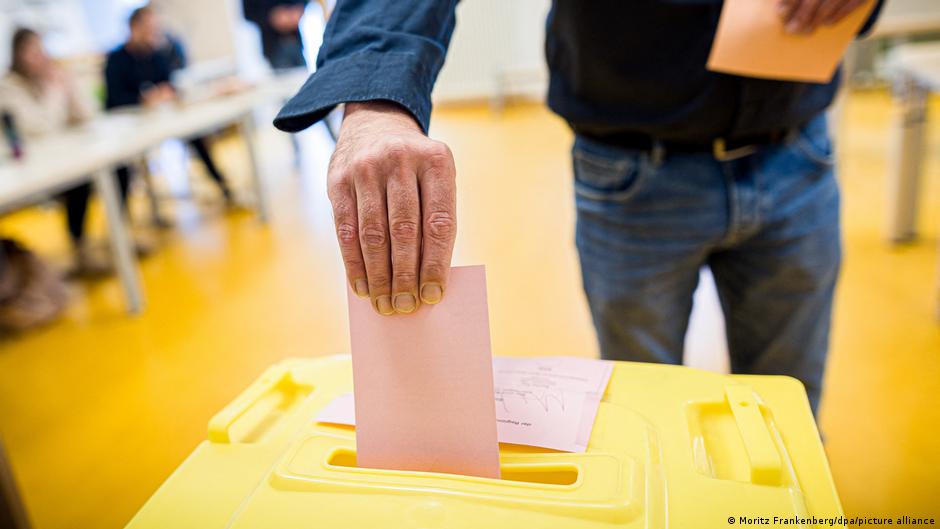
Germany’s Lower Saxony municipal runoffs delivered a clear setback for the far-right Alternative for Germany, while the Greens secured high-profile victories in Hannover, Oldenburg and Göttingen. For equity investors, the vote is not a direct market-moving event in the way national elections or fiscal policy decisions can be. But the results offer a useful signal on political risk, local infrastructure priorities and the broader direction of sentiment in one of Germany’s important industrial regions.
Residents voted on Sunday, September 27, in 123 municipalities to elect mayors and other local leaders. AfD candidates sought three executive posts, but lost in all three contests. The outcome keeps the party from converting its first-round vote share into leadership of the municipalities where it had reached the runoff stage.
In Salzgitter, a city of around 100,000 people and an industrial center closely watched by investors exposed to German manufacturing, Christian Democratic Union incumbent Frank Klingebiel won decisively with 74.72% of the vote. Klingebiel has served as lord mayor since 2006. AfD candidate Patricia Mair received 25.3%.
In Munster, independent candidate Anna Adamczak won with 80.5%, while AfD candidate Christoph Weynand took 19.5%. In Bockenem, independent candidate Jens Lüer secured 69.6%, against 30.4% for AfD contender Felix Mull.
AfD candidates sought three leadership posts in the runoff, but failed to win any of them.
Local Results, Market Read-Through
The equity-market relevance lies less in immediate price action than in the read-through for political fragmentation and regional policy continuity. Lower Saxony is home to major industrial, logistics and energy-linked activity, and municipal administrations can influence permitting, transport planning, housing development and local implementation of climate and infrastructure policy. For investors looking at German equities, utilities, autos, industrial suppliers and construction-related names remain the most obvious sectors to monitor when local political control shifts.
The most visible Green victory came in Hannover, the state capital and largest city in Lower Saxony. Belit Onay of Alliance 90/The Greens retained the city’s top post after defeating Social Democratic Party candidate Axel von der Ohe in the second round. Onay has held the office since 2019. His win keeps Hannover under Green leadership at a time when urban transport, energy efficiency and climate-oriented municipal investment remain central themes for European policy analysts.
In Braunschweig, the state’s second-largest city, Social Democrat Thorsten Kornblum retained the lord mayor’s office. Kornblum, who has led the city since November 2021, defeated CDU candidate Maximilian Pohler. In Osnabrück, the fourth-largest city in the region, CDU incumbent Katharina Pötter also held her post, defeating Volker Bajus of the Greens. Pötter has likewise led the city since November 2021.
Oldenburg, the third-largest city in Lower Saxony, elected a new mayor. Green candidate Jascha Rohr defeated Ulf Prange of the SPD. Prange ran for the Social Democrats instead of Jürgen Krogmann, who had served as lord mayor since November 2014. In Göttingen, the fifth-largest city in the state, Green candidate Onyeka Oshionwu won against CDU candidate Ehsan Kangarani in the runoff.
Sector Rotation Angle
For Wall Street desks, the results may reinforce a familiar pattern in German regional politics: the CDU remains the leading force in aggregate local voting, the SPD retains important municipal footholds, the Greens continue to perform in major urban centers, and the AfD’s support does not automatically translate into executive control. That mix could support a view of limited near-term disruption for investors tracking German municipal policy exposure.
The main round of Lower Saxony’s municipal elections took place on September 13. According to figures available on September 14, the CDU received the largest share of the vote with 27.2%. The party is led nationally by German Chancellor Friedrich Merz. The SPD ranked second with 24.6%, followed by the AfD with 15.9%. The Greens received 14.1%, while the Left Party took 6%.
Turnout, according to the election commission’s September 14 data, was 64.6%, up 7.6 percentage points from the 2021 state elections. Higher participation can matter to political-risk models because it may suggest broader voter engagement and a less narrow mandate for local executives. For investors, however, the number is a contextual indicator rather than a tradable catalyst.
Trading volumes in U.S.-listed German exchange-traded funds, American depositary receipts and European sector baskets would be expected to react more strongly to macro data, earnings revisions, central-bank expectations and national policy than to municipal runoffs. Still, equity research teams often fold such outcomes into political-risk notes, particularly when far-right parties are gaining vote share but remain constrained in executive races.
The vote also carries a legal and institutional dimension. Four AfD candidates were denied admission to the elections because of doubts about their commitment to Germany’s constitutional order. The Lower Saxony AfD organization is under observation by the domestic intelligence agency as a right-wing extremist grouping. The party is challenging that decision in court.
For portfolio managers, the practical takeaway is measured rather than dramatic. The runoffs show no broad local executive breakthrough for the AfD in the contested municipalities, while Green and mainstream-party candidates retained or captured several large-city offices. In market terms, that points to continuity in urban policy settings and a political backdrop that remains fragmented but, for now, institutionally contained.