EU’s €710 Million Aid Package Puts Humanitarian Spending Back in Focus
The European Union’s latest funding pledge highlights crisis spending priorities with limited direct read-through for listed equities.
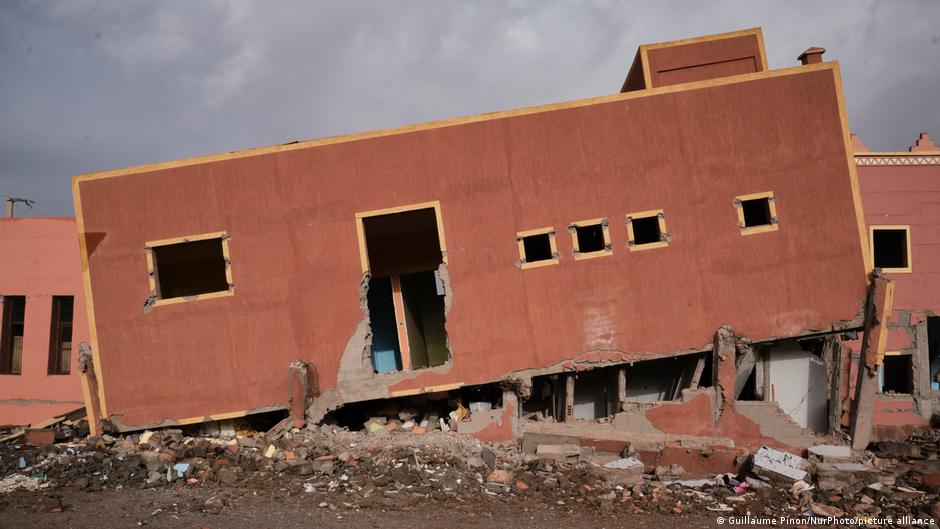
The European Union will allocate an additional €710 million in humanitarian assistance for people affected by wars, natural disasters and other crises around the world, European Commission President Ursula von der Leyen said. The announcement places particular emphasis on Africa, displaced people and the communities hosting them, and comes as investors continue to assess how public-sector spending priorities may influence regional exposure, procurement demand and risk sentiment.
Von der Leyen announced the package on Saturday, September 26, in a video address to participants of the Global Citizen Festival in New York. The festival was later canceled because of bad weather. The funding is aimed at humanitarian needs across several crisis zones, including active conflict areas, regions affected by epidemics and communities exposed to natural disasters.
For Wall Street, the announcement does not create a simple single-stock catalyst. The source material does not name contractors, vendors, banks, insurers, shippers or other listed companies that would receive funds. Still, the scale and geographic distribution of the package are relevant for investors tracking European fiscal priorities, development-finance flows and the broader humanitarian supply chain, including food, health care, housing reconstruction and winterization support.
Sub-Saharan Africa takes the largest stated focus
According to von der Leyen, special attention in the distribution of humanitarian aid will be given to Africa, as well as to forcibly displaced people and host communities. Around €380 million will be directed toward migration-related measures in African countries south of the Sahara. These measures include support for the most vulnerable groups of migrants, as well as their return to their countries of origin and reintegration.
That focus matters for sector watchers because migration management and humanitarian response typically require a mix of public administration, logistics, shelter, health services, food distribution and payment mechanisms. However, based on the details provided, the package should be treated first as a policy and humanitarian development rather than as a confirmed revenue event for any specific listed issuer.
Von der Leyen said special attention would be given to Africa, forcibly displaced people and the communities that host them.
A separate €252 million portion of the funding will go toward emergency assistance connected with active armed conflicts, forced population displacement, epidemics and natural disasters. Of that amount, €97 million will be allocated to countries in sub-Saharan Africa, €103 million to the Palestinian territories and Lebanon, and €52 million to Ukraine, including support for winter preparations.
Smaller sums are also planned for the Great Lakes region of Africa and for efforts to combat an Ebola outbreak in the eastern Democratic Republic of Congo. The inclusion of epidemic response keeps health infrastructure, medical supplies and field operations in the frame, although the announcement did not identify specific implementing partners or procurement channels.
Ukraine funding remains part of the EU aid mix
Ukraine remains a significant beneficiary within the EU’s humanitarian budget. For 2026, the European Union initially allocated €145 million in humanitarian aid for Ukraine. In recent months, however, the amount of humanitarian aid for Ukraine and Moldova was increased to €248 million.
The newly announced emergency allocation includes €52 million for Ukraine, including winterization measures. The funds are directed toward the purchase of food, medical assistance, housing reconstruction, cash payments and preparation for winter. Since the beginning of the full-scale war launched by Russia’s authorities, the European Commission has allocated more than €1.4 billion to humanitarian aid programs for Ukraine.
For equity markets, that mix of spending categories is more relevant at the sector level than at the individual-company level. Food procurement, medical aid, building materials, temporary shelter, energy resilience and financial disbursement systems are all areas investors may monitor, but the announcement provides no basis for attributing expected revenue to particular stocks. As a result, any market reaction is likely to be indirect and tied to broader perceptions of public spending stability, regional risk and humanitarian procurement pipelines.
The EU’s 2026 budget includes about €1.9 billion for humanitarian aid worldwide, according to European Commission data cited in the source. The largest spending categories are €557 million in support for countries south of the Sahara and €463 million for the Middle East and North Africa. The additional €710 million package therefore reinforces an already visible allocation pattern: Africa, the Middle East, North Africa and Ukraine remain central to Brussels’ crisis-response agenda.
From a trading perspective, this type of announcement is unlikely to shift major U.S. indexes by itself. It is not a monetary-policy decision, a sanctions package, an energy embargo or a direct industrial subsidy. Instead, the equity-market relevance lies in how investors read the durability of government-backed humanitarian outlays at a time when conflicts, migration pressure, public health emergencies and climate-related disasters continue to shape budget decisions.
Sector rotation implications are therefore limited but still observable at the margins. Defensive health care suppliers, logistics operators, food distributors, infrastructure groups and payment-services providers may remain on research screens where they have existing exposure to public or multilateral programs. Conversely, without named beneficiaries or tender details, analysts are likely to avoid marking estimates higher for individual companies solely on the basis of the headline number.
Trading volumes in related equities would be expected to depend less on the EU announcement itself than on follow-up procurement notices, implementing-agency awards or changes in geopolitical risk pricing. Equity research desks are likely to frame the package as a signal of continued European commitment to humanitarian spending, not as a near-term earnings event. The cleanest read-through is macro and thematic: crisis response remains a budget priority, with sub-Saharan Africa, the Palestinian territories, Lebanon and Ukraine receiving explicit attention in the latest allocation.