Starlink Station Fire in Poland Puts Satellite and Defense Stocks in Focus
An alleged arson attack near Warsaw highlights infrastructure risks for investors tracking satellite, defense and cybersecurity equities.
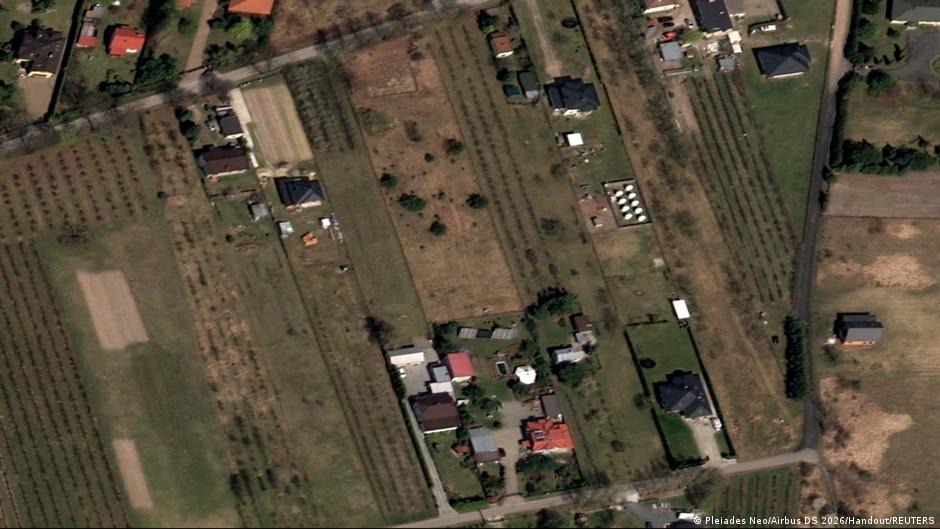
A fire that damaged a Starlink ground station near Warsaw is drawing attention to the security risks surrounding satellite communications infrastructure, an issue with potential implications for Wall Street’s aerospace, defense and cybersecurity sectors.
German magazine Der Spiegel reported, citing sources in several countries, that the Turkish criminal organization Daltons may have been involved in setting fire to the facility and may have acted on instructions from Russian intelligence services. The group has for years been linked to extortion, arms trafficking and contract killings, including in Germany.
The allegations have not established a direct Russian role. Polish officials described the incident as an attempted act of sabotage, while emphasizing that evidence directly connecting Moscow to the fire has not been presented.
Starlink incident raises infrastructure-security questions
The ground station, located in the village of Wola Krobowska about 50 kilometers from Warsaw, was damaged by arson on Sept. 23. The fire affected an electrical substation and a generator. German tabloid Bild reported that the station briefly stopped operating before returning to service. No injuries were reported.
Starlink is operated by SpaceX, which is privately held and therefore cannot be traded directly on public equity markets. For investors, any market read-through would instead center on listed satellite operators, defense contractors, network-equipment suppliers and cybersecurity companies that provide infrastructure protection, resilient communications or related services.
The limited interruption reported at the Polish station may also focus investor attention on redundancy and recovery capabilities. In equity research, the incident is more likely to be assessed as a geopolitical and operational-risk signal than as an immediate earnings event, particularly because no financial losses, customer disruption figures or contract effects were disclosed.
Trading desks could nevertheless watch for sector rotation toward companies associated with secure communications, counter-sabotage technology and critical-infrastructure monitoring if the investigation produces evidence of a broader campaign. Any stock-specific reaction would need to be separated from wider moves in defense spending expectations and European security policy. No trading-volume figures or identifiable share-price effects were provided in connection with the incident.
Suspects face possible extradition to Poland
According to Der Spiegel, two Turkish citizens detained on Oct. 12 in Nürtingen, Germany, as part of the investigation were identified as 38-year-old Ümit E. and 34-year-old Müslüm T. Representatives of several security agencies told the magazine that the men either belonged to the Daltons or carried out assignments for its members.
The Higher Regional Court in Stuttgart is expected to decide whether the two suspects will be extradited to Poland.
Two more people, including a woman, were detained on Oct. 13 during the investigation. Polish radio station RMF FM reported that an anti-terrorism operation was conducted in Berlin to capture her. Investigators’ preliminary theory is that she may have provided logistical assistance to the Turkish citizens and acted as their driver.
Authorities examine possible Russian connection
Der Spiegel reported that the Daltons may have undertaken the alleged operation for Russian intelligence. The magazine pointed to the case of the group’s suspected leader, Beratcan Gökdemir, who was detained in Russia in 2024.
Turkey requested Gökdemir’s extradition, but Russian authorities did not hand him over to Ankara. According to Der Spiegel, German intelligence agencies believe Moscow may have offered him protection in anticipation of reciprocal services. His current whereabouts are unknown.
“Many signs indicate that what happened corresponds to the new Russian doctrine of conducting attacks,” Polish Deputy Prime Minister Krzysztof Gawkowski said on Sept. 23.
Gawkowski’s statement followed the fire and Poland’s initial characterization of the incident as attempted sabotage. Authorities have not, however, disclosed direct proof that Russia ordered the attack.
For equity investors, the investigation adds to a growing list of risks that analysts may incorporate into valuations for communications infrastructure exposed to geopolitical conflict. Possible considerations include higher security costs, insurance expenses, physical redundancy requirements and demand for protected ground systems.
The event could also reinforce interest in defense and cybersecurity shares if governments increase spending to protect satellite links and other critical assets. Conversely, satellite and telecommunications operators could face scrutiny over the vulnerability of ground facilities, which remain essential even when networks rely on spacecraft in orbit.
Until Polish and German authorities provide further evidence, the market significance remains primarily thematic. Investors will be watching extradition proceedings, additional arrests and any official confirmation of state involvement for signals that could translate the investigation into a more concrete catalyst for European defense, satellite communications and infrastructure-security stocks.