Russia Adds StopTime Musicians to Foreign-Agent Register
The designation highlights regulatory and reputational risks but offers no direct catalyst for US-listed stocks or Wall Street sectors.
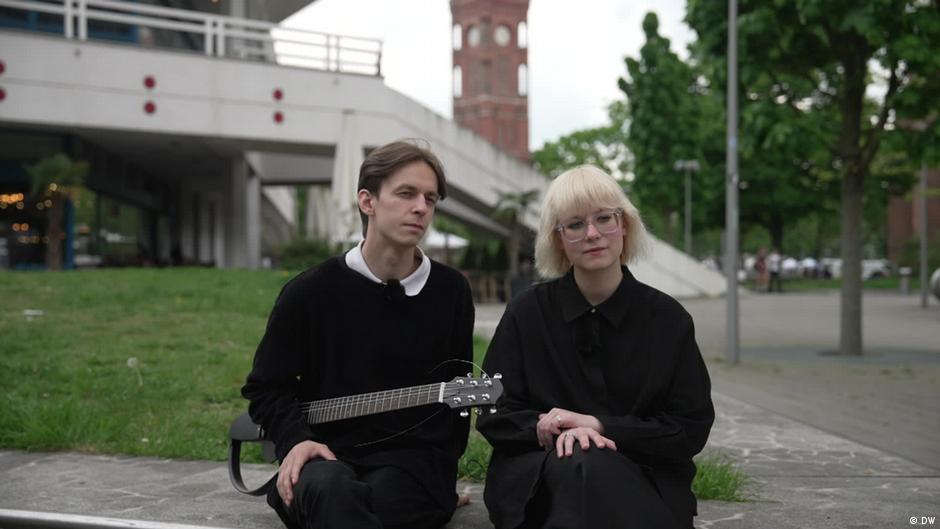
Russia’s Ministry of Justice has added two members of the street-music group StopTime to its register of “foreign agents,” a politically sensitive designation that underscores the regulatory risks surrounding cultural expression in the country but provides no immediate, company-specific catalyst for Wall Street.
The newly listed musicians are 19-year-old vocalist Diana Loginova, who performs under the name Naoko, and her husband, 23-year-old guitarist Alexander Orlov. Information about their inclusion appeared on the ministry’s website on Friday, October 16, exactly one year after the musicians received their first administrative detention.
The ministry said Loginova had opposed the war in Ukraine, disseminated what authorities described as inaccurate information about the decisions and policies of the Russian government, and interacted with people designated as foreign agents. It accused Orlov of actively participating in the distribution of material characterized as anti-Russian.
The official descriptions represent the Russian government’s stated grounds for the decision. The source material did not provide comments from Loginova, Orlov or their representatives responding to the latest designation.
Limited Direct Read-Through for US Equities
For Wall Street investors, the development carries no identified direct financial impact on a publicly traded US company. The musicians are individuals rather than listed issuers, and the source reported no related share-price moves, changes in trading volume, analyst rating actions or revisions to corporate earnings forecasts.
There is therefore no evidence in the report of immediate sector rotation involving US media, entertainment, technology or communications stocks. Any equity-market relevance is indirect, centering on the broader operating environment for international media platforms, music distributors, event businesses and rights holders with exposure to Russia.
The case may nevertheless contribute to investors’ assessment of regulatory and reputational risk in markets where authorities restrict content, performers or distribution channels. Such developments can affect how analysts frame geopolitical exposure, compliance costs and the availability of creative content, although no brokerage or equity-research view was cited in connection with the StopTime decision.
The ministry also added the movement “Malinovy Klin — Independent Kuban” to the foreign-agent register on October 16. Russian authorities alleged that the movement had, among other things, called for a violation of the country’s territorial integrity.
Street Performances Drew Official Scrutiny
StopTime performed on the streets of St. Petersburg beginning in the spring of 2025. Alongside Loginova and Orlov, drummer Vladislav Leontyev was a member of the group until January 2026. The group promoted its concerts on social media and performed songs by Noize MC, Monetochka, Zemfira and the band Pornofilmy. Russia’s Ministry of Justice has designated all of those performers as foreign agents.
During one performance in October 2025, StopTime played Noize MC’s song “Kooperativ Lebedinoye Ozero,” or “Swan Lake Cooperative.” A St. Petersburg court had ruled in May that the song constituted information prohibited in Russia.
The latest designation came exactly one year after the musicians’ first administrative detention over a concert near St. Petersburg’s Ploshchad Vosstaniya metro station.
Authorities found Loginova, Orlov and Leontyev guilty of organizing a mass event that resulted in what officials called a disturbance of public order. Police said 70 people attended the concert near the metro station.
Immediately after the first detention period expired, officials drew up additional administrative reports against the group’s members. The source described the process as a series of “carousel” detentions, which kept the musicians in custody almost until the middle of November.
After their third consecutive detention, Loginova and Orlov left Russia. Leontyev remained in the country and subsequently departed the group.
Investors Left Without a Tradable Catalyst
From an equity-research perspective, the story is best viewed as another data point in Russia’s political and regulatory risk profile rather than as a standalone trading event. The report contained no indication of abnormal volumes in affected securities, because it identified no listed company directly tied to the musicians or the government action.
It also offered no basis for quantifying revenue exposure, estimating costs or changing valuation assumptions for a particular stock. Without evidence of platform restrictions, disrupted commercial contracts or sanctions affecting a listed business, the designation alone does not establish a material earnings impact.
Portfolio managers following global media and entertainment companies may still monitor whether similar cases lead to broader controls over music distribution, social-media promotion or live performances. In this instance, however, the available facts point to an enforcement action against individual musicians and a political movement, not to a measurable shift in US equity fundamentals, sector leadership or Wall Street trading activity.