Senators Urge Trump to Scrap Russian Diesel Deal as Energy Stocks Watch
A bipartisan Senate letter says Russian diesel imports would do little for U.S. fuel costs while easing pressure on Moscow.
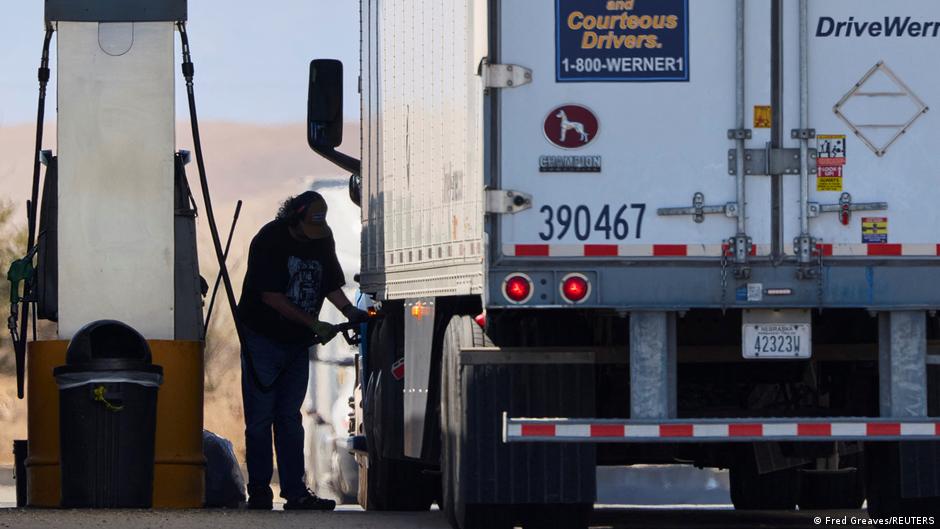
A bipartisan group of U.S. senators is pressing President Donald Trump to abandon a proposed diesel arrangement with Russian President Vladimir Putin, setting up a fresh policy risk for energy markets, refiners and transport-linked equities as Wall Street weighs the impact of a potential shift in sanctions enforcement.
The appeal, led by Democratic Senator Richard Blumenthal and dated Tuesday, October 13, argues that allowing Russian diesel back onto global markets would not deliver meaningful relief to American households facing high fuel prices. Instead, the lawmakers say, it would provide the Kremlin with additional funding to continue its war in Ukraine.
For investors, the dispute introduces a new variable into an already sensitive energy trade. U.S. refiners, integrated oil companies, shipping firms and fuel distributors could all be affected by any change in Russian diesel flows, particularly if Washington suspends sanctions through April 2027 as described in the source article. The issue also touches broader sector rotation themes, with energy shares often reacting to changes in crude and refined-product supply expectations, while industrial and transport names respond to fuel-cost assumptions.
Sanctions Relief Becomes a Market Question
The senators said Congress and the American public support ending the war in Ukraine, which the letter says has cost hundreds of thousands of lives over four and a half years. But they argued that any peace must be reached on fair terms, not through an arrangement that weakens economic pressure on Moscow.
“This deal is a gift to our adversary and a betrayal of our allies; it must be cancelled,” the senators said, according to the Russian-language source text.
The lawmakers said removing U.S. sanctions on Russian diesel exports would “only provide Putin with additional funds to finance his war machine” and allow Russia to continue attacks on Ukrainian civilians. Their letter also urged Trump to increase economic pressure on Russia and on countries they described as central to keeping the war going, particularly China.
The senators specifically called on Trump to use powers granted under Lindsey Graham’s sanctions legislation concerning Russia and Iran. Copies of the appeal were also sent to Secretary of State Marco Rubio and Treasury Secretary Scott Bessent, according to the source.
The signatories included six Democrats: Richard Blumenthal, Jeanne Shaheen, Richard Durbin, Sheldon Whitehouse, Jack Reed and Christopher Coons. They were joined by six Republicans: Mitch McConnell, Thom Tillis, Susan Collins, Alan Stewart Armstrong, Lisa Murkowski and John Cornyn.
Refiners, Diesel Spreads and Trading Desks
Trump said on October 9 on Truth Social that he had held an “extremely successful” phone call with Putin. During the call, according to the source article, the two leaders agreed on supplies of Russian diesel fuel to the U.S. and global markets.
Trump said Russian companies would immediately ship more than 300,000 tonnes, followed by another 500,000 tonnes in November and 1 million tonnes “immediately after that,” which the source article suggests would likely mean December. He also said a further 3 million tonnes could follow depending on refinery conditions, though the period for those additional shipments was not specified.
The U.S. Treasury Department then issued a general license suspending U.S. sanctions on Russian diesel fuel until April 2027, according to the source article. Russian state television program Vesti reported on October 12 that the first shipment had left St. Petersburg for the U.S. East Coast and was expected to arrive within 48 to 72 hours.
On Wall Street, the immediate question is whether additional diesel supply would compress refined-product margins or simply alter regional flows without materially changing end-user prices. The senators’ letter leans toward the latter view, saying American families struggling with high fuel prices are unlikely to see significant improvement from Russian diesel entering the global market.
That argument matters for equity research teams covering refiners and fuel-sensitive sectors. If the volumes are viewed as too small or too uncertain to move retail diesel prices, analysts may focus more on geopolitical and sanctions risk than on direct earnings relief for logistics, trucking, agriculture and industrial companies. Conversely, if traders believe the supply will be sustained, diesel cracks and distillate inventories could become central indicators for short-term positioning in energy equities.
The reported timeline also matters. A near-term cargo to the East Coast, followed by staged shipments in November and December, could attract attention in refined-products markets even before any broader earnings impact is visible. Trading volumes in refinery stocks and energy exchange-traded funds may rise around confirmation of arrivals, Treasury guidance, or further congressional responses.
At the sector level, the dispute could reinforce a defensive posture among portfolio managers. Energy names may face crosscurrents from possible supply additions, sanctions uncertainty and headline risk, while defense-related and geopolitical-risk trades could remain supported if lawmakers intensify pressure on the administration. Transport and consumer-facing stocks may benefit only if investors see credible evidence that diesel prices will fall, which the senators explicitly questioned.
The political fight also highlights the difficulty of translating commodity supply announcements into household price relief. Diesel pricing depends on refining capacity, distribution bottlenecks, inventories, demand and regional constraints, not merely headline tonnage. That gives equity strategists room to treat the deal less as a straightforward fuel-cost catalyst and more as a policy shock with uneven implications across energy, transport and industrial stocks.