Russian Prison Health Case Adds to Human Rights Risk Watch for Investors
The reported return of historian Yuri Dmitriev to a penal colony without a diagnosis highlights continuing governance and sanctions risk around Russia exposure.
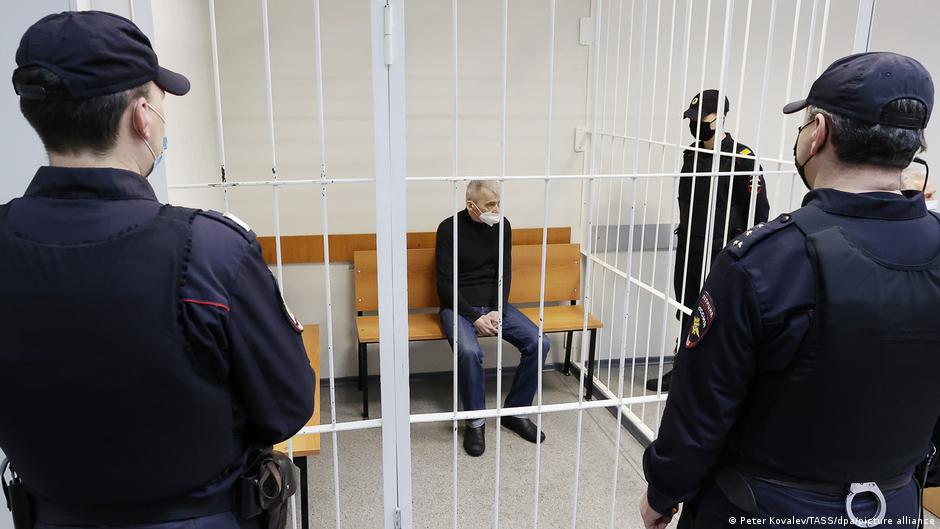
Russian historian Yuri Dmitriev, the former head of Memorial in Karelia, was reportedly returned from a prison hospital to his penal colony without a diagnosis after being sent for treatment with signs that supporters feared could indicate a stroke. For equity investors, the case does not create a direct single-stock catalyst, but it adds to the steady flow of human rights and rule-of-law developments that shape how global funds assess Russian sovereign, corporate and sanctions-linked risk.
The human rights project For Human Rights said on Telegram on Tuesday, October 13, citing an unnamed representative of Dmitriev's support group, that the historian had been transferred to a prison hospital because of suspected stroke symptoms. According to the account, the facility lacked the equipment needed to make a diagnosis. Dmitriev was given a course of injections, but supporters said they did not know what medication had been administered.
His condition is not very good. There was a suspected stroke, but no diagnosis was made because the hospital has no diagnostic equipment.
The same representative said Dmitriev had been prescribed bed rest until October 28, but that the colony administration initially appeared not to know this and was not allowing him to remain lying down. She later added that the information about the bed-rest order may have reached the colony. She also said Dmitriev had been placed in a punishment cell several times, citing alleged infractions including an unfastened top shirt button, sitting on his bed and feeding a cat.
Why Markets Track Cases With No Immediate Trading Symbol
There is no listed company named in the report, and the source article contains no data on trading volumes, equity prices, analyst rating changes or sector flows. That matters for investors: this is not a report that can be mapped cleanly to a share-price move in a particular issuer. Still, human rights cases in Russia remain part of the broader governance landscape watched by sanctions lawyers, emerging-markets desks, ESG teams and portfolio managers with legacy exposure to Russian securities or companies with operational, supply-chain or reputational links to the country.
Since major Western sanctions and market restrictions sharply reduced direct Russia exposure for many global investors, Russia-related news has often entered equity research through risk screens rather than conventional earnings models. Cases involving political imprisonment, judicial process, prison health conditions and Moscow's response to European legal institutions can influence the qualitative risk premium applied to assets connected to Russia, even when they do not move a stock on the day.
The reported hospital transfer took place on September 25, when Dmitriev was urgently hospitalized from Penal Colony No. 18 in Potma, Mordovia, to a medical correctional facility in the settlement of Barashevo. The online outlet Current Time reported that Dmitriev had severe weakness, impaired coordination and could not stand on his own. The latest account says he was later returned to the colony without a diagnosis.
Dmitriev is known for compiling and publishing Books of Remembrance for victims of political repression in Karelia in the 1930s and 1940s, as well as materials on the history of the construction of the White Sea-Baltic Canal. He also identified mass burial sites of repression victims in Sandarmokh and Krasny Bor. Those activities made him a prominent figure among historians and human rights advocates focused on Soviet-era state violence.
Legal History and Governance Signal
The criminal prosecution of Dmitriev began in 2016, when the first case was opened against him on suspicion of producing pornographic images of his adopted daughter. A court acquitted him, but a new case was opened in 2018. On July 22, 2020, a court in Petrozavodsk sentenced him to three and a half years in a strict-regime penal colony on charges of sexual violence against a minor.
In September 2020, the Supreme Court of Karelia toughened the sentence to 13 years in a strict-regime colony. Dmitriev was also accused of producing child pornography, committing indecent acts and illegally possessing a weapon. On December 27, 2021, the Petrozavodsk City Court issued a final sentence against the then-65-year-old historian: 15 years in a strict-regime colony, taking into account the previously imposed term.
Dmitriev has not admitted guilt. On March 15, 2022, the Supreme Court of Karelia rejected his appeal. His supporters have argued that the prosecution is connected to his human rights work and efforts to restore the memory of people who were repressed. The European Union, along with scholars and cultural figures from different countries, called for his release.
For Wall Street, the relevant point is not whether this individual case changes cash-flow assumptions for a company. It is that the same institutional environment that produces these disputes is also central to the way equity research desks frame Russian political risk. Analysts covering companies with any residual exposure to Russia, Russian counterparties or sanctions-sensitive trade often separate measurable financial effects from non-quantifiable governance risk. Dmitriev's case falls into the second category.
In March 2026, the European Court of Human Rights in Strasbourg ordered Russia to pay Dmitriev 2,000 euros in compensation for moral harm caused by excessively long pretrial detention and the absence of a fair trial. Kremlin spokesman Dmitry Peskov said at the time that Moscow did not recognize the ECHR decision. That response underscores the gap between European legal rulings and Russian state practice, a divide that remains relevant for investors assessing enforceability, legal predictability and headline risk.
The equity-market impact is therefore indirect but not irrelevant. No trading-volume figures or sector rotation data were provided in the source report, and the case should not be treated as a direct catalyst for any stock. Rather, it reinforces a familiar research view: Russia-linked exposure remains governed less by conventional valuation alone and more by sanctions architecture, legal uncertainty, reputational risk and the durability of political risk discounts.