Moscow Drone Attack Disrupts Airports, Putting Russian Transport Stocks in Focus
Russian officials said air defenses destroyed more than 100 drones headed toward Moscow as airport restrictions forced flight diversions.
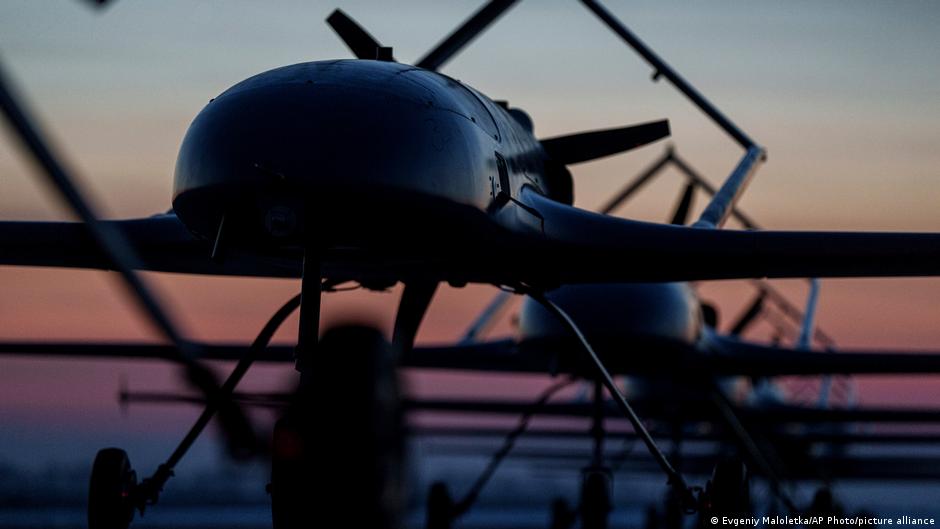
Russian air defenses destroyed more than 100 unmanned aerial vehicles headed toward Moscow overnight into Wednesday, October 14, according to Telegram posts by Moscow Mayor Sergei Sobyanin, in an incident that briefly shifted attention from geopolitics to the operational risk facing Russia-linked transport, airport and insurance-exposed equities.
The reported drone attack triggered temporary restrictions at all major Moscow airports, including Vnukovo, Domodedovo, Sheremetyevo and Zhukovsky, according to notices published by the Telegram channel “Govorit Rosaviatsiya.” Aircraft were redirected to other cities, adding another example of how drone warfare can affect civilian infrastructure and create near-term pressure on airlines, airport operators, fuel logistics providers and related service companies.
Sobyanin did not specify in which parts of the Moscow region the drones were destroyed, nor did he identify what their possible targets may have been. The absence of detail leaves investors with limited visibility into the intended economic impact of the attack, but the scale of the reported interception and the breadth of airport restrictions make the aviation sector the most immediate market lens.
More than 100 drones headed toward Moscow were destroyed by Russian air defenses overnight, according to messages from Moscow Mayor Sergei Sobyanin.
Aviation Disruption Becomes the Immediate Equity Risk
According to TASS, more than 30 aircraft flying to Moscow were diverted to other cities. The agency reported that 19 aircraft bound for Vnukovo instead landed in Nizhny Novgorod, St. Petersburg, Minsk, Pskov and Istanbul. Separately, the Telegram channel “Ostorozhno, Novosti,” which is associated with journalist Ksenia Sobchak, wrote that, according to information from St. Petersburg’s Pulkovo airport, 20 Moscow-bound aircraft were redirected there because of the restrictions.
For equity desks, the affected names and sectors are straightforward even if direct market data from the event were not provided in the source report. Airline operators face schedule disruption, higher fuel burn from diversions, crew and aircraft repositioning costs, and possible passenger compensation pressure. Airport operators and ground-service providers face uneven traffic flows, congestion and knock-on delays. Insurers and reinsurers may also attract scrutiny when residential damage or business interruption is reported, although the source did not provide any claim figures.
Pobeda, the low-cost airline, said it adjusted its schedule because of prolonged restrictions at airports in the Moscow aviation hub and the Volga region, according to “Ostorozhno, Novosti.” For investors, that places attention on the broader Russian airline complex and related transport infrastructure. Pobeda is part of the Russian aviation market’s low-cost segment, and its schedule changes illustrate how restrictions can spread beyond one airport or one carrier when multiple regional hubs are affected at the same time.
Restrictions overnight into October 14 were also introduced at airports in Volgograd, Nizhny Novgorod, Samara, Penza, Saratov and Yaroslavl, according to “Govorit Rosaviatsiya.” That wider geography matters for sector rotation analysis because regional airport disruption can affect not only passenger airlines but also cargo flows, business travel, tourism-linked demand and companies dependent on predictable domestic logistics.
Industrial and Regional Exposure Also Draws Attention
The incident was not limited to Moscow aviation. Saratov Region Governor Roman Busargin reported that at least one person was killed as a result of a drone attack. He said several residential buildings in the city of Balakovo were damaged and that emergency services were working at the scene.
Balakovo’s inclusion is relevant for investors watching regional infrastructure risk. The source report did not identify any industrial target in Balakovo, and it did not provide financial damage estimates. Still, casualties and residential damage can increase political and regulatory pressure, potentially affecting local construction, utilities, insurance and emergency-service procurement themes.
Separately, Stavropol Territory Governor Vladimir Vladimirov reported that air defenses repelled a drone raid aimed toward the industrial zone of Nevinnomyssk. He did not specify which industrial facilities may have been targeted. For market participants, the reference to an industrial zone is notable because attacks near manufacturing, chemicals, energy or logistics assets can influence risk premiums even when officials do not identify a specific company or site.
There were no trading-volume figures, share-price moves or brokerage notes included in the source article. That limits the equity research read-through to operational exposure rather than confirmed market reaction. A cautious analyst view would therefore separate immediate, documented facts from market inference: the confirmed facts are the reported destruction of more than 100 drones, airport restrictions, aircraft diversions, Pobeda schedule adjustments, one reported death in Balakovo, residential damage, and an air-defense response near Nevinnomyssk’s industrial zone.
The investable question is whether such disruptions remain isolated operational events or become a recurring input into valuation models for transport and infrastructure assets. Repeated airport closures can affect reliability metrics, passenger behavior, cost assumptions and earnings visibility. For airlines, even temporary restrictions can produce cascading network effects, especially when aircraft and crews end up in cities outside the planned rotation. For airports and support services, traffic may not disappear but can become less profitable if disruption increases overtime, handling complexity and congestion.
From a Wall Street perspective, the episode reinforces why geopolitical risk is increasingly treated as a sector-specific factor rather than a broad headline discount. Aviation, regional logistics, industrial real estate and critical infrastructure remain the most exposed categories in the source report. Without official details on the drones’ intended targets around Moscow or the specific industrial assets near Nevinnomyssk, investors are likely to focus on companies with direct operational links to affected airports and regions rather than attempt a wider market call.
The lack of precise target information also keeps the equity research tone measured. The event is material for operational-risk monitoring, but the source provides no basis for estimating earnings impact, insurance losses, traffic-volume decline or stock-specific valuation changes. The clearest conclusion is that Russia’s aviation network again showed vulnerability to security-related airspace restrictions, and that any listed companies tied to airline operations, airports, ground handling or regional industrial infrastructure may remain sensitive to further reports of drone activity.