EU Accession Step for Ukraine and Moldova Puts Eastern Europe in Market Focus
The EU’s agreement to open two negotiating clusters advances Ukraine and Moldova’s accession tracks and may sharpen investor attention on regional equities.
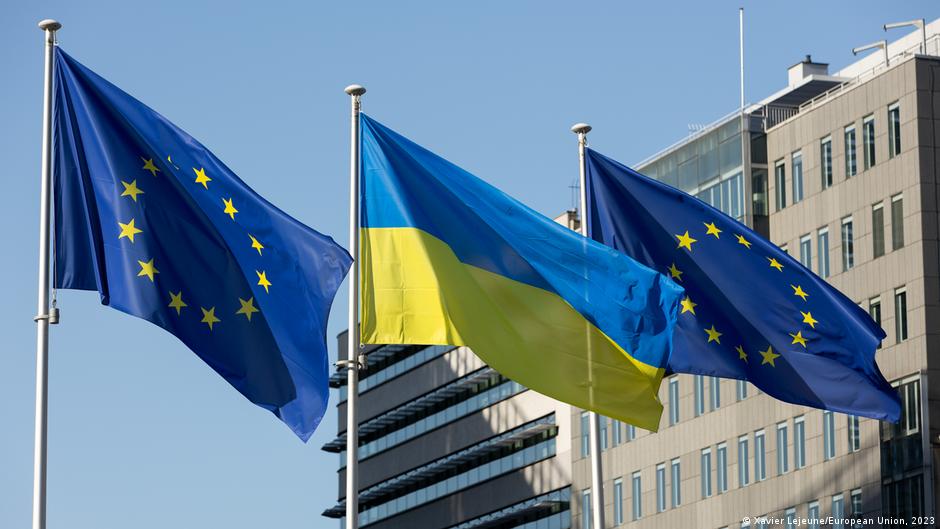
European Union member states have agreed to open negotiating clusters 2 and 3 in accession talks with Ukraine and Moldova, a procedural step that gives Wall Street investors another policy signal to assess in the broader Eastern Europe risk trade. Irish Minister of State for European Affairs Thomas Byrne announced the agreement on X on Monday, October 12, after Ukraine’s parliament approved education-law amendments considered important for securing Hungary’s consent.
The move concerns the thematic clusters known as the “Internal Market” and “Competitiveness and Inclusive Growth.” For equity investors, those areas carry the clearest market-facing implications among the accession chapters because they point to future alignment with EU standards on market access, competition policy, business regulation and growth frameworks. The announcement does not by itself change corporate earnings or trade flows, but it adds to the policy trajectory that investors use when pricing Ukraine- and Moldova-linked exposure.
“I can confirm that all EU member states have agreed to open clusters 2 and 3 for Ukraine and Moldova,” Byrne wrote, also referring to separate accession steps for Albania and Montenegro.
Byrne said that after “Montenegro Monday,” there would be a “Super Tuesday” for Albania, Moldova and Ukraine. He added that EU members had agreed to close chapters 17, 18 and 19 for Albania and chapter 20 for Montenegro. The broader message for markets is that EU enlargement remains active across several candidate countries, even as Ukraine’s process unfolds under wartime conditions.
Equity Lens: Banks, Industrials and Infrastructure Watch the Policy Path
For U.S. investors, the immediate market impact is likely to be concentrated less in direct Ukrainian listings and more in regional exchange-traded funds, European banks, insurers, infrastructure names, agricultural supply chains and defense-linked equities with exposure to reconstruction, cross-border trade or EU integration themes. Sector rotation tied to Eastern Europe has often depended on perceived political risk, financing visibility and reform momentum. This EU step may therefore be read as a modestly supportive policy marker rather than a direct catalyst for broad index moves.
Trading desks are likely to watch whether the October 13 intergovernmental conference in Luxembourg confirms the opening of the two clusters, as European Commissioner for Enlargement Marta Kos had said on October 5 could happen on the sidelines of the EU General Affairs Council. The timing matters for investors because policy confirmation can affect risk appetite in regional assets, particularly where liquidity is thin and headlines can drive sharp moves in sovereign-linked instruments or country-specific funds.
The accession negotiations are organized into six large thematic sections, or clusters, that cover different areas of law and public policy. During the process, the EU evaluates how ready a candidate country is to apply EU rules and standards. The six clusters are “Fundamentals,” “Internal Market,” “Competitiveness and Inclusive Growth,” “Green Agenda and Sustainable Connectivity,” “Resources, Agriculture and Cohesion,” and “External Relations.”
Ukraine’s first cluster, “Fundamentals,” was opened on June 15. The addition of clusters 2 and 3 would broaden the formal scope of talks into areas more directly tied to corporate regulation and economic competitiveness. For equity research teams, that means more attention to reform implementation rather than the opening decision alone. Analysts will likely focus on whether legislative changes translate into enforceable standards, improved market access, and clearer investment conditions over time.
Hungary’s Consent and Reform Conditionality
Earlier on October 12, Ukraine’s Verkhovna Rada approved, in two readings and as a whole, amendments to the education law concerning the rights of national minorities. The document had been necessary to obtain Hungary’s consent to opening the second and third negotiating clusters for Ukraine’s accession to the European Union. Later that evening, Ukrainian lawmaker Yaroslav Zhelezniak said on Telegram that President Volodymyr Zelensky had signed the adopted law.
For markets, Hungary’s role underscores a key accession risk: progress depends not only on the candidate country’s reform agenda but also on unanimous political agreement among EU members. That can complicate the investment case for Ukraine-linked assets, because the path to accession is iterative and subject to political bargaining. Still, each resolved obstacle can reduce a layer of uncertainty, which is why investors following regional risk may treat the latest agreement as incremental but relevant.
Kos said after the Moldova-EU Association meeting on October 5 that Ukraine and Moldova were carrying out systemic reforms “in very difficult conditions” and belonged to a group of four states leading in accession negotiations. She also noted that the European Commission will publish a detailed assessment of reform progress across all areas in candidate countries on October 28 in its annual enlargement report.
That October 28 report may become the next major policy document for investors tracking the region. Equity strategists and macro desks may use it to assess which reform areas are advancing and which could slow capital inflows, EU-related funding prospects or reconstruction assumptions. Because the source material does not provide trading volumes, analyst ratings or specific price reactions, the market view is necessarily framed around potential sector sensitivity rather than measured stock performance.
Kos also urged observers not to forget that Ukraine is fighting for survival while simultaneously pursuing EU accession and implementing reforms, including reforms needed to obtain additional funds for the budget and army needs. That dual-track reality remains central to the investment debate: Ukraine’s accession progress may support longer-term convergence themes, but wartime risk continues to dominate near-term valuation, liquidity and portfolio-allocation decisions.