Trump Says Putin Is More Interested Than Zelensky in Ukraine Peace Deal
The remarks put Ukraine diplomacy back in focus for Wall Street as investors assess geopolitical risk across energy, defense and European exposure.
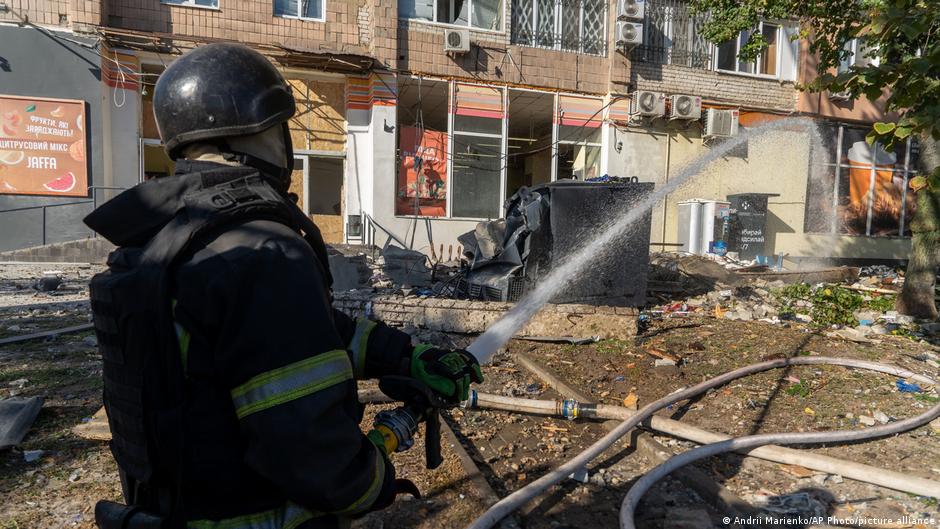
U.S. President Donald Trump said Russian President Vladimir Putin is more interested than Ukrainian President Vladimir Zelensky in reaching a peace agreement over Ukraine, a statement that placed the conflict’s diplomatic trajectory back in the foreground for investors tracking geopolitical risk, energy security and defense-sector exposure.
Speaking to reporters in the early hours of Tuesday, October 13, Trump was asked about Russia’s violation of an energy ceasefire in its war against Ukraine. The U.S. president said that “violations were on both sides” and expressed the view that Putin wants peace.
The comments are likely to be read closely on Wall Street because any shift in U.S. messaging on Ukraine can affect sentiment toward a range of equities, including energy companies, defense contractors, European industrial names and infrastructure-linked stocks. While Trump did not announce new sanctions, military aid measures, or market-specific policy actions, his remarks framed the next stage of diplomacy as depending heavily on Washington’s ability to shape the behavior of both Moscow and Kyiv.
Investors Watch the Policy Signal
One reporter asked Trump what evidence he saw of Putin’s willingness to compromise, given that Russia continues to attack Ukraine. “I think they will make a deal. I really think Putin is more interested than Zelensky in making a deal,” Trump replied, according to the Russian-language source article.
For equity markets, the statement does not by itself change fundamentals. Still, it may influence the way traders price geopolitical headlines, particularly in sectors exposed to war-related supply risk or government spending. Energy stocks can react to expectations around regional infrastructure damage, fuel supply pressures and sanctions risk. Defense shares can be sensitive to perceptions of prolonged conflict or changes in U.S. and European military procurement priorities. European banks and manufacturers may also move with broader risk appetite tied to the war’s trajectory.
Trump’s answer also came as he addressed the reported breach of an energy ceasefire that he himself had announced. Asked about Putin violating the arrangement, Trump said the matter first had to be studied because violations had occurred on both sides.
“First we need to study this situation, because violations were on both sides,” Trump said when commenting on the energy ceasefire issue.
Asked how he intended to ensure that the Russian president complied with the energy ceasefire, Trump said he believes Putin wants an agreement and that Zelensky needs to be persuaded to move toward one. That formulation may draw scrutiny from analysts who follow U.S. foreign policy because it suggests Trump is emphasizing Kyiv’s role in advancing a settlement even as Ukraine says Russia has not met the announced ceasefire terms.
Ukraine Seeks U.S. Pressure on Russia
Zelensky had earlier called on the United States to influence Russia so that it would begin observing a ceasefire regime in the energy sector. “We are waiting to see what concrete steps the Americans are prepared to take,” Zelensky said in remarks at the Warsaw Security Forum.
According to the Ukrainian president, Kyiv was very surprised on October 11 by social media reports that all attacks on energy facilities in Russia’s war against Ukraine would be halted immediately. Zelensky said that directly after the publication of that statement, Russia struck a thermal power plant in Kharkiv, causing additional damage to Ukraine’s energy system.
In a Telegram post on the evening of October 12, Zelensky said Ukraine supported an energy ceasefire and that Kyiv’s position was clear. Ukraine, he said, was ready to guarantee an energy ceasefire as announced by the U.S. president, while Russia had to take corresponding steps. Zelensky added that, at that moment, Ukraine was not recording Russian compliance with the conditions announced by Trump.
“Much depends precisely on the U.S. position so that de-escalation can actually work,” Zelensky wrote, adding that pressure must be applied to Russia and that talks with the American side were continuing at all levels.
The market impact of such statements may depend less on the individual remarks than on whether they are followed by concrete U.S. action. Equity research desks typically look for policy transmission: new sanctions, changes in export controls, altered military-aid packages, or diplomatic steps that could shorten or prolong the conflict. In the absence of those measures, traders may treat the comments as headline risk rather than a durable catalyst.
Still, the energy-ceasefire dispute matters for sector rotation. If energy infrastructure remains under attack, investors may continue to monitor utilities, power equipment suppliers, fuel markets and European energy security plays. If diplomacy gains traction, some risk premium tied to regional disruption could ease, potentially benefiting broader European equities while weighing on parts of the defense trade that have been supported by expectations of sustained military spending.
There were no trading-volume figures, stock price moves, or analyst ratings included in the source material. The core investment question, therefore, is how markets interpret Trump’s allocation of responsibility between Moscow and Kyiv. His assertion that Putin is more interested in a deal than Zelensky contrasts with Ukraine’s account that Russia has not observed the announced energy ceasefire and that U.S. pressure is needed to make de-escalation work.
For Wall Street, the immediate read-through is a renewed focus on geopolitical risk management rather than a direct single-stock event. Investors in energy, defense and European-exposed equities will be watching whether Trump’s comments lead to further U.S. diplomatic pressure, whether Russia changes its conduct toward Ukrainian energy infrastructure, and whether Kyiv receives clearer assurances from Washington on enforcement of the ceasefire terms.