EU Drone and Missile Funding Keeps Defense Stocks in Wall Street Focus
Brussels plans fresh support for Kyiv as investors weigh the implications for aerospace, defense, energy and food-security exposures.
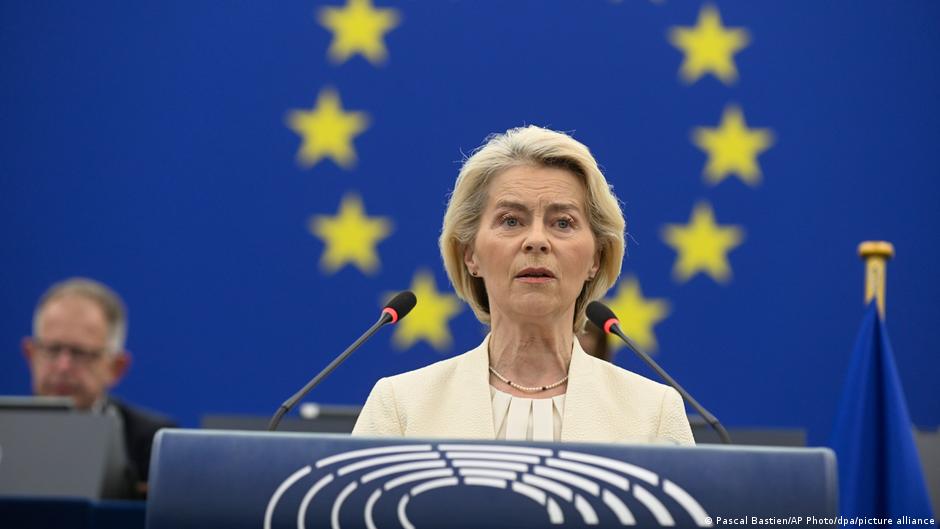
The European Union is preparing to allocate additional financing to Kyiv in mid-October for the purchase of drones and missiles, a move that keeps Ukraine-related defense spending firmly on the radar for Wall Street investors. European Commission President Ursula von der Leyen announced the plan on Sunday, October 11, after a phone call with Ukrainian President Volodymyr Zelensky.
Von der Leyen said the support was needed to strengthen Ukraine’s defenses and protect its airspace. She did not specify the size of the package or identify the funding sources, leaving investors without the kind of headline figure that can immediately reprice individual contractors. Still, the direction of policy remains clear: Brussels is continuing to frame military assistance as a central component of its Ukraine strategy, with drones, missiles and air defense at the core of near-term requirements.
For U.S. markets, the announcement lands in a familiar but important lane. Defense primes, missile-system suppliers, electronic-warfare companies and drone-adjacent technology names have repeatedly traded around Ukraine headlines, even when funding is routed through European institutions rather than directly through Washington. The absence of a euro amount may limit the immediate trading impulse, but the stated focus on drones and missiles reinforces a theme already reflected in equity research: modern conflicts are increasing demand for precision weapons, air-defense systems, sensors, launch platforms and lower-cost unmanned systems.
Defense Demand Remains the Clearest Equity Read-Through
Shares of large U.S. defense contractors are typically most sensitive when funding packages include specific procurement lines or when governments identify named systems. This announcement does neither. But the broader read-through remains constructive for the sector, particularly for companies exposed to missile defense, munitions replenishment, radar systems, command-and-control software and battlefield communications.
Investors may also watch European defense stocks for a more direct policy response, while using U.S.-listed aerospace and defense companies as liquid proxies for the theme. In prior Ukraine-related trading cycles, volume has often concentrated in major defense names and exchange-traded funds tracking aerospace and defense rather than in smaller suppliers, especially when the news lacks procurement detail.
“This is necessary to strengthen Ukraine’s defense and protect its airspace,” von der Leyen said, according to the source article.
That language matters for equity markets because airspace protection points to a capital-intensive category of defense spending. Air-defense systems require interceptors, launchers, radar, software integration, maintenance and replacement stockpiles. Even when the immediate buyer is Ukraine and the funding source is European, the supply chain can reach across NATO-aligned industrial bases. For Wall Street, the question is less whether one announcement moves earnings estimates by itself and more whether the policy trajectory supports a longer cycle of elevated defense budgets.
Sector Rotation Extends Beyond Arms Makers
The market impact is not confined to defense. Von der Leyen said the situation in Ukraine would be one of the central topics at this week’s European Council meeting. Brussels plans to discuss financing needs for the coming year and ways to mobilize new international support. That keeps geopolitical risk embedded in energy, agriculture, shipping and macro-sensitive equities.
Von der Leyen also said she fully supported Zelensky’s call for a ceasefire that would protect global food supplies and energy infrastructure in Ukraine and Russia. For traders, that formulation touches two market-sensitive areas. First, food supply protection keeps grain, fertilizer, logistics and agricultural-equipment exposures in view. Second, the reference to energy infrastructure reinforces the risk premium around oil, natural gas, power generation and related infrastructure equities.
Sector rotation around Ukraine headlines can therefore cut both ways. Defense stocks may benefit from expectations of sustained procurement. Energy shares can attract flows when infrastructure risk rises, though ceasefire language can also pressure geopolitical premiums if investors believe supply disruption risk is easing. Agricultural names may move on any perceived threat to Black Sea exports or broader food-security chains, but the article provides no new production, export or price data, limiting the basis for a more specific trading call.
The European Commission president described the war as having entered a new and darker phase. She said Russia is conducting a prolonged war on the battlefield and striking civilians far beyond the front line. That characterization supports the view that European governments are likely to remain under pressure to finance Ukraine’s military and civilian resilience, even as budget constraints and domestic politics shape the pace of disbursements.
Research Desks Will Look for Funding Details
Equity research teams are likely to focus on several unanswered questions. The first is the amount of the additional drone and missile financing. The second is whether the package will be funded through existing EU instruments, new commitments from member states or other international mechanisms. The third is whether the money translates into orders for specific systems or remains a broader financing pledge.
The source article also notes that two new clusters of topics will be unlocked in Ukraine’s negotiations with the European Union. While that is primarily a political and accession-related development, markets may treat it as part of a broader signal that Brussels intends to keep Ukraine institutionally anchored to Europe. That has implications for long-duration financing, reconstruction planning and the future role of European banks, industrial companies and infrastructure groups.
The latest announcement follows a separate European Commission decision on October 2 to approve a 2.9 billion euro tranche for Kyiv under the Ukraine Facility, the EU mechanism created to provide long-term financial assistance to Ukraine. The facility covers the 2024-2027 period and is designed to provide up to 50 billion euros in stable and predictable financial support.
Payments under the Ukraine Facility are closely linked to Ukraine’s implementation of a specific recovery and reform plan, as well as support for democratic mechanisms, the rule of law and human rights. Disbursements are made quarterly after checks that the conditions for receiving funds have been met.
For Wall Street, the central takeaway is that Ukraine remains a live catalyst across several equity sectors, even when the immediate news comes from Brussels rather than Washington. The new financing pledge lacks the procurement specifics that would normally drive sharper single-stock moves. But the emphasis on drones, missiles and airspace defense adds another data point to a defense-spending cycle that investors continue to monitor through order books, backlog commentary, margin guidance and government budget signals.