Palestinian Election Delay Adds Political Risk for Middle East-Exposed Stocks
Mahmoud Abbas postponed the first Palestinian national vote in more than two decades, extending uncertainty around Gaza governance and regional risk pricing.
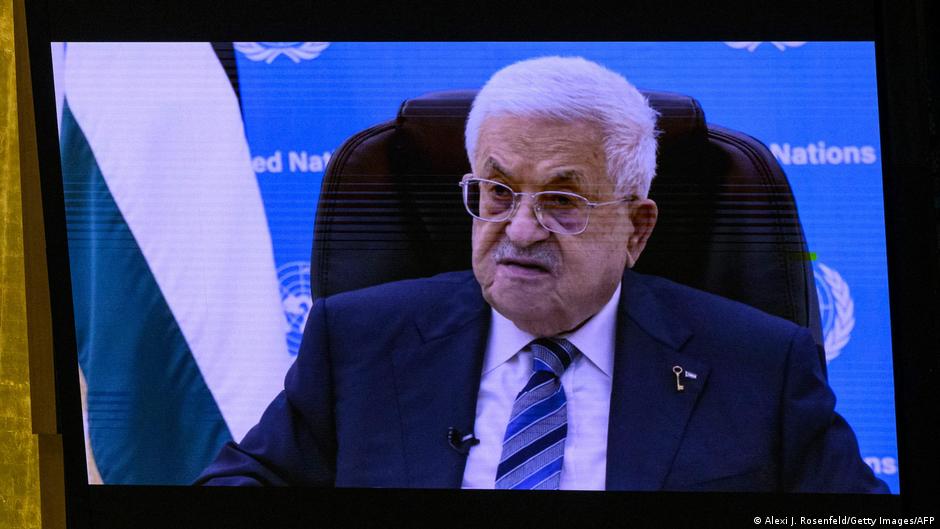
Palestinian Authority President Mahmoud Abbas has postponed parliamentary elections in the Palestinian territories from late November to September 11, 2027, according to WAFA, delaying what had been expected to be the first national vote in more than two decades. The same date is also set for a presidential election, putting both the legislature and the presidency on a longer political timetable at a moment when investors are closely watching Middle East stability, Gaza reconstruction prospects and the durability of the Israel-Hamas ceasefire framework.
For Wall Street, the move is less a single-stock catalyst than a fresh input into geopolitical risk models. The postponement prolongs uncertainty over who will ultimately govern the West Bank, East Jerusalem and Gaza, and it may complicate the second phase of the U.S.-backed plan to end hostilities in Gaza. That matters for sectors that tend to react to shifts in regional risk: energy, defense, shipping, global infrastructure, engineering and construction, and select emerging-market funds with Middle East exposure.
WAFA cited Israeli military restrictions, the expansion of Jewish settlements, attacks by armed settlers and limits on freedom of movement as reasons for delaying voting in the West Bank, East Jerusalem and Gaza. In relation to Gaza, the agency also pointed to instability and the delayed deployment of international security forces. Those factors underscore why equity investors may continue to assign a discount to companies, contractors and financial instruments tied to postwar reconstruction or normalization scenarios.
Israeli Foreign Minister Gideon Saar accused Abbas of deceiving the international community and making false claims that Israel had created obstacles to voting.
Saar said the 90-year-old Abbas was seeking to avoid responsibility and accountability. The criticism was not confined to Israel. Objections to the delay also came from within Fatah, the Palestinian national liberation movement to which Abbas belongs. That internal dissent may matter for markets because governance credibility is central to any future aid mechanism, reconstruction authority or security arrangement that could involve foreign capital, multilateral financing or regional contractors.
Market Impact: Risk Premiums, Not Immediate Earnings
The most immediate market read-through is a potential extension of the geopolitical risk premium attached to the eastern Mediterranean and wider Middle East. Oil and gas traders tend to respond most sharply when political developments threaten supply, shipping lanes or broader regional escalation. The election delay does not by itself point to a supply shock, but it reinforces the fragile political backdrop that can keep energy volatility elevated. Integrated majors, oilfield services companies and refiners may see investor attention increase if the news is interpreted alongside any renewed security incidents.
Defense and aerospace stocks are another area to watch. U.S.-listed contractors such as Lockheed Martin, RTX, Northrop Grumman and General Dynamics often trade with a geopolitical-risk bid when conflicts appear prolonged or regional security spending is expected to remain elevated. The Palestinian election delay is not a procurement announcement, but it may support the broader equity research view that Middle East security demand will remain structurally high, especially if governance arrangements in Gaza remain unresolved.
Shipping and logistics names could also be sensitive to any change in the perceived stability of the region. Equity desks will be watching freight rates, insurance costs and trading volumes in shipping companies if the political impasse feeds into concerns about broader regional disruption. The development comes in a market environment where investors have repeatedly linked Middle East headlines to energy futures, maritime risk and safe-haven flows, even when company-specific earnings effects are difficult to quantify.
Gaza Governance Remains the Key Equity Question
The broader context is the sharp escalation that began on October 7, 2023, when Hamas, recognized by the European Union and the United States as a terrorist organization, launched a large-scale attack on Israel. Militants fired a mass rocket barrage, entered Israeli territory and carried out the deadliest massacre of civilians in the history of the modern Israeli state, killing about 1,200 people. They also seized around 250 hostages and took them to Gaza. Some hostages were exchanged or released, while others died. Israel responded by declaring war on Hamas.
In October 2025, Israeli authorities and Hamas agreed to a ceasefire under a peace plan developed by the administration of U.S. President Donald Trump. The United States, Turkey, Qatar and Egypt acted as guarantors of the agreements between Israel and Hamas. During the first phase, Hamas returned all remaining living Israeli hostages in exchange for the release of Palestinian prisoners from Israeli jails.
In mid-January, the White House said the second phase of Trump’s plan to end hostilities in Gaza had begun. Under that phase, a National Committee is supposed to take over governance of the region until the Palestinian Authority is ready to assume that role. The election delay therefore lands directly on a question investors are already asking: whether there will be a credible administrative framework for Gaza capable of attracting aid, organizing reconstruction and supporting security arrangements.
For equity research teams, the postponement may reduce confidence in a near-term political reset. Analysts following infrastructure, cement, engineering, telecom and regional banking exposure will likely treat the 2027 election date as a sign that major reconstruction-linked earnings opportunities remain difficult to time. Companies with theoretical upside from rebuilding Gaza may remain in a wait-and-see category until governance, funding and security structures become clearer.
The delay also comes after the first municipal elections in 20 years were held in April in Deir al-Balah in Gaza. Candidates on most electoral lists were close to Fatah or were independents. That local vote had offered a limited sign of political process returning in Gaza, but the national postponement now signals a longer path before parliamentary and presidential legitimacy can be refreshed across the Palestinian territories.
Trading volumes in U.S. equities may not show a direct response unless the delay is followed by diplomatic fallout, protests, violence or renewed concerns about the ceasefire. Still, portfolio managers with exposure to energy, defense, shipping and emerging-market risk are likely to fold the development into broader scenario analysis. The market conclusion is straightforward: the political timeline has lengthened, and with it the uncertainty around Gaza’s governance, Palestinian institutional legitimacy and the investment case tied to a more stable Middle East.