Latvian Arrests at RAF Molesworth Put Defense and Security Stocks in Focus
British counterterrorism police detained two Latvian citizens after a breach at RAF Molesworth, a base hosting NATO and U.S. intelligence facilities.
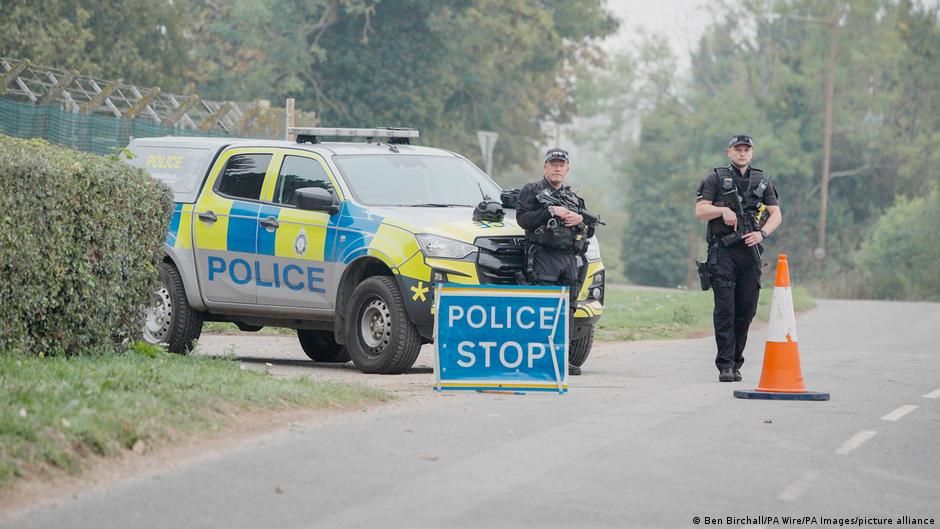
British counterterrorism police detained two Latvian citizens after they entered RAF Molesworth, a military air base in southeastern England that hosts NATO and U.S. intelligence centers, adding another security incident for investors already tracking geopolitical risk across defense, aerospace and infrastructure-linked equities.
The two men, aged 32 and 36, damaged fencing around the facility and were arrested after entering the site, according to police information cited by AFP. The intrusion took place during the night of October 8. Law enforcement officials said the men intended to “cause damage to the United Kingdom.” An investigation is under way.
For Wall Street, the episode does not by itself establish a direct corporate exposure or immediate earnings impact. The source material does not identify any publicly traded contractor, equipment supplier, cyber vendor, airline, or logistics group connected to the incident. Still, the breach lands in a market environment where investors have repeatedly assigned higher attention to defense readiness, base security, intelligence infrastructure, and counterterrorism spending as part of the broader geopolitical-risk trade.
Defense and Security Themes Remain a Market Watchpoint
RAF Molesworth’s role as a site for NATO and U.S. intelligence centers gives the incident a profile beyond a routine trespass case. In equity markets, events involving military installations can influence sentiment toward defense primes, surveillance providers, cybersecurity contractors and perimeter-security suppliers, even when no direct procurement decision has been announced.
The immediate market question is therefore not whether this single breach changes revenue forecasts, but whether it reinforces an existing investor thesis: that allied governments may continue to prioritize military-base protection, intelligence resilience and homeland-security capabilities. That theme has supported interest in defense and security-related equities during periods of heightened geopolitical uncertainty, though stock-specific reactions typically depend on confirmed contracts, budget language, or guidance from companies and government agencies.
Because the police statement described the case as being handled by counterterrorism authorities, traders may also watch whether U.K. officials provide additional detail about the motive, any suspected network, or possible links to other incidents. The source report says the investigation is ongoing and does not provide evidence of a broader conspiracy.
Police said the men’s purpose was to “cause damage to the United Kingdom.”
That phrase is likely to draw attention from political-risk analysts, but it is not the same as a confirmed finding about state involvement, organized terrorism, or a market-relevant threat to a specific issuer. Investors should distinguish between security headlines that affect sentiment and disclosures that alter cash-flow expectations.
No Confirmed Link to RAF Fairford Incident
Police also said that, for now, “nothing indicates” a connection between the RAF Molesworth breach and an incident at RAF Fairford in late September. In that earlier case, a local resident reported suspicious activity near the base. Police later found three vans containing some quantity of gasoline, cordoned off the area and evacuated residents of a nearby village.
Seven suspects were detained in connection with the RAF Fairford incident, but all were later released under certain conditions, according to dpa. The United States subsequently decided to withdraw U.S. B-1 bombers that had been based at Fairford. U.S. President Donald Trump explained the move by referring to “threats” from people he said were “connected with Iran.”
For equity investors, the Fairford reference is important because it shows how base-security developments can move quickly from local policing matters into wider defense posture decisions. However, the Molesworth report does not say that U.S. aircraft, defense programs, base contractors, or listed companies were affected by the October 8 breach.
That distinction matters for trading desks. A confirmed change in deployment, procurement, or operational tempo can have implications for aerospace and defense names, fuel logistics, intelligence services, or security vendors. A police investigation without company exposure is more likely to feed sector-level risk perception than to justify immediate changes to individual stock models.
Sector Rotation Implications for U.S. Equities
In a Wall Street context, the incident fits into a broader rotation framework rather than a standalone catalyst. Defense and security names can attract defensive and geopolitical-risk flows when investors expect governments to spend more on military readiness, surveillance, hardened facilities and counter-drone or perimeter systems. At the same time, risk-sensitive sectors can come under pressure if geopolitical headlines raise concerns about escalation, energy security, or transport disruption.
The source report does not include trading-volume data, share-price moves, analyst comments, or company statements. Any assessment of market response would therefore need to be based on subsequent market data and equity research, not on the reported facts alone. As of the facts provided, there is no basis to name a particular stock as a direct beneficiary or loser from the RAF Molesworth incident.
Still, equity research desks may use the event as another data point in evaluating security budgets across NATO countries and the United States. The presence of U.S. and NATO intelligence facilities at RAF Molesworth places the incident within the transatlantic defense architecture that investors already monitor for budgetary and procurement signals.
For now, the actionable market takeaway is limited but clear: the breach reinforces investor attention on military-base security and counterterrorism risk in the United Kingdom, while leaving stock-specific conclusions dependent on further official disclosures, confirmed contracts, or company guidance.