Russia’s Ruling Party Lead Keeps Political-Risk Focus on Moscow-Exposed Trades
Early election data point to a stronger parliamentary position for United Russia, reinforcing the policy backdrop global investors already associate with Russia risk.
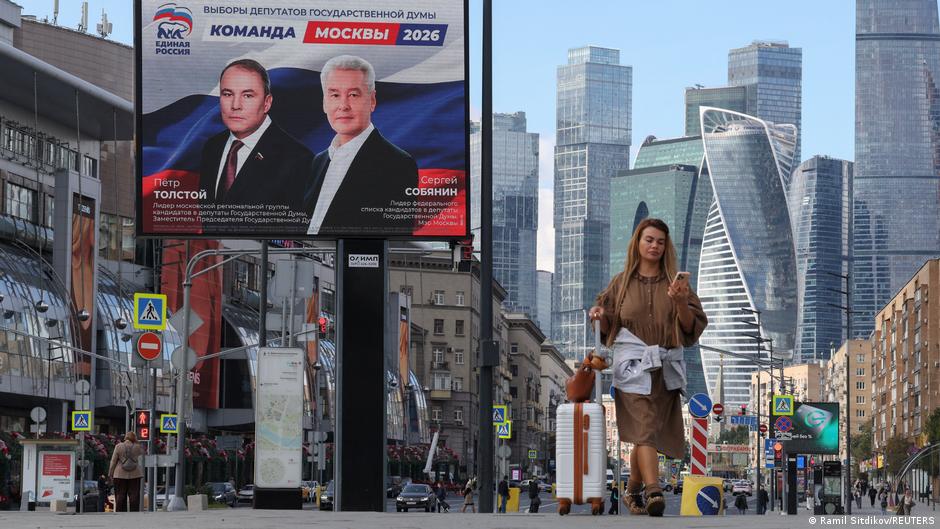
Russia’s ruling United Russia party was on course for a decisive victory in elections to the State Duma, according to preliminary figures released by the Central Election Commission after 82.19% of protocols had been processed. The commission said the party was receiving 57.76% of the vote, a result that would mark a stronger showing than its 49.82% result in the 2021 State Duma election.
The figures place the Communist Party of the Russian Federation in second position with 13.89%, followed by the Liberal Democratic Party of Russia with 8.77%. The New People party was fourth with 7.97%, while A Just Russia was at 4.99%, leaving it at risk of falling below the 5% threshold required to enter parliament on party-list results, according to the data cited by the commission.
For Wall Street, the immediate equity-market significance is less about a surprise change in political leadership and more about confirmation of the policy continuity investors have already priced into Russia-linked exposure. The source material does not identify any individual publicly traded companies, and it does not provide market prices, trading volumes, index moves or analyst notes. That limits any stock-specific read-through to a political-risk assessment rather than a documented move in named equities.
Policy Continuity Remains the Core Market Signal
United Russia’s lead matters because candidates from the party were also ahead in 208 of 225 single-mandate districts. On those numbers, the ruling party would secure more than 301 seats in parliament, the level needed for a constitutional majority. For institutional investors, a constitutional majority is a key governance marker because it indicates the ruling bloc would retain broad legislative capacity.
The market interpretation is therefore one of continuity. Investors tracking Russia-related risk would likely view the results as reinforcing the existing political structure rather than opening a new reform or opposition-led scenario. In equity research terms, that tends to keep the focus on sanctions exposure, capital controls, governance risk, energy policy and the broader investability of Russian assets rather than on near-term earnings revisions prompted by a change in government composition.
After 82.19% of protocols had been processed, United Russia was receiving 57.76% of the vote, according to Russia’s Central Election Commission.
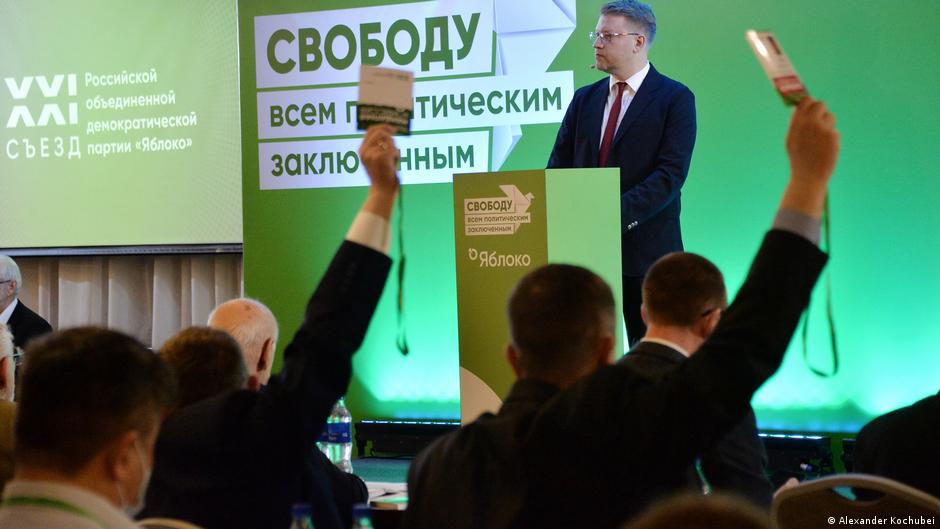
The vote also comes with major geopolitical implications. This round of three-day parliamentary elections was held not only within Russia but also in territories of Ukraine occupied by Russia. Germany and the European Union criticized the elections, pointing to their staged character and to repression against the opposition. The only major party that had opposed the war, Yabloko, was removed from the elections.
Those facts are central to the equity-market angle because international investors generally treat the legitimacy of elections, opposition access and voting in occupied territories as part of sovereign and geopolitical risk. Such risk can influence the discount rate applied to country exposure, the availability of Western capital, and the willingness of global funds to hold or trade securities connected to Russia. The article’s source data, however, does not state that any particular stock, sector or exchange-traded fund moved in response to the election update.
Sector Rotation Hinges on Risk Perception, Not Fresh Company Data
In the absence of company-level information, the likely Wall Street discussion centers on sector frameworks rather than confirmed stock moves. Energy, financials, defense-linked industries, materials and companies with historic Russia exposure are the areas investors commonly monitor when political developments in Moscow affect sanctions risk or cross-border operations. But the election figures alone do not provide evidence of a rotation into or out of any named sector.
The same caution applies to trading volumes. The source article reports vote counts and party standings, but it does not include turnover data for Russian or U.S.-listed securities, American depositary receipts, exchange-traded funds, futures or options. As a result, any assertion about unusual trading volume would go beyond the available record. A disciplined market note would frame the election result as a political catalyst to watch rather than as proof of a completed trade.
Equity strategists are likely to focus on whether the stronger ruling-party result further entrenches the current policy path. United Russia’s apparent improvement from 49.82% in 2021 to 57.76% in the latest count suggests a materially stronger party-list position, based on the commission’s interim figures. Combined with leads in most single-mandate districts, the numbers point toward a parliament in which the ruling party would retain the ability to pass major legislation without depending on opposition parties.
For global portfolios, that reinforces the broader conclusion that Russia exposure remains primarily a geopolitical-risk trade rather than a conventional earnings-recovery story. Western criticism of the election and the exclusion of a major antiwar party underline the factors that have kept many international investors cautious or unable to participate directly in Russian assets. The most relevant equity-research question is whether policy continuity sustains existing restrictions and risk premiums, not whether the vote creates an immediate new corporate winner.
The preliminary results also show the relative positioning of the parties that remain in contention. The Communist Party’s 13.89% keeps it well behind United Russia, while the LDPR and New People party remain in single digits. A Just Russia’s 4.99% showing is especially consequential because of the 5% threshold. If it fails to cross that line, the distribution of parliamentary representation would be affected, though the source article’s main conclusion is that United Russia is positioned to win and to exceed the seat count required for a constitutional majority.
Until final certified results and market data are available, investors have limited grounds for stock-by-stock conclusions. The early count nevertheless sends a clear signal: Russia’s ruling party appears set to retain dominant parliamentary power, and that leaves Wall Street’s Russia conversation anchored in sanctions, governance, liquidity and geopolitical risk rather than in a change-of-control scenario.