Yabloko Clears Novgorod Threshold, Keeping Ballot Access in Focus
The Russian opposition party’s projected seat in the Novgorod regional parliament may preserve a procedural route into future State Duma races.
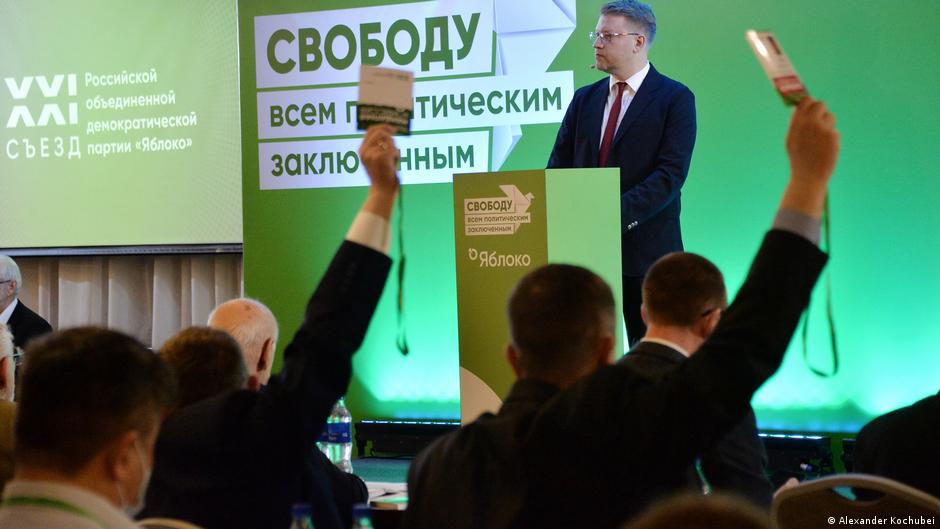
Russia’s Yabloko party is projected to enter the Novgorod Regional Duma after receiving 6.2% of the vote with 96.86% of precinct protocols counted, according to data reported by Russia’s Central Election Commission. The result puts the party above the 5% threshold required for representation in the regional legislature and carries a broader procedural consequence: it may allow Yabloko to continue taking part in State Duma elections without collecting voter signatures.
For investors and political-risk desks watching Russia, the Novgorod result is not a market-moving corporate event in the conventional sense. No listed company, sector index, trading volume, or equity-research revision was cited in the source material. Still, the outcome is relevant to the political backdrop that informs country-risk models, sanctions analysis and long-horizon assessments of Russia’s institutional environment. In that context, the main signal is procedural continuity for a small opposition party that has faced mounting constraints.
Yabloko’s showing marks an improvement from the previous election at the same level in 2021, when the party received 3.83% of the vote. The latest tally, reported overnight into Monday, September 21, indicates that Yabloko crossed the regional parliament threshold despite adverse campaign conditions described by a party source.
Regional Vote Carries National Ballot Implications
The practical importance of a regional seat lies in Russia’s electoral rules. According to a Yabloko source cited in the Russian-language report, having a deputy in a regional parliament enables the party to take part in future State Duma elections without gathering signatures. That issue became more pressing after Yabloko’s federal list was removed from the State Duma election by Russia’s Supreme Court on August 10.
The case against Yabloko’s federal list was brought by Rodina, which accused the party, among other things, of copyright violations and illegal payments for election campaigning. Although the federal list was removed, Yabloko candidates are still participating in voting in single-mandate districts, according to the source article.
The Novgorod result therefore functions as a narrow but important form of political optionality for Yabloko. It does not change the near-term balance of power in Russian national politics, nor does it provide direct information on Russian equities. But for analysts tracking governance risk, it shows that the party may retain one institutional mechanism for future electoral participation even after setbacks at the federal level.
“For the party, it has a very practical meaning: having a deputy in a regional parliament will allow Yabloko to continue participating in State Duma elections without collecting signatures,” a Yabloko source told DW, speaking anonymously.
The same source said Yabloko previously had three regional factions, in Pskov, St. Petersburg and Karelia, but that the party lists there were removed. Against that backdrop, Novgorod takes on additional importance as a remaining foothold for the party’s formal access to the electoral system.
United Russia Leads, Smaller Parties Clear Threshold
According to the Central Election Commission data cited in the report, United Russia led the Novgorod Regional Duma race with 38.37% of the vote. The Communist Party of the Russian Federation followed with 14.54%, while the Liberal Democratic Party of Russia had 12.01%. New People received 9.87%, A Just Russia had 7.7%, and the Party of Pensioners received 5.55%.
Those figures place multiple parties above the 5% threshold, but the article’s central focus is Yabloko’s return to the regional legislature. For market observers, the regional distribution of party support may be less important than the broader direction of political participation. Equity strategists generally treat political pluralism, legal predictability and administrative constraints as part of the sovereign-risk environment, particularly in markets already shaped by sanctions, capital controls and limited foreign investor participation. The source article, however, does not report any immediate reaction in Russian financial markets or any change in sector positioning.
The campaign conditions described by the Yabloko source were unusually difficult. The entire party list on the ballot was marked with a label referring to a “foreign agent” because the party’s list leader, deputy party chair Anna Cherepanova, had been recognized as affiliated with a “foreign agent.” Cherepanova herself was removed from the election because of an administrative case under Article 20.3 of Russia’s Code of Administrative Offenses, according to the report.
The Yabloko source said that neither the labeling nor the removal of the list leader prevented the party from posting what the source characterized as a good result. The source’s assessment was political rather than financial; no trading data, corporate exposure or investor flows were included.
Opposition Voice and Risk Perception
The source article also notes Yabloko’s distinct position among Russian parties. It states that Yabloko was the only Russian party to speak out against the war in Ukraine. That position has made the party significant beyond its vote share, particularly for foreign policymakers and analysts monitoring the remaining space for opposition politics in Russia.
Jürgen Hardt, a member of the CDU/CSU parliamentary group in the Bundestag responsible for foreign policy issues, was cited as previously saying that by excluding Yabloko, Russian President Vladimir Putin had “excluded the last significant opposition voice” from the electoral process. The remark referred to the removal of the party from the federal list contest.
For Wall Street readers, the investable takeaway is necessarily limited. The source article does not identify any Russian or international stocks affected by the Novgorod result, nor does it cite analyst notes, fund flows, trading volumes, bond spreads or currency moves. The event is best understood as a political-risk data point rather than a catalyst for immediate equity repricing.
Even so, institutional investors with exposure to Russia-related risk, emerging-market policy research or sanctions-sensitive sectors may view the development as part of a broader governance picture. The Novgorod vote suggests that, despite significant legal and administrative pressure, Yabloko may preserve a formal route into future parliamentary races. Whether that procedural access translates into meaningful national political leverage remains uncertain and was not assessed in the source material.