German EV Demand Surges as Chinese Brands Gain Ground on Local Automakers
Germany’s electric-car registrations rose about 80% in October, but Chinese producers captured more of the growth than domestic manufacturers.
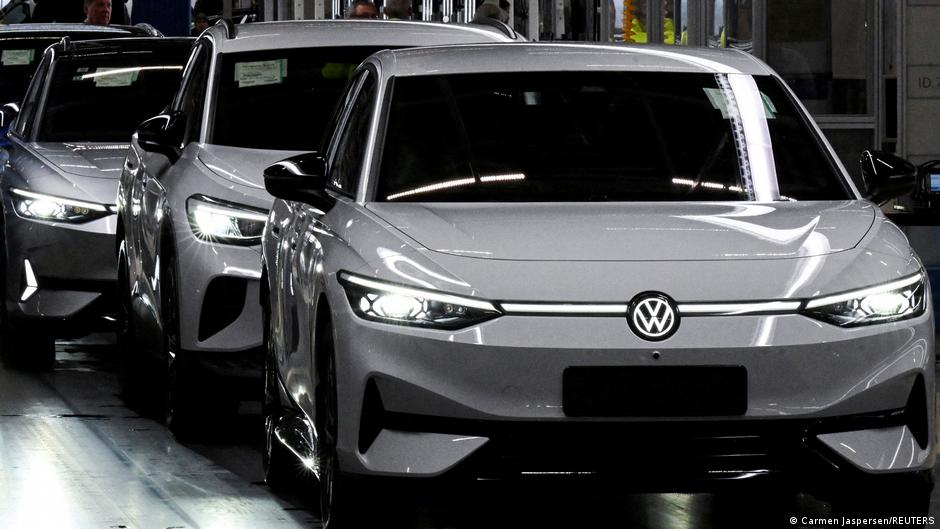
Germany’s electric-vehicle market accelerated sharply in October 2026, creating a potentially important signal for investors tracking European automakers, Chinese manufacturers and the broader transition away from internal-combustion vehicles.
About 254,500 new passenger cars were registered in Germany during the month, according to the Federal Motor Transport Authority, known as the KBA. Roughly 94,000 of those vehicles were fully electric, an increase of about 80% from the corresponding period in 2025.
The expansion underscores the strength of German consumer demand for battery-powered cars despite the country’s energy crisis. High fuel prices and a government subsidy program introduced in May 2026 have made electric models more attractive to motorists, according to Reuters.
For equity markets, however, the headline increase in demand does not translate into an equal benefit for every automaker. Foreign manufacturers, and Chinese companies in particular, are taking a growing share of Germany’s expanding electric-car market. That shift raises questions about whether listed German automotive groups can convert supportive industry conditions into stronger sales, margins and profits.
Chinese manufacturers capture a larger share
Chinese automakers recorded the strongest sales growth as their share of the German market climbed from 5.2% to 8.4%, according to consulting firm EY. German manufacturers, by contrast, have continued to lose electric-vehicle market share from month to month.
Germany’s EV market is expanding rapidly, but the strongest competitive gains are accruing to Chinese manufacturers rather than the country’s established automotive groups.
The divergence is significant for the equity research view of the sector. Rising registrations can support a positive assessment of overall EV demand, yet market-share losses may limit the earnings benefit for domestic producers. German automakers already face pressure on profitability, and stronger competition could make it harder to protect pricing while funding the continuing investment required for electric models.
The October registration data therefore point toward potential differentiation within automotive equities rather than a uniform sector-wide uplift. Companies gaining share in fully electric vehicles are better positioned to benefit from the market’s rapid growth. Manufacturers surrendering share may need higher volumes, tighter cost control or more competitive product offerings to achieve the same financial effect.
Combustion-engine registrations retreat
Demand moved in the opposite direction for vehicles with internal-combustion engines, a category that also includes hybrids in the reported figures. Around 62,400 such vehicles were newly registered in October 2026, representing a sharp decline from October of the previous year, according to the KBA.
The contrast between approximately 94,000 fully electric registrations and about 62,400 registrations for combustion-engine and hybrid vehicles highlights the speed of the change in Germany’s new-car mix. For investors, it reinforces the strategic importance of EV portfolios and the growing risk attached to dependence on traditional powertrains.
The pattern may also influence sector rotation within the auto industry. Investors assessing manufacturers increasingly need to distinguish between exposure to a growing end market and the ability to win within that market. Strong national EV demand can coexist with weaker results for incumbent producers when foreign rivals capture incremental sales.
No stock-specific trading volumes or share-price moves were provided with the registration figures, so the immediate market reaction cannot be quantified from the available data. The fundamental read-through is nonetheless clear: October’s growth supports the broader electric-mobility theme, while the distribution of that growth presents a competitive warning for German carmakers.
Subsidies strengthen demand but intensify competition
The subsidy program launched in May has helped stimulate purchases at a time when elevated fuel prices have increased the cost of operating conventional vehicles. That combination appears to be accelerating consumer adoption, but it is also opening Germany’s market more widely to international competitors.
Equity analysts evaluating the industry will likely focus on whether German groups can halt their sequential loss of EV market share and whether stronger electric-car demand can offset continued profit pressure. The key issue is no longer simply how quickly Germany adopts electric vehicles, but which manufacturers secure the revenue generated by that transition.
October’s figures show a market undergoing a pronounced shift: fully electric registrations are rising rapidly, combustion-engine demand is weakening, and Chinese brands are strengthening their position. For automotive stocks, that mix favors selective analysis centered on market share, pricing power and profitability rather than a broad assumption that every producer benefits equally from higher EV demand.