Russian Strikes on Sumy and Mykolaiv Keep Ukraine Risk in Market Focus
Attacks that killed civilians and damaged port infrastructure add to the geopolitical risk investors track across defense, shipping and grain-linked equities.
Russian forces struck civilian and infrastructure targets in Ukraine on Wednesday, September 9, killing and injuring residents in Sumy and Mykolaiv and keeping geopolitical risk on the radar for Wall Street investors monitoring the war’s impact on European security, Black Sea logistics and commodity-sensitive shares.
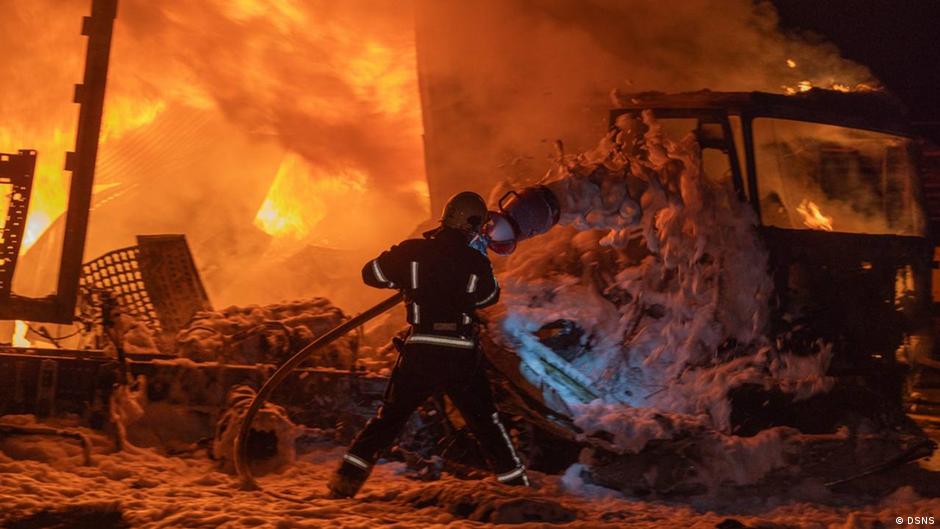
In Sumy, a Russian strike hit a parking area near the Manufaktura shopping center on Wednesday evening. Oleg Grigorov, head of the regional military administration, said two people were killed: a 21-year-old man and a 21-year-old woman. Preliminary information indicated that about 20 other people were wounded.
Three of the wounded, two men and one woman, were reported to be in serious condition. Another woman from Sumy was described as being in extremely serious condition. Teenagers were among those injured. Rescue workers and municipal services were operating at the site after the strike, while regional authorities warned that the threat of further attacks remained.
Authorities in Sumy said the threat of repeat attacks in the region remained in place after the strike near the shopping center.
Russian forces also continued attacks on Mykolaiv, a southern Ukrainian city closely watched because of its proximity to port infrastructure and Black Sea trade routes. Regional military administration head Heorhiy Reshetilov said attacks throughout September 9 damaged port infrastructure, killed two people and injured at least 12. A one-year-old child was among those wounded.
Ukraine’s State Emergency Service said some of the Russian strikes hit warehouses where vegetables were stored, as well as a post office branch. During the night of September 9, Russia had already launched a large-scale attack on the region. Drone and ballistic missile strikes damaged port and civilian infrastructure, as well as residential buildings. Authorities had reported one woman killed and four people wounded in that earlier wave.
Why Wall Street Is Watching the Strikes
For U.S. markets, the immediate significance is not a direct earnings event for a single listed company, but another reminder that the Russia-Ukraine war remains an active source of headline risk. Equity traders have repeatedly treated escalations around Ukrainian ports, energy facilities and transport infrastructure as variables that can affect sector positioning, especially in defense, shipping, agriculture and energy-linked names.
Damage to port infrastructure in Mykolaiv is particularly relevant for investors following Black Sea logistics and agricultural supply chains. The source report did not specify the scale of the damage or whether cargo operations were affected, so any market interpretation depends on subsequent confirmation from Ukrainian authorities, shipping data or company disclosures. Still, attacks on port-adjacent infrastructure tend to draw attention from traders in grain markets and from equity investors watching agricultural processors, fertilizer producers, rail and marine transport firms.
The warehouses hit in Mykolaiv were described by Ukraine’s emergency service as facilities where vegetables were stored. That detail points to localized disruption in food storage and distribution rather than a confirmed broad commodity shock. For Wall Street, the distinction matters: localized infrastructure losses may have humanitarian and regional economic significance without necessarily changing earnings expectations for U.S.-listed food or logistics companies.
Defense stocks are another area where the war continues to influence investor thinking. Reports of drone and ballistic missile attacks reinforce the market’s focus on air defense systems, counter-drone technology, ammunition supply and European rearmament budgets. The article does not mention any specific weapons makers or procurement decisions, so there is no direct company-level catalyst in the report. The broader equity research view is that sustained attacks on Ukrainian cities and infrastructure keep defense demand narratives intact, particularly for companies exposed to missile defense, sensors and munitions.
Sector Rotation Remains Event-Driven
Trading volumes around Ukraine-related headlines often depend on whether the events are seen as changing the war’s trajectory, threatening export corridors or prompting new policy action from the United States or Europe. The strikes described in Sumy and Mykolaiv involved civilian casualties and infrastructure damage, but the source report did not include financial market data, share-price moves or analyst commentary tied to the attacks.
That absence is important. Investors may watch names in aerospace and defense, marine shipping, grain trading, fertilizer and energy for possible reaction, but the article itself does not establish a measurable move in U.S. equities. Any claim about specific stock performance, unusually heavy trading volumes or analyst target revisions would require separate market data and research notes.
From a sector-rotation perspective, the most plausible market channel is risk management rather than immediate repricing. Portfolio managers with European exposure may continue to assess the durability of logistics networks, the cost of war-risk insurance, the stability of agricultural exports and the possibility of additional sanctions or military aid packages. Those issues can influence relative preferences among defense contractors, commodity-linked equities and transport companies, while also affecting broader sentiment toward emerging Europe.
The human toll remains central to the story. In Sumy, the deaths of two 21-year-olds and injuries to about 20 others followed a strike near a shopping center parking area. In Mykolaiv, attacks over the same day killed two people, injured at least 12 and damaged port infrastructure. Earlier overnight strikes in the region had already killed one woman and injured four people, according to authorities.
For Wall Street, the latest attacks are another data point in a long-running conflict that continues to intersect with markets through defense spending, shipping routes, food supply chains and geopolitical risk premiums. The direct equity impact will depend on whether further attacks disrupt export flows, trigger policy responses or appear in company guidance. Until then, the strikes reinforce a familiar investment backdrop: Ukraine-related risk remains unresolved, episodic and concentrated in sectors most exposed to security and supply-chain stress.