Russian Strikes Hit Ukraine Logistics, Warehouses and Power Assets
Attacks on Odesa, Kyiv region and Mykolaiv underscored the market sensitivity of logistics, infrastructure and energy-exposed assets.
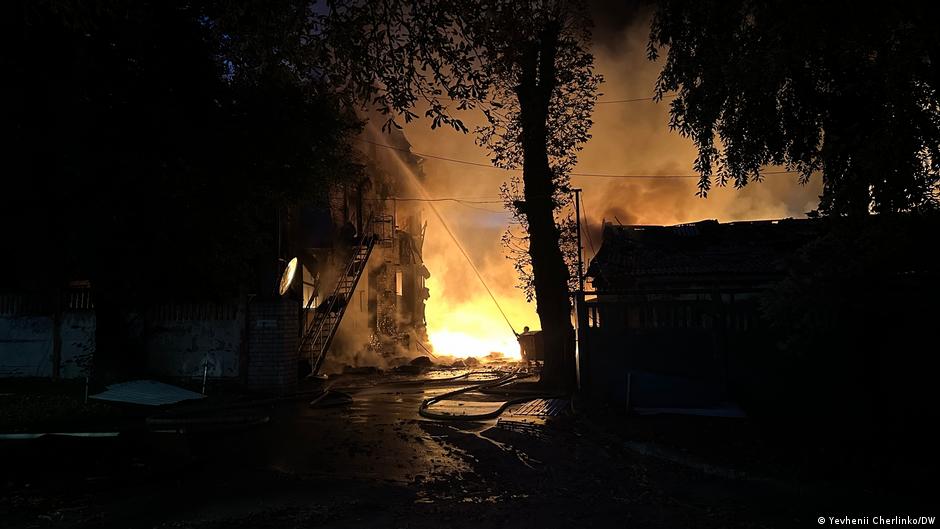
Russian forces attacked Ukraine’s Kyiv and Odesa regions, as well as the southern city of Mykolaiv, from the evening of Sept. 12 into the night of Sept. 13, according to local authorities. The strikes damaged logistics, warehousing, residential and energy infrastructure, creating another reminder for investors that the war continues to feed operational risk across transport, utilities and reconstruction-linked sectors.
In Odesa region, two people were injured after an evening drone attack hit a branch of Nova Poshta, the major Ukrainian delivery and logistics operator, regional military administration head Oleh Kiper and the State Emergency Service said. Kiper said the facade of the building, glazing and a cargo vehicle were damaged.
“The facade of the building, glazing and a cargo vehicle were damaged,” Kiper said.
Separately, an attack on Odesa damaged a multi-storey residential building, according to Serhiy Lysak, head of the city military administration. It was the second strike on an apartment building in the city within 24 hours, according to the account cited by local officials.
In Kyiv region, the regional military administration said strikes on the evening of Sept. 12 damaged warehouse premises in the Boryspil district and caused a fire. In the Brovary district, a warehouse and a private house were damaged. Kyiv Mayor Vitali Klitschko also reported that air defense systems were operating and urged residents to remain in shelters. The Kyiv regional military administration reported air alerts in different parts of the region overnight on its Telegram channel. No information about deaths or injuries was reported.
In Mykolaiv, an evening attack on energy infrastructure left several districts of the regional center partially without power, according to regional military administration head Heorhii Reshetylov. He said repair crews would begin restoring electricity supply as soon as the security situation allowed. Reshetylov later reported the end of an air alert, followed by a renewed air alert.
Why Wall Street Is Watching the Damage Pattern
For U.S. equity markets, the immediate importance of these attacks is less about direct exposure to any one damaged facility and more about the recurring pattern: Russian strikes continue to target the physical systems that keep Ukraine’s economy functioning. Logistics hubs, warehouses, housing stock and power infrastructure sit at the center of the country’s wartime resilience, and each new round of damage can shape how investors view risk across transportation, energy, construction materials, defense technology and insurance-linked equities.
Nova Poshta is not a Wall Street-listed company, but a strike on one of its facilities is relevant to the broader market read-through because delivery networks are a key part of Ukraine’s domestic commerce and humanitarian supply chain. Damage to a cargo vehicle and branch infrastructure is a small event in isolation, yet repeated attacks on logistics nodes can raise the perceived cost of operating in the region. That matters for multinational companies with supply-chain exposure, reconstruction contractors, equipment providers and publicly traded firms whose future growth assumptions include Ukraine recovery spending.
The warehouse damage in Boryspil and Brovary is also notable for sector rotation analysis. Warehousing is the physical layer behind trade, retail distribution, agricultural inputs, repair equipment and aid flows. Investors often treat infrastructure and logistics exposure as a long-cycle reconstruction theme, but the continuing strikes show that the same assets remain vulnerable while the conflict is ongoing. That tension can support demand for defense, surveillance, air defense-adjacent technologies and grid-hardening solutions, while tempering enthusiasm for nearer-term civilian infrastructure plays.
Energy infrastructure remains a particularly sensitive category. Mykolaiv’s partial outages followed a strike on power assets, and officials said restoration work would begin only when security conditions permitted. For traders, attacks on electricity supply can influence views on companies tied to distributed power, grid repair, generators, transformers, electrical components and emergency infrastructure. They can also add a geopolitical premium to European energy sentiment, even when the specific incident does not immediately move benchmark prices.
Equity Research Takeaway
The equity research view is likely to remain selective. Defense and aerospace names may continue to benefit from investor focus on air defense demand and military aid requirements, while engineering, construction and industrial suppliers linked to reconstruction may trade with more mixed sentiment. The long-term opportunity in rebuilding Ukraine remains substantial in market narratives, but each attack on warehouses, apartments and energy infrastructure reinforces that timing, security access and insurance costs remain unresolved variables.
Trading volumes around directly exposed U.S.-listed names may depend less on this single overnight sequence and more on whether investors see it as part of a broader escalation in strikes on logistics and power assets. In recent market behavior around geopolitical risk, rotation often favors defense, cybersecurity, energy security and critical infrastructure suppliers, while higher-risk regional exposure can weigh on transportation, insurers or industrial companies perceived as having operational vulnerability.
The reported absence of deaths or injuries in Kyiv region may limit the immediate geopolitical shock value for global investors. Still, the injuries reported in Odesa region, the damage to Nova Poshta facilities, the warehouse fires and the partial power outages in Mykolaiv all add to a persistent risk map that Wall Street continues to price indirectly through sector exposure rather than through a single Ukrainian equity proxy.
For portfolio managers, the key point is that Ukraine-related market impact remains distributed across sectors. The events of Sept. 12-13 did not introduce a new theme, but they reinforced several existing ones: logistics vulnerability, the importance of air defense, the fragility of urban power supply, and the still-uncertain timeline for reconstruction. Those factors are likely to keep equity research focused on companies that can either supply resilience or absorb the elevated risk of operating near an active war zone.