Russian Presence at G20 Energy Meeting Puts Oil and Defense Stocks in Focus
A Russian representative is expected at next week’s G20 energy ministers’ meeting in Houston as markets assess geopolitical risk around supply security.
A Russian representative will attend next week’s meeting of G20 energy ministers in Houston, a U.S. administration official told Reuters, adding a geopolitical variable for investors already tracking energy security, sanctions policy and military risk across major shipping routes.
The meeting is scheduled for Sept. 14-16 in the U.S. city and will focus on the theme of “energy abundance.” The identity of the Russian participant has not yet been disclosed. For Wall Street, the attendance matters less as a protocol detail than as a signal that energy diplomacy involving Moscow remains active even as the war in Ukraine continues to shape sanctions, commodity flows and investor risk appetite.
The Houston gathering is expected to include U.S. Energy Secretary Chris Wright, U.S. Interior Secretary Doug Burgum and Trump administration representative Jarrod Eigen. Representatives from the energy sector in Europe and Asia are also expected to take part, placing the event at the intersection of policy, production, infrastructure and trade.
Energy Security Returns to the Trading Screen
Although the official theme is abundance, the meeting comes as many countries remain concerned about energy security because of Russia’s war in Ukraine and the confrontation between the United States and Iran. Those concerns have market implications across crude oil, natural gas, tanker operators, refiners, oilfield services companies and defense contractors, particularly when policy signals touch sanctions or shipping risk.
The situation has been further complicated by advances by the Iran-backed Houthis in Yemen. On Sept. 10, the group seized the port city of Mokha on Yemen’s western coast and strengthened its position near the Bab el-Mandeb Strait, the southern outlet of the Red Sea. That waterway is closely watched by energy traders because disruption risks can affect shipping routes, freight costs and the pricing of geopolitical risk across commodities.
Equity investors are likely to read the Houston meeting through several lenses. Integrated oil majors and exploration-and-production companies tend to draw attention when geopolitical risk raises questions about supply security. Refiners can be more sensitive to changes in crude spreads and product availability. Oilfield service names may react to policy signals around production capacity, while tanker and logistics stocks can become more volatile when routes near the Red Sea or other strategic corridors face new pressure.
At the same time, the presence of Russia at a U.S.-hosted G20 energy forum does not itself imply any change in sanctions policy or energy flows. The report said only that a Russian representative would attend and that the person had not been identified. For equity research desks, that distinction is important: the event creates a headline risk window, but it does not provide a measurable earnings input on its own.
Russia will participate in the G20 energy ministers’ meeting in Houston, Reuters reported, citing an unnamed White House official.
Sanctions, Diplomacy and Sector Rotation
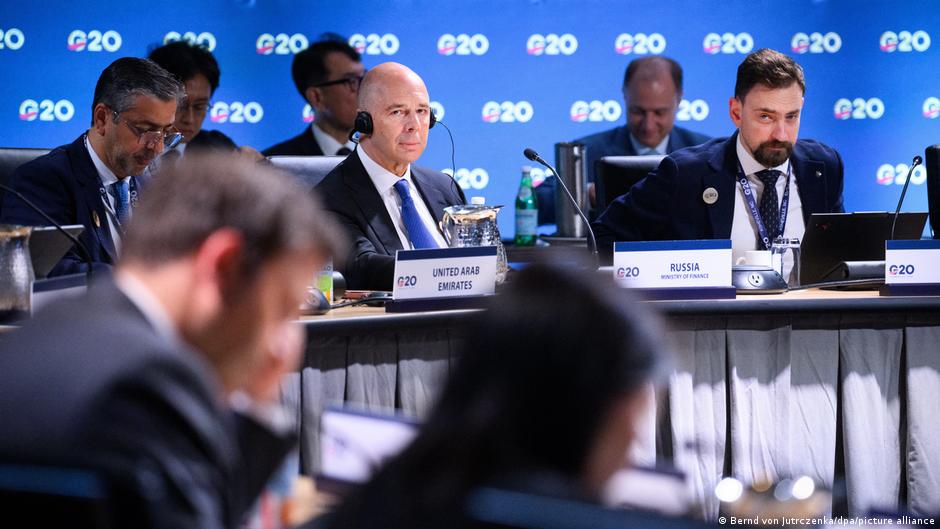
The energy meeting follows a recent G20 finance ministers and central bank governors’ meeting held Aug. 31-Sept. 1 in Asheville, where Russian Finance Minister Anton Siluanov took part for the first time since the start of the war in Ukraine. Earlier, Russia had been represented at such events by secretaries.
According to U.S. media reports cited in the source article, Siluanov discussed with U.S. Treasury Secretary Scott Bessent Donald Trump’s peace plan, proposed in November 2025, as well as the impossibility of easing sanctions before the war ends. That reported framing is central for investors: sanctions remain a key constraint on how markets price Russian-linked energy exposure, European energy security and any potential normalization scenario.
European officials criticized Siluanov’s appearance. German Finance Minister and Vice Chancellor Lars Klingbeil called the decision to receive him at the event an “alarming signal.” In conversations with colleagues from other European countries, Klingbeil threatened to boycott the traditional group photograph if Siluanov appeared in it. According to Klingbeil, representatives of other European countries joined his position, and the photo was ultimately taken without the Russian minister.
That episode underscores the political sensitivity surrounding any Russian participation in high-level economic forums. For markets, it also illustrates why diplomatic contact does not necessarily translate into policy relief. Energy and financial stocks can respond quickly to hints of de-escalation, but European resistance and the stated position that sanctions cannot be eased before the war ends may limit any sustained rotation based only on attendance at multilateral meetings.
Trading volumes around energy and defense names could rise if investors use the Houston event as a catalyst to reassess geopolitical exposures. The most direct watch list includes oil and gas producers, liquefied natural gas infrastructure firms, refiners, pipeline operators, oilfield services groups, tanker companies and aerospace and defense contractors. Broader sector rotation could depend on whether the meeting produces language on supply expansion, emergency coordination, sanctions enforcement or shipping security.
Still, the factual base remains narrow. The reported Russian participation is confirmed only through an unnamed U.S. administration official cited by Reuters; the Russian delegate is not known; and no concrete policy outcome has been announced. In that environment, equity research teams are likely to treat the meeting as a risk-monitoring event rather than a standalone reason to revise earnings estimates.
The larger market significance is that energy diplomacy is moving forward against a backdrop of simultaneous conflicts and chokepoint risk. Houston will bring together U.S. officials, international energy representatives and, according to the report, Russia. For Wall Street, the question is whether the discussions reinforce the current sanctions-and-security framework or open any visible path toward a different policy stance. Until then, the impact is most likely to show up in positioning, volatility and sector-level attention rather than in hard changes to fundamentals.