Lukashenko Orders Belarus Army Checks as Border Risks Re-enter Market Focus
The Belarusian leader said inspections would extend as far as mobilization readiness, adding another geopolitical variable for investors watching Eastern Europe.
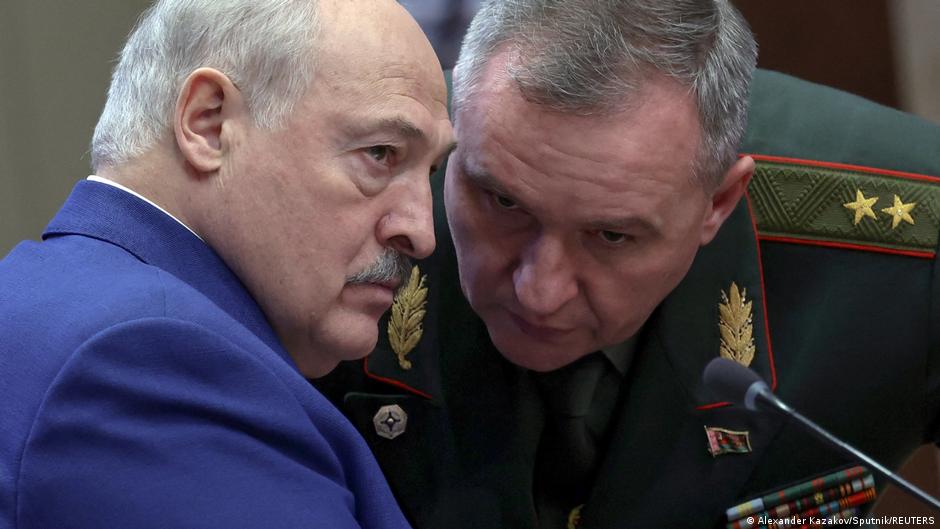
Belarusian leader Alexander Lukashenko has announced that inspections of the country’s armed forces will continue and may extend “up to mobilization,” a signal likely to keep geopolitical risk in Eastern Europe on investors’ radar even as global equity markets remain focused on rates, earnings and sector rotation.
Speaking to journalists on Friday, September 11, at the Obuz-Lesnovsky combined-arms training range in Belarus’s Brest region, Lukashenko said the time had come to “shake up” the entire military. His remarks were reported by the state news agency BelTA.
“I have already said it in plain language: the army needs to be shaken up, the time has come. The whole army. We will check everyone. Up to mobilization,” Lukashenko said.
For Wall Street, the remarks do not immediately translate into a direct earnings event for U.S.-listed companies. But they add to the broader geopolitical backdrop that can influence trading in defense, energy, agriculture, logistics and European-exposed industrial names. Investors have repeatedly treated developments around the war in Ukraine and neighboring Belarus as factors that can affect risk appetite, commodity pricing and portfolio positioning across global equities.
Lukashenko said checks had already taken place in tank and motorized rifle units and were now under way in an artillery brigade. He described the campaign as a way to prepare Belarusian forces under conditions as close as possible to combat.
“We are preparing for war so that there will be none,” he said.
He added that “all armed forces will be checked” and linked the effort to lessons from what Russian authorities call the “special military operation,” their term for the war in Ukraine. “Everything must be as in battle. This is how our troops must be trained,” Lukashenko said, according to the report.
Market sensitivity remains tied to escalation risk
The market angle is less about Belarus as a standalone equity market and more about how traders price the possibility of renewed pressure on Ukraine’s northern flank, additional Russian-Belarusian coordination, or fresh disruptions near European borders. Any perceived escalation could support defensive positioning, including interest in defense contractors and cybersecurity providers, while weighing on European cyclicals, airlines, transport operators and companies with higher exposure to regional demand.
Energy and agriculture remain particularly sensitive categories. Belarus borders Ukraine, Poland, Lithuania, Latvia and Russia, placing it near corridors that investors associate with European security, sanctions risk and supply-chain vulnerability. Although Lukashenko did not announce a new military operation, the explicit reference to mobilization readiness gives equity research desks another data point when assessing the geopolitical risk premium embedded in oil, natural gas, fertilizer and grain-linked equities.
Trading volumes in directly affected sectors can rise around such headlines, especially when they coincide with other macro catalysts. The likely response from institutional investors is not a wholesale repositioning based on one statement, but a renewed watch on headlines that could affect defense procurement expectations, commodity volatility and European equity discounts. Portfolio managers may also reassess hedges through broad indexes, energy shares, defense stocks and currency-sensitive multinational names.
Lukashenko also said his youngest son, 22-year-old Nikolai, is serving in the army. According to Lukashenko, Nikolai received a diploma this summer from a joint biotechnology program run by Peking University and Belarusian State University. He said Defense Minister Viktor Khrenin had conscripted him and that Nikolai was serving “as required, like everyone else” as a lieutenant. Lukashenko did not disclose the unit, saying only that it was “the most difficult” one, and added that Nikolai continues to study biotechnology in his free time.
Ukraine has warned of Belarus-related threats
The latest comments follow earlier warnings from Ukrainian President Volodymyr Zelensky. In spring 2025, Zelensky said Belarus had begun building roads and preparing artillery positions near the border with Ukraine. He said Kyiv believed Russia would once again try to draw Belarus into its war, linking the activity to a regrouping of Russian forces that, according to the Ukrainian president, Moscow’s military command was carrying out to compensate for shortages of personnel.
At the beginning of the summer, Zelensky said Lukashenko had one week to remove drone relay transmitters from two Belarusian regions bordering Ukraine. The Ukrainian president said the devices were being used to adjust strikes by Russian unmanned aerial vehicles against Ukraine. “If he does not do it, we will,” Zelensky said at the time. A few days later, he reported that the relay transmitters were no longer operating.
For equity investors, those details matter because they frame Lukashenko’s latest military comments inside a continuing pattern of border-related security concerns rather than as an isolated domestic inspection program. The distinction is important for analysts covering European risk, U.S. defense demand and energy-market volatility. A routine readiness check may have limited market impact; a readiness check tied by officials to lessons from the war in Ukraine and mobilization preparedness is more likely to be monitored for second-order consequences.
Still, the factual threshold for a market-moving shift has not yet been crossed in the source material. Lukashenko announced inspections and emphasized military readiness, but the article does not report a mobilization order, troop deployment into Ukraine or a new sanctions package. That leaves investors with a familiar task: separate headline risk from confirmed operational change while watching whether follow-up actions alter the outlook for regional security, commodities or defense-sector expectations.