German Youth Protests Put Retail, Security and Travel Stocks in Focus
Disorder across major German cities raises near-term questions for retailers, insurers, transport operators and security providers.
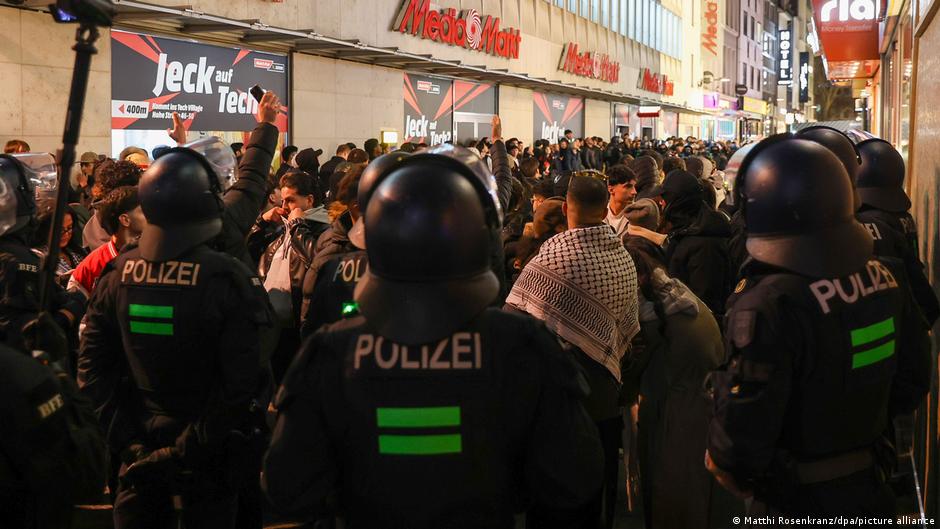
Violent unrest in several of Germany’s largest cities could put consumer-facing, insurance, transport and security stocks under closer scrutiny when European markets reopen, although the available information does not establish any specific share-price moves or trading-volume changes.
Demonstrations organized by the Gen-Z regelt movement, whose name translates as “Generation Z decides,” took place in more than 30 German cities on Saturday, October 31. Organizers said more than 100,000 people participated nationwide. Protests that began peacefully later developed into disorder in Frankfurt, Berlin, Cologne, Hamburg, Stuttgart and Bremen.
The protesters demanded improvements in education, measures addressing the rising cost of living, stronger climate protection, easier access to psychotherapy and addiction treatment, and opposition to compulsory military service and cuts in social spending. For equity investors, the breadth of those demands connects the unrest to several policy-sensitive areas, including public spending, consumer purchasing power, defense policy and the energy transition.
Retail damage creates the clearest company-level exposure
Frankfurt produced the most direct corporate connection. A demonstration involving between 8,000 and 9,000 people escalated into looting and attacks on police, including the use of Molotov cocktails. Protesters smashed shop windows and entered a gun store as well as a Snipes clothing and sneaker outlet. Authorities confiscated two weapons from those who attacked the gun shop.
The incident places physical retailers with prominent city-center locations in focus, particularly chains exposed to apparel, footwear and discretionary spending. The source account identified Snipes but did not quantify property damage, lost sales, insurance exposure or disruption to its operations. It also provided no figures for market trading volumes or changes in the valuation of any listed company.
Hesse Interior Minister Roman Poseck said the violence was driven by about 100 left-wing extremists inclined toward violence who had joined the demonstration. Police checked the identification of approximately the same number of people and detained more than 30.
Authorities restored order closer to nightfall using water cannon, armored police vehicles, a helicopter and drones, while closing part of central Frankfurt.
“We will thoroughly analyze the actions of the aggressors, the composition of the offending groups and the course of events, and then draw the appropriate conclusions,” Hesse Premier Boris Rhein said.
For investors, any expansion of policing, surveillance and crowd-control measures could increase attention on European security-equipment and public-safety suppliers. At the same time, recurring unrest could raise operating costs for retailers, commercial landlords and insurers. Those are potential sector implications rather than confirmed financial effects from the October 31 events.
Transport, insurance and consumer sectors face broader risk
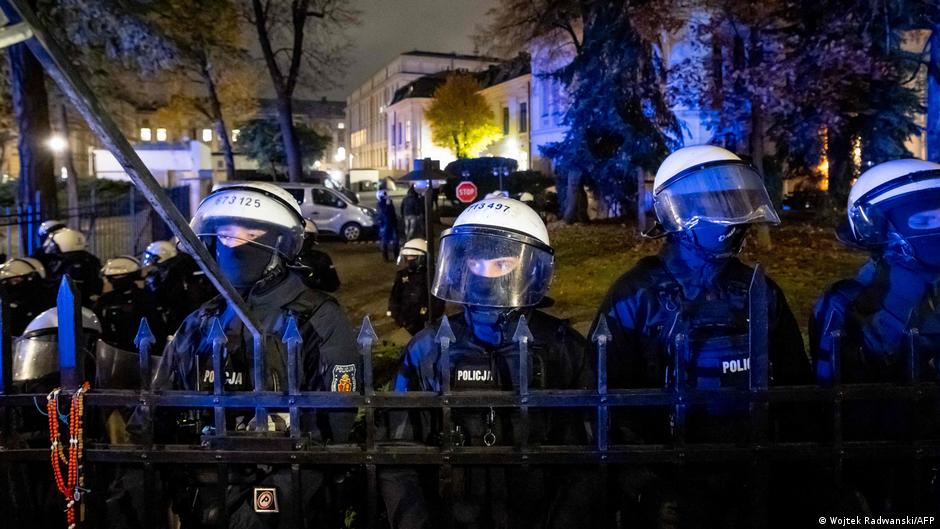
In Berlin, one of two large demonstrations descended into disorder. The event drew about 3,500 participants, mainly from far-left groups. Some protesters threw firecrackers and bottles toward police and set off fireworks. Police also reported property damage and violations of weapons legislation. Authorities detained 56 people, while 27 police officers sustained minor injuries.
In Cologne, police prohibited a planned march and permitted only a stationary gathering. Officers cited face coverings worn by some protesters and the use of pyrotechnics, including devices thrown at police. Water cannon were deployed near the end of the event.
In Hamburg, some demonstrators built and burned barricades and threw bottles and stones at police. Protests ended with similar disorder in Stuttgart and Bremen. Repeated disruption across several commercial centers could become relevant to transport operators, hotel groups and urban retailers if demonstrations continue, particularly if closures reduce foot traffic or interfere with city-center access.
Insurance investors may also watch whether the unrest produces meaningful claims for broken storefronts, damaged property or interrupted business. The source material supplied no estimate of insured losses, however, and the incidents should not be treated as financially material to any company without further disclosure.
European spread may shape sector rotation
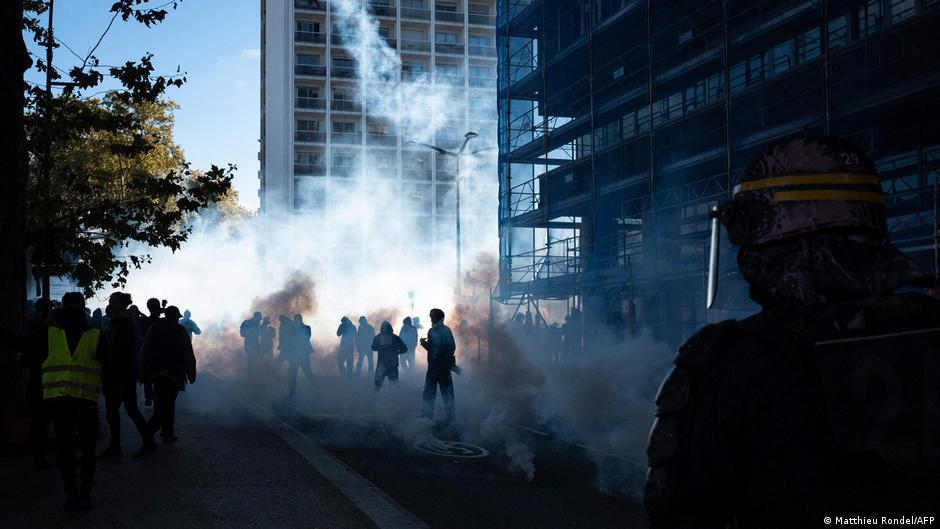
The German demonstrations formed part of a broader wave of youth protests that has recently reached other European countries. In France, rallies in several cities also escalated into vandalism and clashes with police. Belgium has experienced youth demonstrations as well.
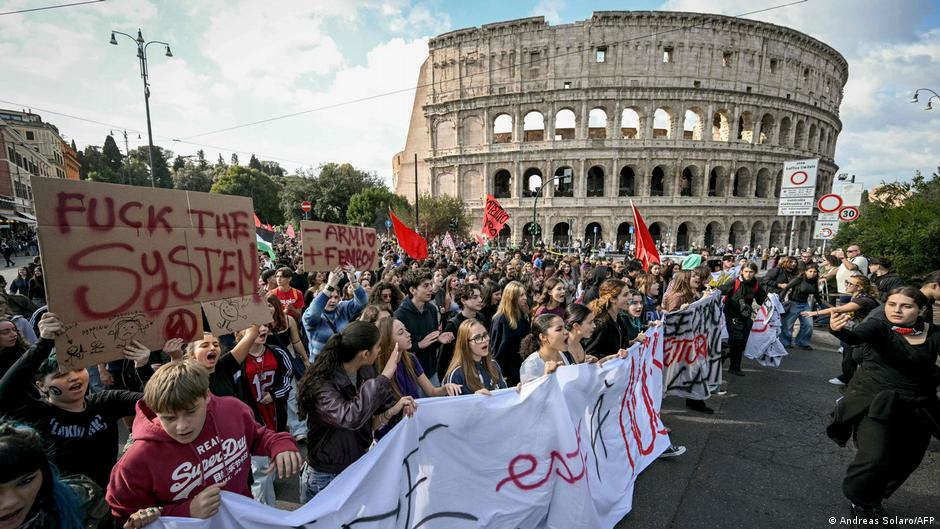
Italy faced a particularly difficult situation on October 30, when organizers said more than one million people joined protests. After severe rioting in Milan, Italian authorities ordered the deployment of 500 military personnel to maintain order.
Equity research desks are likely to distinguish between isolated property damage and a sustained cross-border pattern capable of affecting earnings expectations. A prolonged cycle of unrest could encourage defensive sector rotation toward businesses with limited dependence on urban foot traffic, while weighing on discretionary retailers, travel companies and commercial-property owners. It could also strengthen interest in security and surveillance suppliers.
For now, the market case remains event-driven and preliminary. Investors will need evidence on the duration of protests, store closures, insurance claims, policing budgets and any changes to government policy before assigning lasting effects to specific stocks or sectors.