France Protests Put Retail, Travel and Transport Stocks on Watch
A third weekend of nationwide unrest drew 320,000 demonstrators, raising investor scrutiny of consumer, travel and infrastructure shares.
French retail, travel and transport stocks could face increased scrutiny after a third consecutive Saturday of nationwide protests brought 320,000 demonstrators onto the streets and led to 565 arrests, according to government figures.
The turnout was lower than during the two previous Saturday demonstrations, suggesting that participation is declining even as confrontations with police remain a risk for businesses operating in major urban centers. Authorities estimated that 550,000 people demonstrated on Oct. 17 and 410,000 on Oct. 24. Protest organizers disputed the latest official count, saying that almost 500,000 people participated across France.
For equity investors, the immediate focus is likely to fall on companies with substantial exposure to city-center retail traffic, tourism, transportation networks and consumer confidence. Carrefour and other retailers may be watched for signs that disruption or cost-of-living concerns are affecting spending. Accor and Air France-KLM could draw attention if repeated unrest weighs on travel demand, while infrastructure and transport names such as Vinci and Alstom may be assessed for operational disruption or changes in public spending priorities.
The source account provided no share-price moves, trading-volume figures, earnings revisions or company disclosures tied to the demonstrations. Any market impact therefore remains a risk assessment rather than evidence of a measurable financial effect.
Turnout falls, but clashes continue
The Interior Ministry said demonstrations were largely peaceful. Interior Minister Laurent Nuñez, however, said members of far-left groups used what he described as “monstrous violence” against law-enforcement officers.
The declining national turnout may temper the broad market response, but recurring clashes keep event risk elevated for consumer-facing and transport-related equities.
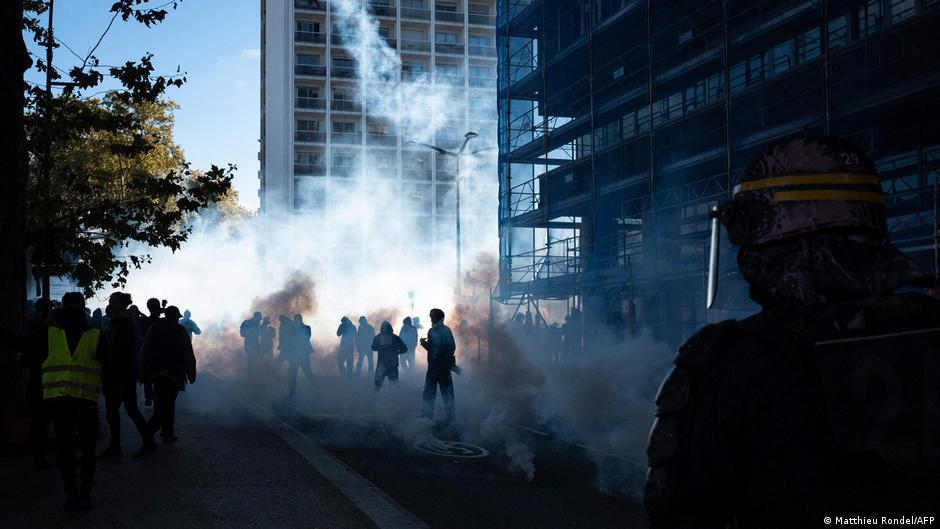
Authorities said 70,000 people demonstrated in Paris. Several hundred protesters clashed with police in the capital, leaving five officers injured. Three were wounded by Molotov cocktails, according to officials. One officer’s clothing caught fire, and he was diagnosed with a burn to his leg. Protesters also threw paving stones and rocks at police, who responded with tear gas and batons.
Across France, 70,000 police officers were deployed to provide security. In Toulouse, officers used water cannon and tear gas against participants in an unauthorized demonstration. An unauthorized march involving about 10,000 people also took place in Marseille and later developed into clashes with law enforcement. Police used tear gas during disorder in Lyon, France24 reported.
From a sector-rotation perspective, persistent disruption could encourage a defensive tilt away from businesses reliant on discretionary spending and urban footfall. Food retail and other essential-consumption businesses may prove relatively resilient compared with hotels, airlines and nonessential retailers, although pressure from rising living costs could still affect margins and purchasing patterns. No sector performance data were included in the source material, and the protests alone do not establish a durable rotation.
Cost-of-living concerns broaden protest agenda
The nationwide demonstrations began in late September with protests by school and university students. Their complaints included teacher shortages, crowded classrooms, excessively long school days, outdated school buildings and a lack of modern equipment. Participants also expressed anxiety about their future, including difficulties gaining admission to universities.
The protests subsequently attracted people dissatisfied with other social problems, including the rising cost of living. Demonstrations increasingly developed into disorder marked by burning garbage containers and cars, severe clashes with police, vandalism and looting.
Those concerns matter to equity research because they touch both household demand and fiscal policy. Analysts following French consumer stocks may look for evidence of weaker discretionary spending, while coverage of construction, infrastructure and education suppliers could focus on whether pressure for upgraded public facilities translates into budget changes. Such outcomes remain uncertain, and the demonstrations have not produced any company-specific guidance in the information provided.
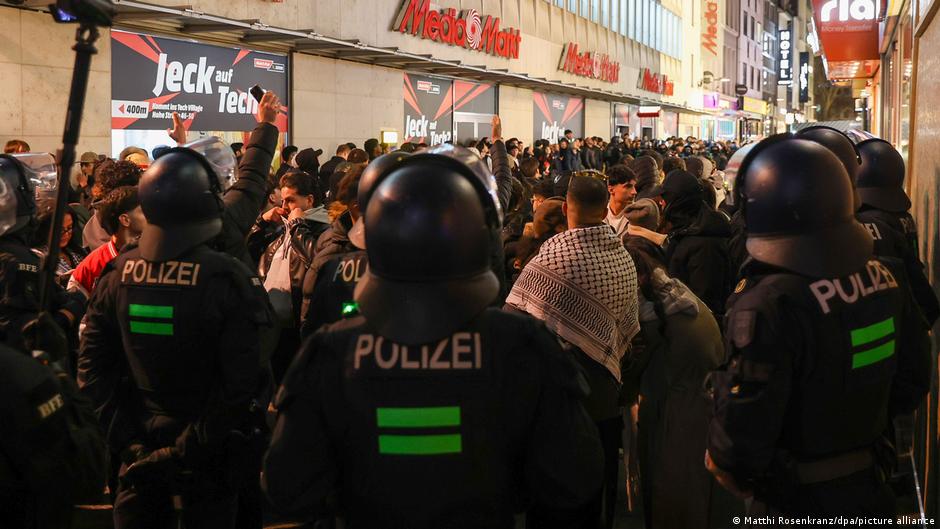
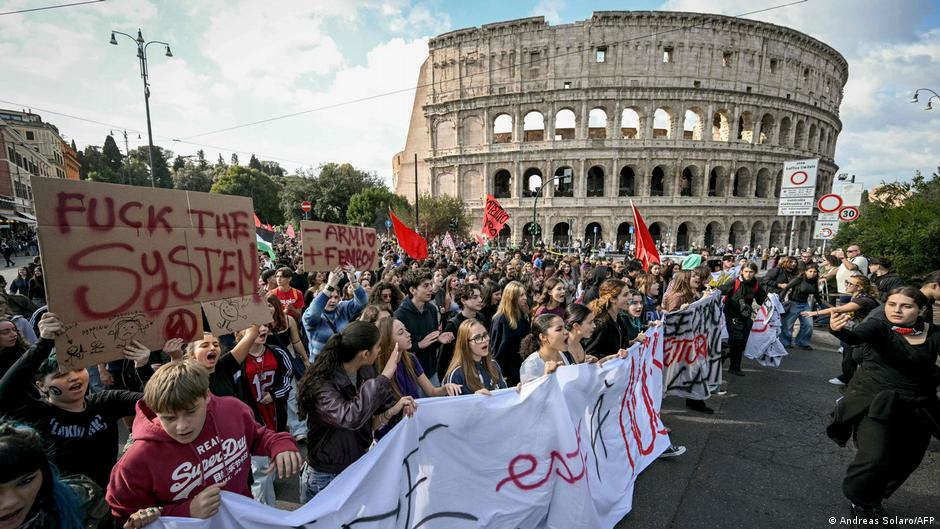
The unrest has also inspired young people to protest elsewhere in Europe, including Italy, Germany and Belgium. Demonstrations in major German cities ended in disorder on Oct. 31. That wider regional dimension may lead investors to examine geographic exposure rather than treat the issue solely as a France-specific event, particularly for companies operating retail, hospitality or transport networks across several European markets.
Trading desks will now be watching whether participation continues to fall, whether clashes persist and whether the movement’s economic demands become more defined. A sustained decline in turnout could reduce the likelihood of a lasting equity-market effect. Renewed violence, wider European demonstrations or interruptions to commerce and transportation would instead increase the potential for heavier trading in exposed shares and a rotation toward more defensive sectors.