German Push on Ukraine Aid Puts Defense Stocks Back in Market Focus
Foreign Minister Johann Wadephul said German industry should benefit from Berlin’s support for Kyiv, sharpening investor attention on defense procurement.
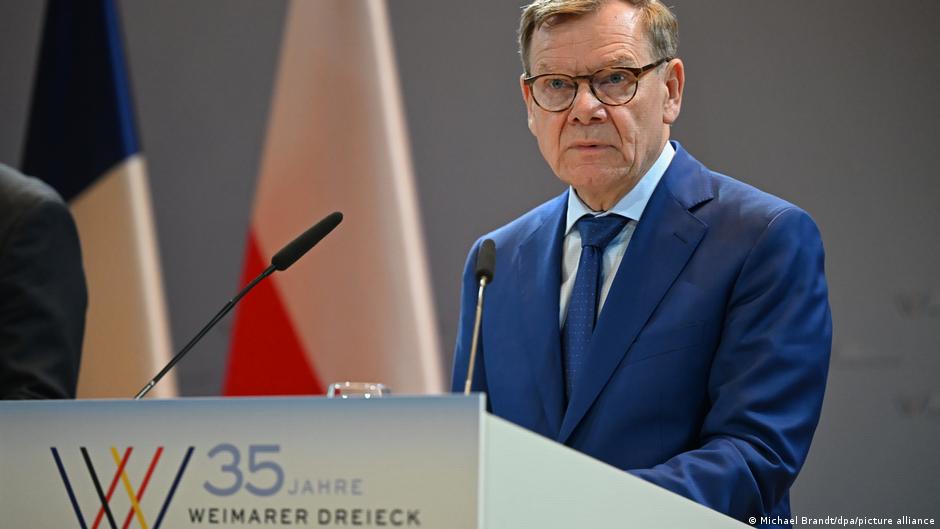
German Foreign Minister Johann Wadephul has urged Kyiv to pay greater attention to Germany’s interests, saying that German defense companies should benefit from Berlin’s continuing financial and military support for Ukraine. The comments place the business side of European security assistance back in focus for equity investors tracking defense stocks, procurement flows and the broader rotation into companies tied to military spending.
In an interview with Bild published on Tuesday, September 8, Wadephul criticized Ukrainian President Volodymyr Zelensky and said Germany’s role as a leading backer of Ukraine should be reflected in procurement decisions. His remarks were direct: Germany is providing substantial financial and military support, and Berlin must be able to explain that support to German taxpayers.
“At the moment, we are Ukraine’s strongest supporter in terms of financial and military assistance,” Wadephul said, adding that “German defense industry must naturally benefit from this.”
For markets, the significance is not only diplomatic. Wadephul’s statement links taxpayer-funded military aid more explicitly to domestic industrial participation. That framing may increase attention on German and wider European defense contractors whenever Berlin announces new support packages, procurement channels or NATO-linked funding commitments. It also reinforces a theme already closely watched by equity research desks: European defense spending is no longer only a government budget story, but a potential order-flow story for listed suppliers.
Procurement Link Matters for Investors
Wadephul said he raised the issue during a recent visit to Kyiv and described the message he gave to Zelensky. Germany, he said, stands with Ukraine and supports it, but Berlin also has to justify that policy domestically. At a minimum, he argued, German defense industry should participate in all procurement.
That language matters because equity markets tend to respond less to broad political support than to indications that support could translate into contracts, production visibility and backlog. Wadephul did not name any companies, specify contract structures or provide figures for potential procurement opportunities. Still, his comments suggest that Germany wants a defined role for its defense industrial base as assistance to Ukraine continues.
Defense stocks across Europe have been a recurring focus for investors since Russia’s full-scale invasion of Ukraine shifted security policy across the region. Wadephul’s comments add another layer to that trade: the possibility that donor governments may seek stronger domestic industrial participation when financing military support. For traders, that can influence how news around Ukraine aid is read, especially when announcements involve air defense, drone protection, ammunition, energy resilience or medical equipment.
The remarks may also affect sector rotation. When investors anticipate that government spending will flow toward domestic suppliers, defense equities can attract attention at the expense of more cyclical sectors that depend on consumer demand or lower interest rates. However, the source article does not provide trading volumes, share-price moves or analyst ratings, so any market reaction would need to be assessed separately from exchange data and broker research.
Berlin Announces Additional Aid
Wadephul visited Kyiv on August 22. At a joint press conference with Ukrainian Foreign Minister Andrii Sybiha, he announced an additional 60 million euros in assistance for Ukraine. The package forms part of Germany’s continuing support for the country and comes alongside further funding through NATO-linked channels.
Germany will also transfer another 10 million euros to a NATO fund. According to the article, money from that fund is used, among other things, for supplies of energy resources, medical equipment and systems designed to protect against drones. Those categories are relevant for investors because they point to the practical areas where support is being directed, even though no individual suppliers were identified.
Wadephul also announced further talks with partners from various countries on supplying Ukraine with additional air defense systems. Air defense has remained one of the central categories in Ukraine-related military assistance, and any future procurement decisions in that area are likely to remain closely watched by markets. The minister did not disclose specific systems, delivery timetables or contract values in the article.
From an equity research perspective, the key takeaway is the political signal. Germany’s foreign minister is publicly arguing that Berlin’s support for Kyiv should include a role for German defense industry. That does not by itself establish new revenue, nor does it guarantee procurement awards. But it may shape expectations around future aid packages and the industrial policy attached to them.
The statement also highlights a wider tension for European governments: maintaining support for Ukraine while demonstrating domestic economic benefit. For investors, that tension can become a stock-market catalyst when political language turns into procurement documentation, budget allocations or named contracts. Until then, Wadephul’s comments are best read as a directional policy signal rather than a confirmed earnings event.