Georgia Detains Ex-Defense Chief, Putting Political Risk Back on Investors’ Radar
The detention of Giorgi Baramidze adds to concerns over Georgia’s institutional backdrop, with investors likely to watch regional banks, sovereign risk and frontier-market exposure.
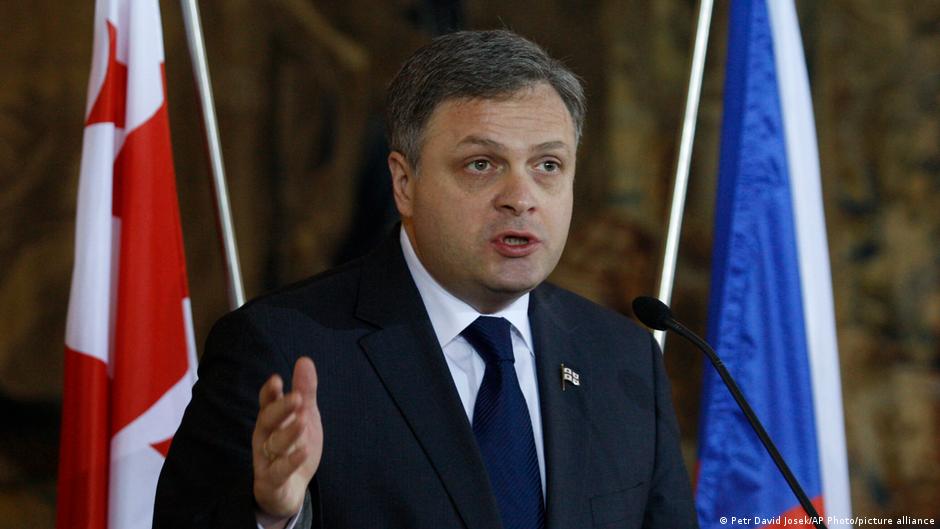
Georgia has detained Giorgi Baramidze, a former acting prime minister, former defense and interior minister, and one of the leaders of Mikheil Saakashvili’s United National Movement, on an accusation described by prosecutors as “treason, namely sabotage.” The case stems from comments Baramidze made about the 1992-1993 war in Abkhazia, and it places political and institutional risk in Georgia back in focus for investors tracking the country’s financial assets and regional exposure.
Deputy Prosecutor General Amiran Guluashvili said Baramidze would be charged with “treason against the homeland, namely sabotage,” and that the decision was made on the basis of a court ruling. Georgia’s Prosecutor General’s Office published a statement on Friday, September 11, outlining the case and saying the investigation was continuing.
For Wall Street, the immediate read-through is less about direct U.S.-listed equity exposure and more about frontier-market risk appetite, country-risk premiums and sentiment toward companies with meaningful Georgia exposure. Investors who follow regional banks, emerging-market debt and exchange-traded vehicles with frontier allocations are likely to treat the arrest as another signal that Georgia’s domestic political climate remains a material variable.
Market Lens: Political Risk, Not Earnings Guidance
The case does not, on its own, change corporate earnings forecasts or sector fundamentals. But it may reinforce caution toward Georgian assets at a time when institutional stability, rule-of-law perceptions and relations with Western partners are central to how investors price smaller emerging and frontier markets. In equity research terms, the issue is a political-risk overhang rather than a direct operating event.
Specific listed names most likely to draw attention are not major Wall Street stocks but Georgia-linked financial companies and regional lenders followed by emerging-market investors. London-listed Georgian banks such as Bank of Georgia Group and TBC Bank Group are often used by international investors as liquid proxies for the country’s economy. Any sustained deterioration in the political-risk narrative could affect valuation multiples, foreign investor participation and trading appetite in those names, even if daily trading volumes remain driven by broader market conditions and company-specific results.
U.S. investors may also monitor sovereign spreads, local-currency pressure and fund flows into broader frontier-market products. Georgia is not a large weight in most global portfolios, which limits the systemic market impact. Still, for dedicated frontier-market desks, the accumulation of politically sensitive legal cases can matter because it feeds into governance screens, discount-rate assumptions and capital-allocation decisions.
Prosecutors said Baramidze’s remarks were “groundless and fabricated” and had an “intentional ideological and propaganda character.”
The allegation is tied to Baramidze’s appearance on the program “Birth of Georgia,” broadcast on July 18 on the YouTube channel of the same name hosted by Iago Khvichia, leader of the opposition libertarian party New Political Center - Girchi. According to prosecutors, Baramidze said during the interview that at the beginning of the 1992-1993 war in Abkhazia, Georgian soldiers did not take prisoners but shot them on the spot, and that this left the Georgian side, unlike the Abkhaz side, without an exchange fund.
Law enforcement opened an investigation into Baramidze’s statement on August 7 after a complaint from the state service for veterans’ affairs. The Prosecutor General’s Office later said it had not found facts confirming that Georgian forces shot prisoners. Prosecutors argued that Baramidze’s words undermined Georgia’s state and national interests, external security, defense capability and state institutions.
They also said the comments damaged Georgia’s image, harmed the reputation of the country’s Defense Forces, offended the honor and dignity of Abkhazia war veterans and fallen service members, threatened reconciliation and confidence-building among people affected by the conflict, undermined Georgia’s policy on peace and de-occupation, and complicated the normal work of state agencies.
Prosecutors now intend to ask a court to place Baramidze in custody. Law enforcement authorities said the investigation remains ongoing and that the public would be informed about its progress and results.
Broader Pattern Raises Governance Questions
Baramidze is the fifth former Georgian defense minister to face a criminal case in the country. That broader pattern is likely to be the part of the story that matters most to institutional investors, because repeated cases involving former senior officials can affect perceptions of judicial independence, political competition and policy predictability.
In July, Bacho Akhalaia, an ally of Saakashvili, was sentenced to two and a half years in prison after being found guilty of public calls to overthrow the government following remarks at a court hearing. In November 2025, Irakli Okruashvili, a former interior and defense minister who supported Saakashvili until 2007, was sentenced to seven years in prison in connection with the high-profile killing of 19-year-old Amiran Robakidze during a police check in 2003.
Also imprisoned are former members of the government of the ruling Georgian Dream party: Juansher Burchuladze, who headed the Defense Ministry until February 2024, and Irakli Garibashvili. Garibashvili served as defense minister from 2019 to 2021, prime minister from 2021 to 2024, and chairman of Georgian Dream from 2024 until April 2025. Burchuladze is accused, among other things, of taking bribes, while Garibashvili is accused of money laundering.
From a sector-rotation standpoint, the news is unlikely to move broad U.S. indexes or alter leadership among technology, financials, energy or defensive sectors. Its importance is narrower: it may prompt emerging-market investors to reassess exposure to Georgia-linked financials and sovereign risk, especially if legal developments are seen as part of a larger political trend. Equity research teams covering the region are likely to frame the event as another governance headline to watch rather than as a catalyst requiring immediate changes to bank earnings models.
The practical market question is whether investors view the detention as an isolated legal action or as part of a deepening political-risk cycle. If the latter interpretation gains traction, valuation discounts for Georgia-facing assets could widen, liquidity could become more sensitive to headlines, and foreign portfolio managers may demand a higher risk premium before adding exposure.