EU Budget Deadlock Puts Digital, Defense and Research Stocks in Focus
European leaders postponed a seven-year budget agreement until December as divisions over spending cuts and new EU-wide levies persisted.
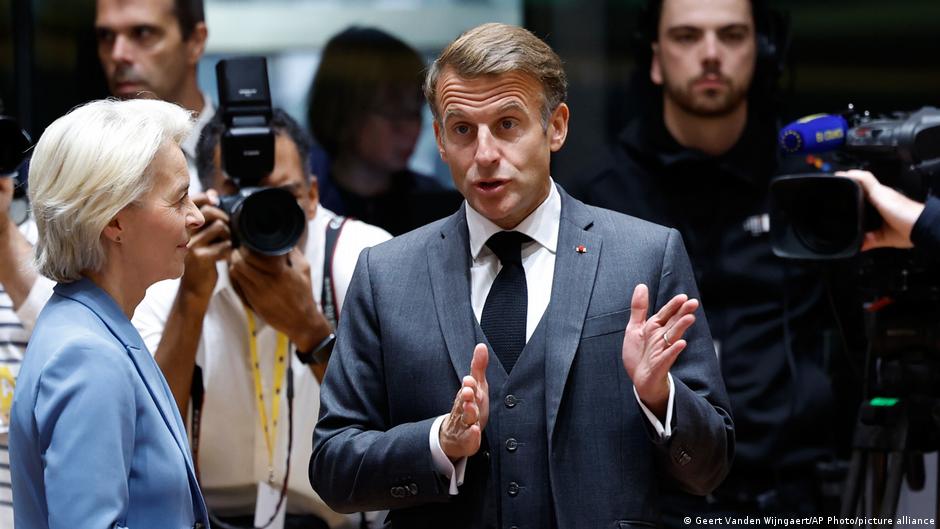
European Union leaders ended the first day of their Brussels summit without an agreement on the bloc’s budget for the next seven years, leaving investors to assess competing proposals that could affect digital services, cryptocurrency businesses, online gambling, defense, research and other politically sensitive sectors.
The negotiations produced no breakthrough and are set to continue in December, according to AFP, citing sources in Germany’s federal government. The officials described the summit discussions among EU heads of state and government as “contradictory debates,” reflecting divisions that had been apparent before the talks began.
Germany, Austria, Sweden, Denmark, the Netherlands and Finland are calling for fiscal restraint. France, Spain and Poland are among the countries supporting a larger EU budget. The disagreement places two market narratives in opposition: reduced public spending in areas connected to competitiveness and innovation, and the prospect of new EU-wide taxes affecting digitally oriented industries.
Sector exposure divides the budget proposals
The European Commission presented a draft long-term budget worth almost €2 trillion during the summer. Ireland, which holds the presidency of the Council of the EU, proposed reducing that total by €140 billion, or approximately 8%.
Ireland’s proposal would cut EU spending on competitiveness, scientific research, defense and foreign policy. For equity investors, those categories define the most direct sector exposure arising from the negotiations. Companies dependent on European research programs, defense procurement or projects designed to improve regional competitiveness could face a less supportive funding environment if the proposed reductions survive the talks.
The source material does not identify individual listed companies, provide share-price moves or report trading volumes following the summit. That limits any company-specific conclusion for Wall Street investors. The immediate equity-research focus is therefore likely to remain on budget sensitivity: how much revenue, project financing or expected growth in each covered business depends on EU programs that could be reduced.
Traditional spending priorities are also under pressure. Before the negotiations began, German Chancellor Friedrich Merz called for the Commission’s proposal to be cut “substantially.” He categorically rejected allocating additional money to two large established budget areas: agriculture and cohesion policy.
“Substantial” reductions to the Commission’s proposal would shift the debate from the overall size of the budget to which sectors and regional programs absorb the cuts.
That stance reinforces the austerity position but does not resolve how savings would be distributed. Agriculture and cohesion policy have traditionally represented major spending categories, while Ireland’s proposal targets competitiveness, research, defense and external policy. The resulting uncertainty leaves several sector groups exposed to changing allocations rather than to a settled fiscal plan.
France proposes taxes on digital and financial activity
France used the summit to promote new EU-wide levies that could increase the budget without raising member states’ direct contributions. The proposed revenue sources include taxes on digital services, cryptoassets and online gambling.
For Wall Street, this part of the negotiations carries potentially greater relevance to internationally traded growth and technology businesses than the headline budget total alone. A digital-services levy could affect the European economics of companies operating online platforms or selling digital services, while taxes on cryptoassets and internet gambling would introduce additional policy risk for businesses exposed to those markets.
No tax rates, implementation timetables or company-level liabilities were provided, and the proposals have not been adopted. Equity analysts therefore lack the information needed to calculate earnings effects. Until negotiators define the scope of the levies, the principal research questions concern taxable revenue, geographic exposure and whether added costs could be passed on to customers.
Likewise, no evidence was provided of unusual trading volume in any affected shares or sector funds. Investors monitoring the dispute will need to distinguish between policy headlines and measures detailed enough to alter earnings estimates. The December summit may provide a clearer catalyst if leaders narrow the spending cuts or advance the proposed levies.
Political calendar raises pressure for a December deal
Many of the EU’s 27 member states want to approve the long-term budget before the end of the year. Their concern is that elections in several countries in 2027 could bring eurosceptic and populist forces to power, making a later compromise harder to achieve.
In France, far-right politician Marine Le Pen could win the presidential election. AFP reported that President Emmanuel Macron has already warned that reaching an EU budget agreement would be “difficult” in that event.
Austrian Chancellor Christian Stocker did not rule out negotiations extending into next year. That possibility would prolong uncertainty over both the allocation of EU spending and France’s proposed new revenue measures.
For equity markets, the dispute currently points to prospective sector rotation rather than a confirmed repricing event. Budget restraint would reduce the fiscal-policy case for research, defense and competitiveness-linked beneficiaries, while new levies would create a separate headwind for digital services, cryptoasset and online-gambling businesses. Without reported stock moves or volume data, however, those remain policy exposures to monitor rather than demonstrated market reactions.
The next significant milestone is the EU summit in December. Investors will be watching whether leaders converge on Ireland’s €140 billion reduction, protect particular spending categories, or give concrete form to France’s tax proposals. Each outcome would distribute the budget’s market impact differently across European sectors and the US-listed companies with relevant EU operations.