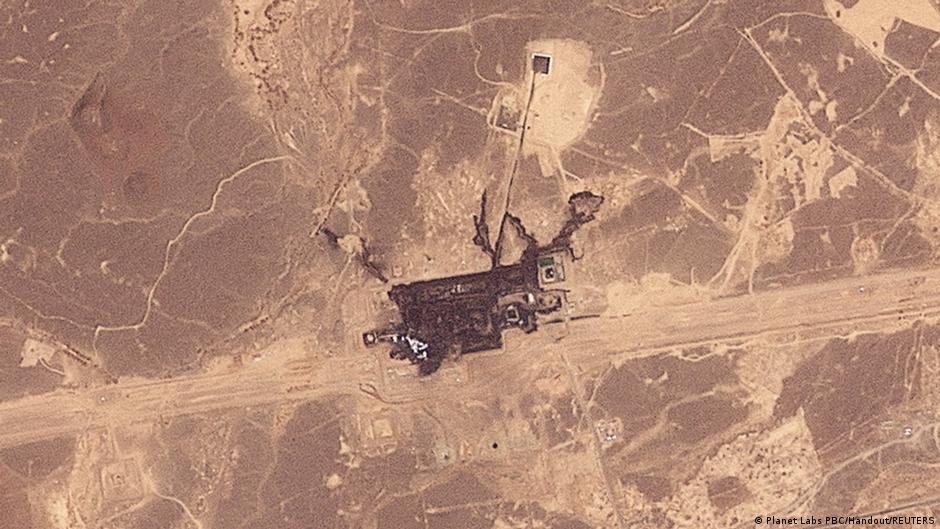
Drone Strike on Russia’s Yamal Gas Hub Raises Energy Market Risk
The reported first Ukrainian drone attack on Russia’s Arctic gas region puts a key fuel and condensate hub into sharper focus for energy investors.
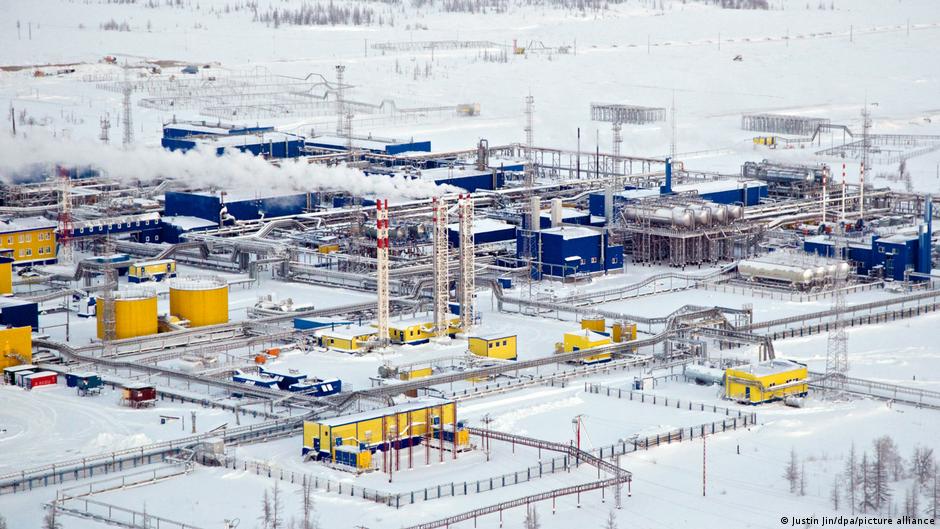
Ukrainian drones attacked the Yamalo-Nenets Autonomous District for the first time, according to Russian regional authorities, marking a notable expansion of the geography of strikes on Russian energy infrastructure. The region is central to Russia’s natural gas industry and accounts for the bulk of the country’s gas production, making the incident relevant for energy markets, listed gas producers, oilfield-service names and investors tracking geopolitical risk premiums across the sector.
Dmitry Artyukhov, the governor of the region, said on Wednesday, September 9, that drones targeted the Yamalo-Nenets Autonomous District and that a fire broke out at an industrial facility in Novy Urengoy after debris from an unmanned aerial vehicle fell on the site. Russian officials said there were no deaths or injuries. Artyukhov said the attack had been repelled, while the scale and nature of the damage were still being assessed.
Artem Zhoga, the presidential envoy to Russia’s Urals Federal District, said the target was a fuel and energy complex facility in Yamal. He said employees had been evacuated in advance. Russian authorities did not identify the specific enterprise that was struck.
Russian officials said the attack was repelled, but debris from a drone caused a fire at an industrial facility in Novy Urengoy.
For Wall Street, the immediate issue is less the fire itself than the risk signal. Yamal is not a marginal production area. The Yamalo-Nenets Autonomous District is estimated to account for about 80% of Russia’s natural gas output. Any confirmed damage to processing, condensate handling or logistics infrastructure in the region would draw attention from traders already sensitive to disruptions in Russian energy flows, even where sanctions and market segmentation limit direct exposure for U.S. investors.
Energy Stocks and Risk Premiums
The source of the fire was not officially identified, but several media outlets and analytical projects that track strikes inside Russia reported that the possible target was the condensate preparation plant for transportation in Novy Urengoy, a facility tied to Gazprom’s gas infrastructure. The plant is considered one of the region’s key sites for processing gas condensate. It handles condensate from the Urengoy, Yamburg and other fields in the region, with design capacity estimated at around 19.5 million tons of feedstock per year.
That makes the incident potentially significant for equity desks watching European gas-linked sentiment, liquefied natural gas equities, oil and gas majors, and energy-service stocks. A disruption in Yamal would not translate mechanically into U.S. stock moves, but it can affect the broader risk premium assigned to natural gas supply chains. Investors may monitor names with exposure to global LNG pricing and gas-market volatility, including integrated energy producers, LNG exporters, pipeline operators and equipment suppliers.
Gazprom itself is not a typical direct holding for many U.S.-based investors because of sanctions, listing restrictions and market-access issues. Still, events involving Gazprom infrastructure can influence the macro backdrop that shapes trading in energy-linked equities. When traders price the sector, they often look beyond direct ownership and toward the impact on benchmark gas prices, European storage expectations, substitution demand, and the relative attractiveness of North American gas assets.
Sector rotation could also be affected if the attack reinforces a broader market view that geopolitical risk around energy infrastructure is rising. In that setting, defensive energy exposure may draw renewed interest, while industries sensitive to fuel costs, such as chemicals, heavy manufacturing, transport and some utilities, could face pressure if gas and refined-product markets respond. The article does not report a verified outage or production loss, so the market reaction would likely depend on subsequent confirmation of damage, operational continuity and any follow-on strikes.
A Longer-Range Strike Question
Novy Urengoy lies roughly 2,800 kilometers in a straight line from the Russian-Ukrainian border. If it is confirmed that the drones were launched from Ukrainian territory, the incident could represent the farthest known Ukrainian Armed Forces strike on Russian territory since the start of the full-scale war. That distance matters for investors because it changes the perceived map of vulnerability for Russian infrastructure.
Until now, market attention has often centered on refineries, depots, ports and logistics nodes closer to Ukraine or in western and southern Russia. A strike on the Arctic gas region, if confirmed as described, suggests that assets previously viewed as more insulated by geography could come under scrutiny. The result may be higher attention to insurance, repair timelines, redundancy in processing systems and the security costs associated with strategic energy infrastructure.
Trading volumes in energy futures, European gas contracts and related equities could rise if investors interpret the incident as part of a widening campaign against Russian fuel and energy assets. The source material does not provide trading data, price moves or broker commentary, so any equity-market implications remain conditional. Still, the event gives research desks a fresh basis for reviewing supply-risk assumptions around Russian gas and condensate infrastructure.
For equity research, the main watch points are clear: whether Russian officials disclose the affected facility, whether independent monitoring confirms the target, whether the fire caused any measurable operational impact, and whether condensate processing or transportation from the Urengoy and Yamburg fields is disrupted. Analysts may also compare the incident with previous attacks on Russian energy assets to assess whether the range, target selection and frequency of strikes are changing.
The official Russian account says there were no casualties and that the damage assessment is ongoing. The lack of detail about the facility leaves investors without a firm basis for estimating physical losses. But the reported first drone attack on Yamal places one of Russia’s most important gas-producing regions into the market’s geopolitical risk calculus, a development that energy traders and equity analysts are unlikely to ignore.