Armenia's Parliamentary Vote Spurs Market Watch on Regional Geopolitics and Sector Shifts
Armenia’s ruling party leads parliamentary elections, prompting Wall Street to monitor geopolitical risks and sector rotation amid evolving regional alliances.
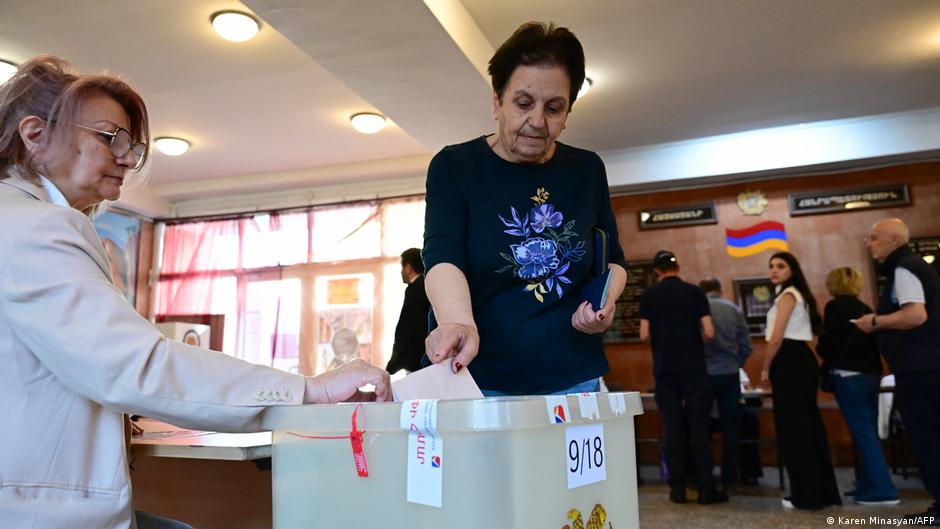
Armenia’s recent parliamentary elections have delivered a clear lead for the ruling Civil Contract party, headed by Prime Minister Nikol Pashinyan, according to preliminary results. The vote outcome is expected to shape the country’s foreign policy trajectory, particularly its pivot toward closer European Union integration, a move that has already attracted significant attention from investors tracking geopolitical developments in the region.
Election Results and Political Landscape
On June 7, Armenia held parliamentary elections critical for determining the nation's political and economic direction in the coming years. After processing nearly 56% of ballots, the Central Electoral Commission reported that the Civil Contract party secured approximately 50.86% of the vote, positioning it to form a single-party government. Opposition blocs, including the Strong Armenia alliance led by Russian-Armenian businessman Samvel Karapetyan, garnered 23.19%, while the Armenia bloc, headed by former President Robert Kocharyan, obtained 9.6%.
Smaller parties such as Prosperous Armenia and Wings of Unity also crossed the electoral threshold, although with more modest shares of the vote. Voter turnout rose to 58.97%, surpassing recent elections, signaling strong public engagement.
"The Civil Contract party will unilaterally form the government," Prime Minister Pashinyan declared early in the count, underscoring his confidence despite incomplete vote tallies.
However, opposition figures criticized this statement as premature and constitutionally inappropriate, highlighting underlying tensions in Armenia’s political environment. The parliament’s 105 seats include reserved mandates for national minorities, reflecting the country's diverse demographic fabric.
Market Implications and Sector Rotation
For Wall Street and global investors, these election results prompt a reassessment of risk exposure in sectors sensitive to geopolitical dynamics, particularly in emerging markets connected to Eurasia. Armenia’s legislative direction—marked by a strengthened pro-EU stance legislated by Pashinyan in 2025—has heightened regional tensions with Russia, traditionally Armenia’s dominant strategic partner.
Investors are closely watching energy, commodities, and agricultural sectors due to recent Russian import restrictions on Armenian goods, including alcohol, agricultural products, flowers, and fish. Such trade barriers directly impact Armenian exporters and ripple through related supply chains, influencing trading volumes in equities tied to these industries. The sanctions reflect Moscow’s displeasure with Armenia’s pivot to the European Union, a geopolitical shift that could recalibrate investment flows and sectoral focus.
Financial analysts emphasize the potential for sector rotation away from Russian-linked assets toward those aligned with EU integration themes or more resilient local industries. Equity research reports recommend a cautious approach to Armenian-related stocks due to the evolving political risks but note opportunities in sectors benefiting from diversification and new trade partnerships.
Additionally, Wall Street traders are monitoring broader regional security implications, given Russia’s comparison of Armenia’s situation to precursors of the Ukraine crisis. Such commentary underscores the importance of geopolitical risk premiums in asset pricing models and informs portfolio adjustments in emerging market equities.
Conclusion
Armenia’s parliamentary election results have significant implications beyond the Caucasus, influencing sector rotation and trading volumes on Wall Street through geopolitical risk reassessments. The Civil Contract party’s anticipated dominance signals continuity in Pashinyan’s EU-oriented policy, despite opposition challenges and Moscow’s retaliatory measures. Investors will continue to track developments closely, balancing opportunities against risks in a region where political shifts can translate rapidly into market volatility.