White House Ukraine Push Puts Defense, Energy and Risk Assets in Focus
U.S. envoys discussed concrete next steps with Vladimir Putin and are due in Kyiv as investors assess any shift in Ukraine war risk.
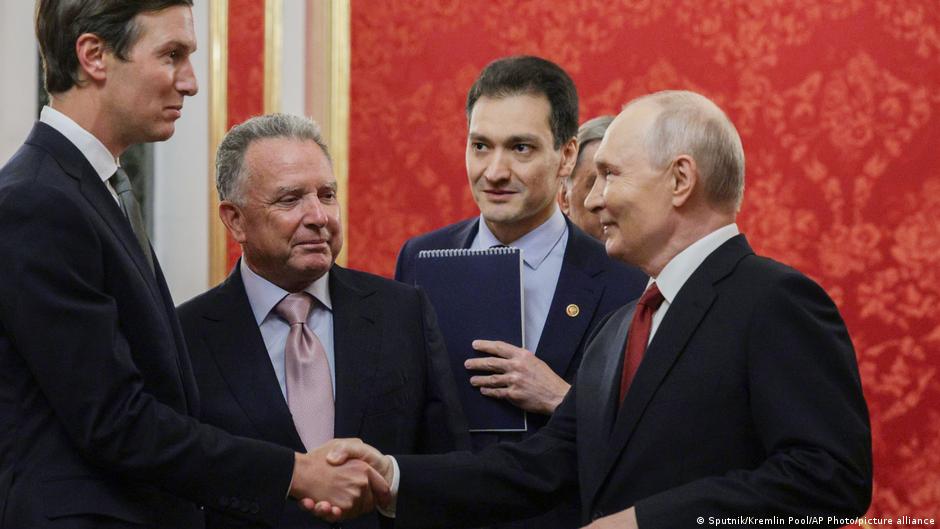
The White House said U.S. representatives Stephen Witkoff and Jared Kushner discussed “concrete plans” with Russian President Vladimir Putin for further steps aimed at ending the war in Ukraine, opening a new diplomatic track that could become a focal point for Wall Street trading desks watching defense, energy, transport and broader risk sentiment.
A White House representative told AFP overnight on Sunday, September 6, that Witkoff, a special envoy of the U.S. president, and Kushner, Donald Trump’s son-in-law, had held talks in Moscow on specific next steps to halt the war. According to the official, those plans are expected to be made public “in the coming weeks.” The official also said the U.S. envoys were looking forward to “no less productive meetings” in Ukraine.
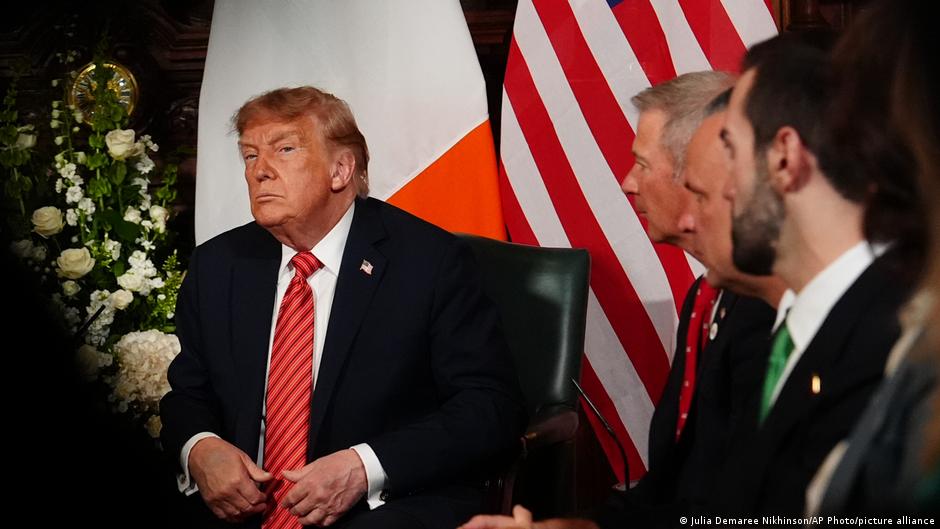
Trump also announced a new diplomatic initiative to end the war, AFP reported, saying Witkoff and Kushner had carried with them a plan “to end the war.” The U.S. president did not specify whether the plan envisages transferring Ukrainian territory to Russia. He said only: “We have an idea for peace.”
For equity investors, the immediate issue is not the content of the plan, which has not been disclosed, but the possibility that diplomatic headlines could reprice geopolitical risk. Defense contractors, oil and gas producers, European-exposed industrials, airlines, shipping names and wheat-linked agricultural businesses are among the areas most sensitive to developments around the war. Any credible progress toward a cease-fire or political settlement could pressure parts of the defense trade while supporting risk appetite in European assets and companies exposed to lower energy volatility.
Stocks Face a Headline-Driven Risk Premium
After the Moscow visit, Kushner and Witkoff are set to travel to Kyiv for their first talks with Ukrainian President Volodymyr Zelensky. Flightradar24 data cited in the Russian-language report showed that a Boeing C-32A carrying the U.S. special envoys landed at 01:30 local time at the airport in Rzeszow, Poland. The aircraft left Moscow’s Vnukovo airport and flew west while avoiding Belarus, crossing Latvian, Lithuanian and Polish airspace. From there, the envoys are expected to continue to the Ukrainian capital by train.
The route itself underscores the operating realities that have shaped investor views of the region since the start of the full-scale war: closed or restricted airspace, elevated security risk and a persistent premium in logistics, commodities and insurance costs. Trading volumes in exposed sectors can rise sharply when diplomatic headlines appear, particularly in companies where Ukraine risk is already embedded in revenue, supply chains or government spending expectations.
Moscow described the talks with Putin as “extremely frank.” Yuri Ushakov, an aide to the Russian president, told Russian journalists that the U.S. delegation had presented “several ideas” on how the war in Ukraine might be brought to an end.
“The American representatives were thoroughly prepared for this trip,” Ushakov said, adding that they expressed interest in a swift end to hostilities and presented ideas on possible routes to a solution.
Ushakov said the negotiations were timely and useful for both sides, according to Interfax. He also said Putin confirmed Russia’s intention to continue working with the Americans to find political and diplomatic outcomes.
RBC reported that the Russian side gave the Americans its assessment of the course of military operations in Ukraine, highlighting what it described as successes by the Russian army and expressing confidence in achieving its stated goals. According to that report, Trump’s special envoys promised to use that information during negotiations in Kyiv.
Those details matter for equity research desks because they suggest talks are still framed around competing battlefield assessments as much as diplomatic formulas. Analysts are likely to treat the next stage in Kyiv as a test of whether the U.S. initiative can narrow positions or merely add another round of headline volatility. Without published terms, portfolio managers have little basis to change long-term assumptions on sanctions, reconstruction, defense spending or energy flows.
Sector Rotation Hinges on Details Not Yet Public
In U.S. markets, a perceived reduction in Ukraine war risk could weigh on shares that have benefited from expectations of sustained military procurement, while lifting cyclical and internationally exposed names if investors see lower macro uncertainty. European banks, manufacturers and transport companies may also draw attention because the war has been a persistent drag on regional confidence and input-cost visibility.
Energy stocks remain central to the market reaction function. The war has affected oil, gas and refined product markets through sanctions, supply concerns and shifts in European sourcing. A diplomatic process that looks credible could reduce some risk premium, though the article provides no detail on sanctions relief, energy arrangements or enforcement mechanisms. That absence limits any equity research conclusion to scenario analysis rather than a firm sector call.
Ukraine-linked agriculture and food supply chains may also be watched, but again the public record described here does not include any agreement on ports, grain exports or territorial questions. The White House has only said concrete plans were discussed and that details should be released in the coming weeks.
Zelensky spoke by phone the previous day with the U.S. special envoys after they arrived in Russia and said Ukraine was ready to halt strikes on Moscow for the next three days. In a social media post, he said the plan for diplomatic measures in Kyiv involving the American team had been approved and that Ukraine was awaiting Witkoff and Kushner for a substantive conversation.
The market read-through is therefore conditional. Investors have a fresh diplomatic catalyst, named participants, a Moscow meeting described by both sides as substantive, and a scheduled Kyiv leg. What they do not yet have are the terms of the plan, Ukraine’s response, Russia’s concessions, or clarity on whether territorial issues are part of the proposal. Until those emerge, Wall Street is likely to price the initiative through volatility, sector rotation and tactical trading rather than a durable reset in earnings forecasts.