U.S.-China Space Tensions Put Defense and Satellite Stocks in Focus
Beijing warned Washington against preparing for war in space after U.S. officials confirmed orbit-based military capabilities.
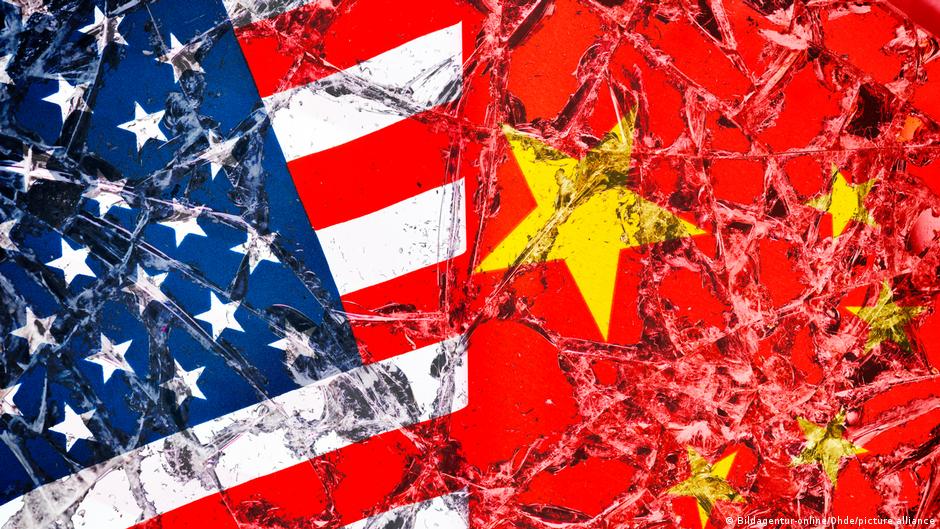
China urged the United States to stop preparing for military conflict in space after Washington for the first time officially confirmed that it has weapons-related systems deployed in orbit, a development that could sharpen investor focus on defense contractors, satellite operators and space-infrastructure suppliers.
The Chinese Foreign Ministry said Tuesday, September 15, that it opposed the “militarization of space,” turning space into a battlefield and the emergence of an arms race beyond Earth. The statement followed remarks a day earlier by U.S. Air Force Secretary Troy Meink, who said the United States has space-control assets operating in orbit. He did not provide details on the weapons themselves.
For Wall Street, the disclosure adds a geopolitical layer to a space and defense trade already tied to national security spending, satellite resilience, launch capacity, cybersecurity and communications infrastructure. The source material did not name any publicly traded companies or quantify procurement programs, but the policy signal is likely to be read across the aerospace and defense sector, satellite services, space surveillance and anti-jamming technologies.
“We urge the American side to stop building up military capabilities and preparing for war in space,” Chinese Foreign Ministry spokesman Guo Jiakun said at a briefing.
Defense Spending Narrative Gains Another Catalyst
The U.S. Space Force statement described space-control capabilities as necessary to ensure control and protection of space and said they may be used for both offensive and defensive purposes. It also referred to kinetic and non-kinetic means, language that investors may associate with a broad range of technologies, from physical interception systems to electronic warfare, cyber operations, directed-energy concepts and signal disruption.
That breadth matters for equity markets because space defense is not a single-product category. It cuts across prime defense contractors, launch providers, satellite manufacturers, payload specialists, secure communications vendors and companies supplying sensors, tracking systems and ground infrastructure. The immediate market impact may depend less on one disclosure than on whether investors see a longer procurement cycle forming around space control, satellite protection and counterspace capabilities.
The U.S. statement separately identified China and Russia as space threats. It said China is developing and operating space-action assets and counterspace defense systems as part of a broader military modernization strategy. Russia, according to the statement, views space as a theater of military operations and believes dominance in space will become decisive in future conflicts.
Those assertions reinforce a familiar defense-sector theme: the expansion of contested domains beyond land, sea and air into cyber and space. For portfolio managers, that can support sector rotation into companies perceived as beneficiaries of higher defense budgets or mission-critical government contracts. At the same time, the escalation risk can weigh on broader risk appetite if investors view the dispute as another pressure point in U.S.-China relations.
Satellite Resilience Moves Up the Risk Register
The article also noted that concerns have evolved beyond the placement of nuclear weapons in space. The 1967 Outer Space Treaty, signed by the United States, Russia and China among others, prohibits nuclear weapons in orbit and calls for the exploration of space for peaceful purposes. However, the treaty does not apply to conventional weapons placed on satellites or spacecraft.
That distinction is important for investors tracking the commercial space economy. Modern military and civilian networks depend heavily on satellites for communications, surveillance, navigation and data transfer. As space becomes more strategically contested, demand may grow for satellite hardening, redundancy, rapid replacement capacity, secure software, anti-jamming tools and space-domain awareness.
The source article said hacking satellites and interfering with their operations are becoming increasingly significant. It noted that Russia is suspected of developing weapons against Starlink satellites used by the Ukrainian military. It also cited AFP as reporting that Russia, the United States, China and India are studying options outside the treaty framework, including strikes against adversaries’ satellites that play a key role in military communications, observation and navigation.
That creates both opportunity and risk for listed companies with exposure to satellite networks. On the opportunity side, governments may spend more on protection, redundancy and monitoring. On the risk side, companies operating large satellite constellations could face higher insurance, cybersecurity and resilience costs, as well as closer regulatory and defense scrutiny.
Trading Implications Remain Company-Specific
Because the U.S. disclosure did not include program size, contract awards or named suppliers, the near-term equity research view is likely to remain selective. Analysts may look for companies with existing Space Force relationships, classified program exposure, secure communications portfolios or technology applicable to both offensive and defensive space-control missions. But the source report does not provide enough detail to justify assigning revenue upside to any specific stock.
Trading volumes in aerospace and defense names could still react to the headline if investors treat it as confirmation that space is moving from an emerging strategic domain to a more explicit military priority. Sector rotation may favor defense and space-infrastructure names during periods of geopolitical stress, while higher-growth commercial satellite companies may trade more unevenly if investors focus on vulnerability rather than procurement opportunity.
The political backdrop is also relevant. The U.S. Space Force was established in 2019 during Donald Trump’s first presidential term as a separate branch of the armed forces, amid potential threats from Russia and China. The latest confirmation of orbit-based capabilities suggests that the institutional buildout of U.S. military space strategy has continued to mature.
For markets, the key question is whether rhetoric becomes budget authority, contract flow and recurring demand. China’s warning underscores that space is now part of the broader strategic competition among major powers. Until more program detail is released, investors are likely to price the news through established defense-sector frameworks: geopolitical risk premiums, government spending visibility, classified-program exposure and the growing importance of satellite resilience.