Uzbekistan’s Halt in Gold Exports Triggers Sector Shift and Market Volume Changes
Uzbekistan's six-month cessation of gold exports impacts commodity sectors amid rising trade with China and Russia.
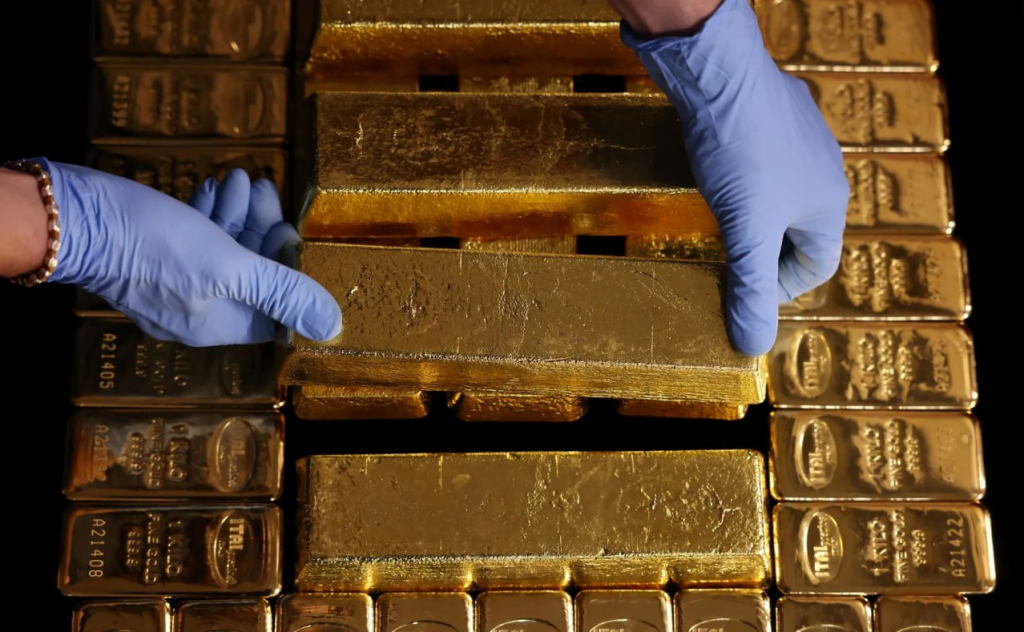
Uzbekistan has not exported gold for over six months, a move that has significantly affected the country’s trade balance and market dynamics. The suspension of gold sales has led to a roughly 30% decline in exports for the first time since 2023, reshaping sector rotations and influencing trading volumes across related equities.
Trade Dynamics and Sectoral Implications
In the first quarter of 2026, Uzbekistan's foreign trade turnover reached $18 billion, marking a 2.7% increase compared to the same period in 2025. However, export volumes fell sharply by 29.3% to $5.8 billion, while imports surged by 30.8% to $12.2 billion. This divergence highlights a significant shift in trade composition, driven primarily by the halt in gold exports.
The prolonged cessation of gold exports, last recorded in September 2025, means that gold—previously accounting for $3.6 billion in sales during Q1 2025—is no longer contributing to export earnings. This reduction has pressured commodity-heavy sectors and related equities, influencing investor sentiment and trading volumes in the metals and mining industry.
"The Central Bank emphasized that maintaining high gold reserves is critical amid current conditions, despite the suspension of sales impacting reserves dynamics."
The Central Bank has noted the importance of sustaining robust gold reserves despite the absence of sales, signaling a cautious approach to reserve management. Meanwhile, declining gold prices—from around $5,300 per ounce down to $4,400 in March—have dampened the attractiveness of gold exports, further reinforcing the sector's subdued position.
Geopolitical Trade Relations and Market Outlook
Uzbekistan's external trade increasingly centers on key partners like China, Russia, and Kazakhstan. The trade volume with China alone reached $4.6 billion in Q1 2026, representing one-quarter of total foreign trade turnover. Russia and Kazakhstan follow with $3.3 billion and $1.3 billion respectively, reinforcing a trade bloc that underpins sector rotations and relative market performances.
Equity research suggests that investors may look to diversify out of commodity-heavy stocks linked to gold and mining, reallocating to sectors benefiting from increased trade activity and import growth. The 20 main trading partners all recorded growth in bilateral trade compared to 2025, indicating potential for broader sectoral shifts in Uzbekistan's equity markets.
Market participants on Wall Street and global exchanges monitoring emerging markets should note these dynamics. The pause in gold exports reduces exposure to precious metals equities while amplifying the influence of trade-linked industries. This sector rotation, combined with shifting trade volumes, could impact Uzbekistan-focused exchange-traded funds and related asset classes.