US Signals No Sanctions Relief for Russia Before Ukraine War Ends
Treasury Secretary Scott Bessent told Anton Siluanov at the G20 finance meeting that Moscow should not expect weaker economic pressure before the war in Ukraine ends.
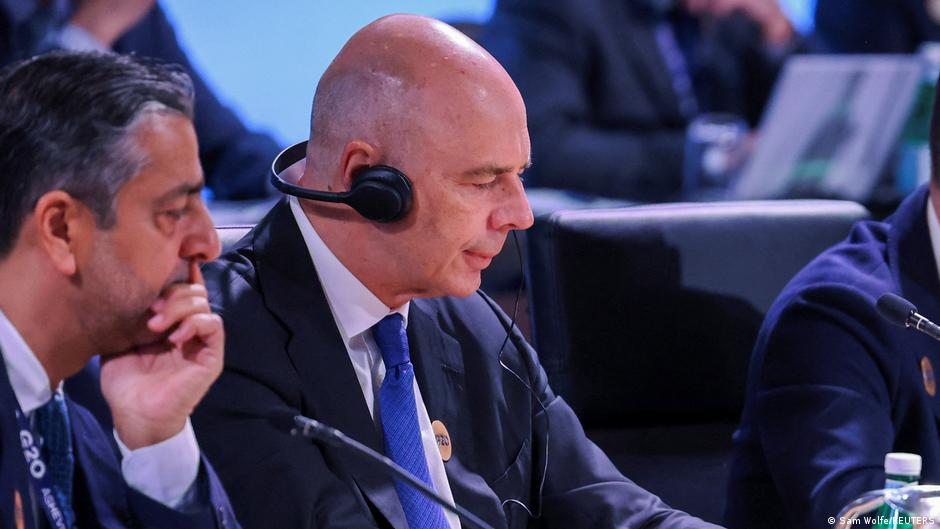
U.S. Treasury Secretary Scott Bessent told Russian Finance Minister Anton Siluanov that Moscow should not expect any easing of U.S. economic pressure before the war in Ukraine ends, according to Reuters, a message that reinforces the policy backdrop facing investors in sanctions-sensitive sectors and companies with residual Russia exposure.
The conversation took place on the sidelines of a meeting of G20 finance ministers and central bank governors in Asheville, North Carolina, Reuters reported early Tuesday, September 1, citing a source familiar with the bilateral exchange between the Russian and U.S. ministers. Bessent told Siluanov that Russia should not expect either reduced economic pressure or agreements on other issues until the war in Ukraine is over.
For Wall Street, the significance of the exchange lies less in any immediate policy change than in the confirmation that the U.S. sanctions regime remains firmly tied to the course of the war. That keeps a restrictive framework in place for investors assessing geopolitical risk, cross-border financial flows, and the relative positioning of sectors exposed to energy, shipping, industrial supply chains and international banking channels.
The remarks also undercut any near-term expectation that diplomatic contact alone could translate into a softer sanctions environment. In market terms, that tends to support a higher risk premium for Russia-linked assets and for businesses whose earnings sensitivity is shaped by commodity volatility, trade frictions or compliance burdens linked to sanctions enforcement.
European Friction Adds to Policy Signal
Siluanov’s participation in the meeting triggered criticism from European governments, which are currently working on strengthening sanctions against Russia over the war, the Reuters report said. The reaction underscored that Western allies remain focused on maintaining, and potentially increasing, pressure rather than opening the door to normalization.
Germany’s finance minister and vice chancellor, Lars Klingbeil, described Siluanov’s presence at the event as an “alarming signal.” Speaking to journalists, Klingbeil said there was room for clear criticism and direct discussion, but that a joint photograph with the Russian minister would have gone too far at this stage.
“One can find space for clear criticism, discuss things with one another, and choose clear words about this war, but a joint photo would be too big a step for me at this stage,” Klingbeil said.
According to Klingbeil, representatives from other European countries joined his position, and the group photograph was ultimately taken without Siluanov. He also told reporters that during the participants’ general morning meeting, he told Siluanov that the war in Ukraine must end and reaffirmed Berlin’s support for Kyiv.
That public European pushback matters for markets because it reinforces the likelihood that sanctions policy will remain coordinated across the Atlantic rather than fragmenting around symbolic diplomatic engagement. For equity investors, the implication is that any thesis built on a rapid rollback of Russia-related restrictions still lacks support from the policy signals emerging from both Washington and key European capitals.
From a sector-rotation perspective, the development is more consistent with a market that continues to favor domestically insulated revenue streams over businesses dependent on a reopening of Russian financial or commercial channels. It also keeps attention on trading volumes in names that historically react to geopolitical headlines, especially where investors use macro news to reposition around energy pricing, defense spending expectations and broader risk appetite.
No specific new sanctions were announced in the reported exchange, and the source material does not point to an immediate change in legal restrictions. Even so, the tone of the U.S. message may carry weight for equity research analysts evaluating whether current valuation assumptions adequately reflect a prolonged period of policy rigidity. In that sense, the meeting serves as a marker for scenario analysis rather than a catalyst tied to a fresh enforcement package.
Russia’s Finance Ministry had earlier published a press release on the evening of August 31 saying that Siluanov and Bessent held a meeting on the sidelines of the G20 gathering of finance ministers and central bank governors. According to that statement, the two sides discussed issues of Russian-American interaction on financial matters as well as cooperation within the Group of 20.
Also on August 31, CNBC reported on its website, citing the U.S. Treasury Department, that Bessent discussed U.S. President Donald Trump’s peace plan for Ukraine with Siluanov in Asheville. Read alongside the Reuters account, that report suggests the bilateral contact covered both the diplomatic track and the broader question of how the war continues to shape economic relations between Washington and Moscow.
For investors, the central takeaway is straightforward: the U.S. side used a high-level international forum not to hint at concessions, but to restate that sanctions relief remains conditional on the end of the war. Until that condition changes, the market backdrop is likely to remain defined by compliance caution, episodic geopolitical volatility and a continued preference for sectors viewed as more resilient to prolonged East-West economic confrontation.