US Cuts Scale of Military Exercises with South Korea, Impacting Defense Sector Stocks
Trump orders reduction of joint US-South Korea military drills, citing cost and diplomatic considerations amid tensions with North Korea.
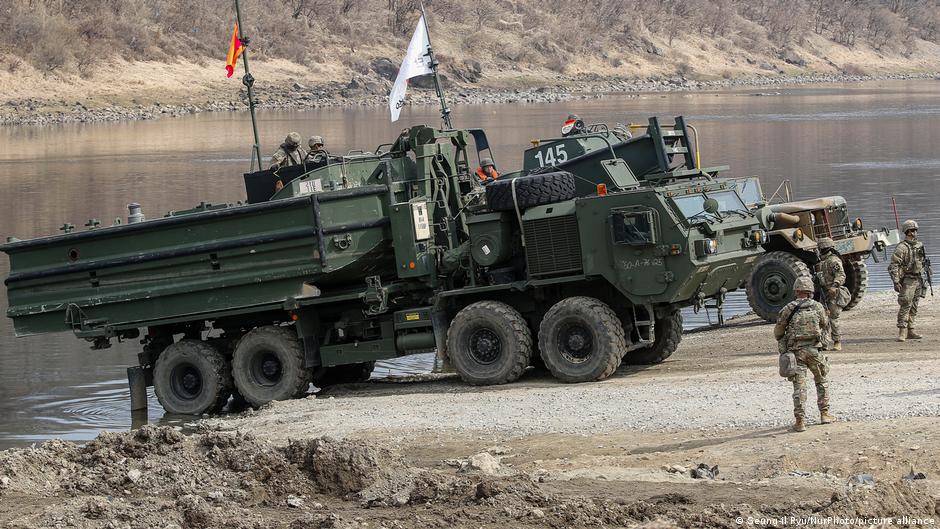
The United States has announced a significant reduction in the scale of its joint military exercises with South Korea, a move that carries implications for defense-related stocks and may signal shifts in geopolitical risk assessments impacting market dynamics.
Strategic Military Changes and Market Implications
On August 16, President Donald Trump instructed US Secretary of Defense Pete Hegseth to curtail the scope of the annual Ulchi Freedom Shield military exercises, historically a key joint operation aimed at preparing for potential aggression from North Korea.
Trump highlighted in his statement that these drills are costly, with the US shouldering most expenses, and sends a "completely inappropriate and hostile signal" to North Korea, a country that, during his administration, has posed no direct threat and behaved respectfully. This diplomatic rationale, paired with Trump's reportedly "very good relations" with North Korean leader Kim Jong Un, underpins the decision.
"These exercises not only cost a lot, most of that cost is borne by the United States (as usual!), but they also send a completely inappropriate and hostile signal to a country that, as long as Donald Trump is president, has presented no threat and has behaved respectfully," Trump wrote.
Beyond defense spending, Trump also criticized South Korea's failure to support the US and Israel in the ongoing conflict against Iran, signaling growing rifts in traditional alliances.
Historically, the Ulchi Freedom Shield, an 11-day exercise scheduled to commence on August 17, has been a focal point for defense preparedness. The drills involve approximately 28,500 US troops stationed in South Korea, emphasizing deterrence against North Korean provocations. Since the Korean War armistice in 1953, peace remains formally unresolved, maintaining a delicate security balance in the region.
President Yoon Suk-yeol of South Korea has recently pursued rapprochement with North Korea, even proposing peace talks on August 15, though no response has been received from Pyongyang as of this writing. This thawing diplomatic environment, coupled with the US scaling back joint drills, may recalibrate risk perceptions among investors.
Market Sector Impact and Trading Volumes
The decision to reduce military exercises may have immediate repercussions on defense contractors and related equities. Stocks of companies specializing in military hardware, training services, and logistical support could face downward pressure amid expectations of reduced US defense spending in the Asia-Pacific theater.
Conversely, energy and commodity sectors might react to the shifting geopolitical tensions, particularly given the intertwined nature of Middle East conflicts and East Asian stability. Sector rotation towards less defense-dependent industries could be observed in trading volumes.
Equity research analysts are likely recalibrating their forecasts to account for decreased military engagement risk premiums and potential reallocation of government budgets.
Investors should closely monitor subsequent policy developments and diplomatic exchanges, as these will shape market sentiment across global equity markets.